March 28, 2025
Mohenjo
Business, Food For Thought, Human Interest, Political, Science, Technical
amazon, business, Business News, current-events, Future, Hotels, human-rights, medicine, mental-health, research, Science, Science News, technology, Technology News, travel, vacation

Click the link below the picture
.
One of the most surprising things to me about interviewing people for jobs has always been how frequently candidates profess not to have any questions for me when prompted. After all, this is a job they’re considering spending a large chunk of their waking hours at for the next however many years, and it’s likely to have a significant impact on their day-to-day quality of life and progression in their career. Surely there’s something they’d like to know about.
Undoubtedly, part of the reason people tell their interviewers they don’t have questions is that they’re unsure of how to ask about the things they really want to know, like “Are you a nightmare of a boss?” or “Am I going to get work calls at 9 p.m., or be expected to work all weekend?” or “Is everyone here miserable?” They also worry that interviewers will read negative subtext into perfectly reasonable questions, for example, looking like a slacker if they ask about what sort of hours people work, or not appearing sufficiently interested in the position they’re interviewing for if they ask about advancement potential. But when you don’t take advantage of the opportunity to ask your interviewer questions, you risk coming across like you’re not that interested in the job or not thinking critically about whether it’s one you’ll do well in.
It’s true that some of the information you want to know is best sought outside of a formal interview (more on how to do that here), but you can still learn a lot by asking your interviewer the right questions. Here are ten strong questions that will get you useful insights into whether the job is right for you.
1.
This gets right to the crux of what you need to know about the job: What does it mean to do well, and what will you need to achieve in order for the manager to be happy with your performance?
You may think you already understand this from the job posting, but it’s not uncommon for employers to post the same job description year after year, even if the job has changed significantly during that time. Companies often post job descriptions that primarily use boilerplate language from HR, while the actual manager has very different ideas about what’s most important in the role. Also, frankly, most employers just suck at writing job descriptions (which is why some are written by AI and so many more sound like they
were), so it’s useful to have a conversation about what the role is really about. You may find out that while the job posting listed 12 different responsibilities, your success in fact hinges on just two of them, or that the posting dramatically understated the importance of one of them, or that the needs of the role are expected to change significantly in the next year, or that the hiring manager is battling with her own boss about expectations for the role, or even that the manager has no idea what success would look like in the job (which would be a sign to proceed with extreme caution).
2.
Job descriptions usually just lay out a list of activities and responsibilities. But it’s also important to know what it really looks like to operate on this particular team and in this particular culture. Maybe you’ll find out that the role’s most important client is notoriously hard to please, or there’s been a sticky political history with partner organizations that will complicate the work you’d be taking over. You might find out there’s tons of organizational support for the role, or that it’s a battle to keep the position’s work funded. Things like that often aren’t listed in written job descriptions but can have a profound impact on what it’s like to be in the job and how happy you’re likely to be if you take it.
.
Photo-Illustration: by The Cut; Photos: Getty Images
.
Click the link below for the complete article:
.
__________________________________________
March 27, 2025
Mohenjo
Business, Food For Thought, Human Interest, Political, Science, Technical
amazon, business, Business News, current-events, Future, Hotels, human-rights, medicine, mental-health, research, Science, Science News, technology, Technology News, travel, vacation

Click the link below the picture
.
CLIMATEWIRE | Drastic cuts to federal science programs are draining millions of dollars in research funding from universities in Republican-dominated states, testing the support of conservative lawmakers for President Donald Trump’s chaotic reshaping of the U.S. government.
The administration’s downsizing effort — led by Elon Musk’s Department of Government Efficiency — has resulted in thousands of federal employees being fired and the cancellation of billions of dollars in grants at agencies that support research on climate science, public health and other fields.
Those actions — some of which have been reversed by court orders — have sent shock waves through the nation’s scientific research system and led universities in more than a dozen states to limit the number of new students or staff they’ll take on, citing uncertainty about federal funding.
The science-slashing blitz threatens to upend the nation’s research and development pipeline and diminish the flow of innovation that has bolstered local economies and protected communities from the effects of climate change, according to former federal research chiefs.
Republicans lawmakers, who control both chambers of Congress, have largely supported the administration’s science funding cuts, even as they threaten local institutions and the communities that depend on them. But some GOP senators in states with large research universities are beginning to express concern about Trump’s cuts.
“We just want to make sure the money is being deployed as productively as possible,” Republican Sen. Thom Tillis of North Carolina told POLITICO’s E&E News.
His state has seen a 25 percent cut in graduate school admissions at the University of North Carolina, Chapel Hill, and a hiring freeze at North Carolina State University. Similar cost-cutting measures are expected at Duke University.
Universities and the communities they support are reeling as Trump and Musk move to cancel funding for scientific projects focused on climate change, diversity, or other topics they have derided as wasteful and “woke.” The administration is also trying to shut down scientific programs at EPA, NASA, and other agencies that work to advance the nation’s understanding of climate change.
While Washington currently spends around $142 billion more per year on research and development than Beijing, the Chinese Communist Party was already narrowing the gap before Trump’s moves began reverberating through the American scientific system.
“U.S. leadership is clearly being compromised by the Trump administration on the false prophecy of saving money,” said Craig McLean, who served as research director at NOAA during Trump’s first term and sparred with the White House over the president’s erroneous hurricane claims. “This will cost the United States money and opportunity, and endanger people’s lives and property.”
.
 sanjeri/Getty Images
.
.
Click the link below for the complete article:
.
__________________________________________
March 27, 2025
Mohenjo
Business, Food For Thought, Human Interest, Political, Science, Technical
amazon, business, Business News, current-events, Future, Hotels, human-rights, medicine, mental-health, research, Science, Science News, technology, Technology News, travel, vacation

Click the link below the picture
.
Caroline Fleck, PhD, is a licensed psychologist, corporate consultant, and adjunct clinical instructor at Stanford University. She received a BA in psychology and English from the University of Michigan and an MA and PhD from the Department of Psychology and Neuroscience at Duke. Fleck has served as a supervisor and consultant for some of the most rigorous clinical training programs in the country, and has been featured in national media outlets, including the The New York Times, Good Morning America, and HuffPost. In her private practice, Fleck specializes in dialectical behavior therapy (DBT) and other cognitive behavioral treatments for mood, anxiety, and personality disorders. Fleck’s corporate work focuses on strengthening company cultures and individual performance. She implements custom training programs for Fortune 500 companies and provides executive coaching to industry leaders worldwide.
What’s the big idea?
The secret to influencing others isn’t about persuasion—it’s about validation. In Validation: How the Skill Set That Revolutionized Psychology Will Transform Your Relationships, Increase Your Influence, and Change Your Life, Fleck reveals how acknowledging and accepting others’ experiences can strengthen relationships, defuse conflicts, and even increase self-compassion. Through captivating stories and actionable techniques, she introduces eight powerful skills to harness validation’s transformative impact. Validation uncovers how truly seeing and being seen is the key to lasting change.
Below, Fleck shares five key insights from her new book. Listen to the audio version—read by Fleck herself—in the Next Big Idea App.
1. Validation is not what you think it is.
My technical definition of validation is that it communicates mindfulness, understanding, and empathy in ways that convey acceptance. If I were to translate that into a mantra, it would be, “Validation shows that you’re there, you get it, and you care.”
- Validation is not praise: Praise is a judgment. It says, “I like the way you look or perform.” Validation demonstrates acceptance. It says, “I accept who you are, independent of how you look or perform.” When people claim that we shouldn’t rely on “external validation,” they are confusing validation with praise.
- Validation is not problem-solving: Problem-solving focuses on changing someone’s reaction by suggesting solutions to their, e.g., “I know you didn’t do well on that spelling test; why don’t we try reviewing your words on the way to school next time?” Validation, on the other hand, focuses on acknowledging the situation and the validity of someone’s response to it: “You studied so hard; I can understand why you are upset.”
- Validation is not agreement: I can validate why someone would have concerns about protecting an unborn fetus, even if I am pro-choice. If the idea of validating an opinion you disagree with makes you nervous, rest assured that validating another person’s perspective does not necessarily function to reinforce it. On the contrary, people tend to get entrenched in their views when they feel like they have to defend their own position or attack yours. A validating response from you leaves nothing to attack, much less anything to defend against.
So again, validation shows that you’re there, you get it, and you care. It is not praise, problem-solving, or agreement.
2. Validation is like MDMA for your relationships.
Validation improves relationships by transforming how they feel, increasing trust, intimacy, and psychological safety. Research has consistently shown validation to be among the strongest predictors of relational outcomes, ranging from commitment to quality across various types of relationships. This is really important given the effect relationships have on our health and life expectancy. Having poor social relationships is associated with the same death rate as smoking 15 cigarettes a day. Data show that the quality of a person’s relationships can increase their probability of surviving by 50%.
Importantly, validation is critical to all our relationships, including the one we have with ourselves. Knowing how to validate your own emotions is essential to developing self-compassion and improving how you relate to yourself. I have many more tips on how to cultivate self-validation in the book.
.
 [Source Photo: Freepik]
.
.
Click the link below for the complete article:
.
__________________________________________
March 26, 2025
Mohenjo
Business, Food For Thought, Human Interest, Political, Science, Technical
amazon, business, Business News, current-events, Future, Hotels, human-rights, medicine, mental-health, research, Science, Science News, technology, Technology News, travel, vacation
Click the link below the picture
.
In 2013, Susan Klugman, an obstetrician and geneticist who is currently president of the American College of Medical Genetics and Genomics, got back test results that were “really weird.” Her patient was a pregnant woman who had opted for noninvasive prenatal testing, or NIPT, a screen for Down syndrome and a handful of other conditions that had been on the market for only two years. Now Klugman was looking at a lab report that suggested the 13-week-old fetus had a chromosomal condition that should have been lethal. And yet here it was on ultrasound, with a beating heart, developing organs and no sign of a problem. After several rounds of diagnostic testing, Klugman reassured the woman that her baby would most likely be fine. Nine months later, she read by chance in her local newspaper that the new mother had died of renal cancer. Mysterious test results and an unexpected cancer—surely, Klugman thought, there must be a connection.
For decades, prenatal testing for Down syndrome and other chromosomal conditions had fallen into two categories: invasive biopsies using a needle to collect fetal cells from the amniotic fluid or the placenta, or biomarker testing via a simple blood draw from the pregnant person. The invasive test carries a small but real chance of miscarriage. Biomarker testing is easier, cheaper, and safer, but because it looks at proxy measures and not the fetal DNA itself, it casts a wide and leaky net. Some people carrying a fetus with a chromosomal condition are missed, while the majority of those flagged as high risk turn out to be false positives.
Thus, the introduction of a more accurate and noninvasive blood test in 2011 was embraced enthusiastically by expectant parents. Today, NIPT is used in more than 60 countries, and sales of the test have attained a market value of more than $4.5 billion. In the U.S. alone, it is used in more than a million pregnancies a year. Multiple labs offer NIPT. And while they have their differences, they have this in common: all of them work by examining something called cell-free fetal DNA.
In living cells, DNA is contained in discrete structures known as chromosomes. As cells die and are replaced, chromosomes are deconstructed, and tiny snippets of DNA are released into the bloodstream. If sequenced, these blood-borne snippets can be traced back to their chromosome of origin like jigsaw puzzle pieces using our human genome map as if it were the picture on the box. A random sampling of cell-free DNA will consist of DNA from all chromosomes in proportion to their size—the largest chromosome being represented by the most segments, and so on—and therefore we can predict the number of segments we expect to see from each chromosome of origin.
In a pregnant person, some of this cell-free DNA is fetal DNA from the placenta. In the epiphany that spawned NIPT, Hong Kong–based researcher Dennis Lo realized that even though fetal DNA is only a small part of the whole, the fetal genome can be accurately assessed if the numbers are precise enough because any underrepresentation or overrepresentation of a given chromosome is clearly coming from the fetus. After all, the pregnant person’s chromosomal status is known, so their contribution to the cell-free DNA in the sample is entirely predictable.
That’s a safe assumption almost all the time. But from the earliest days of NIPT, there were rare instances of abnormal results that could not be explained by variations in fetal DNA. Sheetal Parmar, senior vice president of medical affairs for women’s health at Natera, who has been at the NIPT lab since it began testing in 2013, recalls that it was clinicians who first drew their attention to a possible link between certain oddball results and malignancies in pregnant people. “It started with people coming back to us and saying, ‘Hey, this particular patient had this finding and has been diagnosed with cancer,’” Parmar says.
But anecdotes aren’t evidence, and this left the labs in an awkward spot. Telling a person they have cancer—an unknown cancer of unknown origin, requiring unspecified follow-up, which insurance will be unlikely to cover —is not something to be done lightly, much less when the person involved is pregnant. NIPT tests showing multiple missing or added chromosomes, which labs had begun to suspect might be a potential indication of cancer, were officially labelled “nonreportable” results. Unofficially, genetic counselors and obstetricians have told stories of off-the-record phone calls from friends at labs whispering suggestions that a certain patient should “get checked out.”
In 2019, convinced that this cancer signal was real, Diana Bianchi, director of the Eunice Kennedy Shriver National Institute of Child Health and Human Development, began a study intended to provide clearer guidance to labs and clinicians about how and when to follow up on these atypical results. Called IDENTIFY (Incidental Detection of Maternal Neoplasia through Non-invasive Cell-Free DNA Analysis), the study offered a thorough evaluation to any patient who was currently pregnant or less than two years postpartum, who didn’t already have a cancer diagnosis and whose results were “discordant”—that is, cases in which the fetus seemed fine, yet the pregnant person’s NIPT results showed a pattern of extra and missing chromosomes that should have been impossible in a viable pregnancy.
.
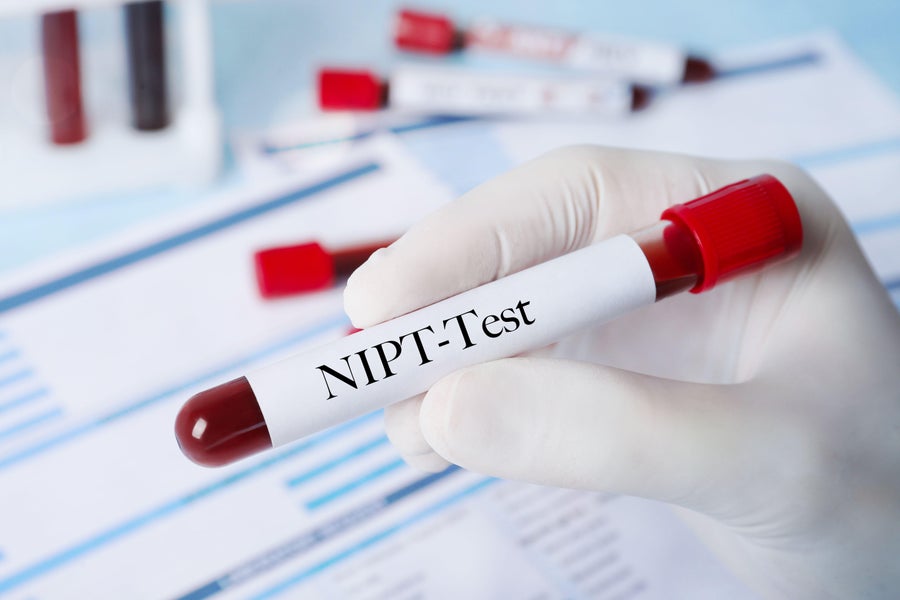
A noninvasive prenatal test. Olga Yastremska/Alamy Stock Photo
.
.
Click the link below for the complete article:
.
__________________________________________
March 26, 2025
Mohenjo
Business, Food For Thought, Human Interest, Political, Science, Technical
amazon, business, Business News, current-events, Future, Hotels, human-rights, medicine, mental-health, research, Science, Science News, technology, Technology News, travel, vacation
From

Click the link below the picture
.
A 17-year-old student has been accepted into more than 60 colleges and awarded over $1 million in scholarships, bringing him closer to his goal of pursuing a career in medicine.
“I’m just passionate about helping others, lending a helping hand whenever it is needed,” Mantavius “Lebron” Presley, a senior at Douglas County High School in Georgia, told “Good Morning America” in an interview. “My biggest goal in life is to motivate people and help others, because you never know what somebody is going through, and you can always help somebody eat with just a word of inspiration, a smile or even a hug.”
Lebron said he began applying to colleges on Aug. 1, 2024, the first day of his senior year, focusing on schools that aligned with his goals of eventually attending medical school and becoming an anesthesiologist.
His top college choices include the University of Alabama, Morehouse College, Xavier University of Louisiana, Howard University and Mercer University, all known for their strong pre-med programs.
Juggling dual enrollment courses and work-based learning, he said he made time to complete applications whenever possible and applied to as many schools as he could.
Lebron said he was determined from a young age to attend college and achieve something great.
“When I was a little boy, I always said that I would go to the university, because people in my family will always talk about how much they loved their college life and how much [it] really impacted them,” he recalled. “So, I always thought when I was a little boy, that I would just go off and do something amazing.”
Raised by a single mother, Lebron credits his mom, Chasity Green, as his biggest supporter and inspiration.
“She is my biggest cheerleader,” he shared. “Always on the sidelines, always letting me know that she’s here for me, if I have any questions, if I need any advice, if I ever just need a shoulder to lean on, somebody to cry on. If she doesn’t know the answer, she’s gonna get with somebody and find out the answer. She’s just always willing to help me and be by my side and give me inspiration and guidance when I need it the most.”
Lebron’s first college acceptance came in October from the University of Alabama, and the offers kept pouring in. As of Thursday, he had received 61 acceptances and over $1.1 million in scholarships.
.

Mantavius Presley, a senior at Douglas County High School in Georgia has been accepted into more than 60 colleges and awarded over $1 million in scholarships. Courtesy Mantavius Presley
.
.
Click the link below for the complete article:
.
__________________________________________
March 26, 2025
Mohenjo
Business, Food For Thought, Human Interest, Political, Science, Technical
amazon, business, Business News, current-events, Future, Hotels, human-rights, medicine, mental-health, research, Science, Science News, technology, Technology News, travel, vacation

Click the link below the picture
.
We live in a world that seems to get busier and busier! Not only do we have our daily work tasks, but we also have more meetings, longer commutes, and more interactions with more people in more locations than at any time in the history of work.
In addition to the many real and present external distractions, there are also internal obstacles to great listening. Our internal worlds can be loud. At times, they are a blaring noise of emotion, attitude, and motives that can make it impossible for us to give others our full attention.
As two positive psychology experts, we’ve identified six of the most common internal barriers that can interfere with your ability to listen well, and developed a framework of six “radical listening” skills that can help you have better conversations and build better relationships.
Six barriers that prevent you from listening well:
1. Comparing: “It happened to me!”
Sometimes, the topic of a conversation seems to invite you to share your own, similar experiences. Rather than appreciating the speaker’s experiences, you are mentally reminiscing and preparing to offer your own carefully chosen anecdote—that time that you scheduled a business meeting in a dim sum restaurant where the waiting staff interrupted every couple of minutes to offer you some delicious delicacies. We call this comparing. What is it they are implicitly asking for in the conversation? It might be admiration from you, an acknowledgment of their enthusiasm, or a bit of respect for their work.
2. Competing: “That’s nothing—I have had it much tougher than that!”
People are social creatures and it is common for friends and colleagues to share challenges they are experiencing. An office mate might say “I’m really struggling to get through my emails! I have over 200 unread emails sitting in my inbox!” It is easy to assume that they are looking for some sympathy or perhaps some ideas for dealing with the overwhelm. Instead of offering either of these, however, you respond, “Just 200? I have over 1,000 emails that I need to respond to!” We call this competing. Again, there is nothing wrong with sharing your own experience, but it runs the risk of appearing unsympathetic, self absorbed, or checked-out.
3. Mind reading: “I know what you’re going to say.”
Can you think of any recent interactions in which you were pretty sure what was going to happen even before the conversation took place? This is called mind-reading. This bias—even if it was rooted in experience—interfered with our ability to engage positively with the team. Mind-reading runs the risk of focusing on your own assumptions rather than the views and interests of others. Unless you are actually a mind reader, believing that you know what other people will say becomes a barrier to genuinely listening.
4. Unsolicited advice: “If I were in your shoes . . .”
A leader of a team in another department confides in you how difficult it is for them to take a vacation and totally unplug from work. This is an instance that calls for optimal support matching. Rather than breaking out the toolbox, it is wiser to listen to what is being asked for. It might be that your colleague would appreciate some suggestions. Or, it may be that they just want someone to commiserate with them. Whatever the case, one thing is certain: If you are busy giving unsolicited advice—attempting to solve another person’s problem—while they are talking to you, then you are not listening.
.
 [Photos: ugguggu/Adobe Stock; LanaSham/Adobe Stock]
.
.
Click the link below for the complete article:
.
__________________________________________
March 25, 2025
Mohenjo
Business, Food For Thought, Human Interest, Political, Science, Technical
amazon, business, Business News, current-events, Future, Hotels, human-rights, medicine, mental-health, research, Science, Science News, technology, Technology News, travel, vacation
Click the link below the picture
.
Here’s a simple question: What’s a moon?
As with so many questions in science, it may seem straightforward but truly isn’t. “Why, a moon is a celestial body that orbits a planet,” you’re probably thinking. Well, sure—if you squint your eyes and don’t look too closely, that’s a pretty decent description.
But rigidly defining the term “moon” isn’t so easy.
The canonical example is of course our own moon, a decently big chunk of rock that orbits Earth. But centuries ago the first telescopic observations of other planets revealed that many have moons as well; Jupiter has four giant, easily seen satellites, and Saturn has several that are visible by modest means as well. So at that point in time, our definition of “moon” seemed safe enough.
Then, of course, things got complicated—because they always do. As telescopes got bigger and better, more moons were found. Mars has two, and poor Mercury and Venus have none, but in contrast, moons seemingly kept sprouting on Jupiter like mushrooms after a rainstorm. For the first half of the 20th century, Jupiter was known to have an even dozen. A handful more were found telescopically in the 1970s, and the numbers jumped a bit when we started sending spacecraft to the outer planets. Then, in the 2000s, the numbers leaped upward as more exacting techniques were used to scrutinize Jupiter’s environs.
As of this writing Jupiter has 95 confirmed moons. They range in size from mighty Ganymede, the largest in the solar system at more than 5,200 kilometers across—wider than the planet Mercury!—to the tiniest that we’re able to see from Earth, at roughly 1 km in diameter. Saturn is more distant from us than Jupiter, so its moons are harder to see, yet we now know it boasts at least 274 moons, a staggering number! Of these, 128 were just announced this month by scientists who had used an advanced searching technique that allows extremely faint satellites to be spotted in telescopic observations. Most of these new additions are only a few kilometers across.
It’s clear that with ever more powerful equipment, we’ll find that many planets have orbital companions of arbitrarily small dimensions. Is something the size of a football stadium a moon? Sure! But what about something the size of a car, a basketball or a grape? What about a grain of dust?
Saturn’s rings are composed of trillions of small icy particles. Is each of these a moon?
At some lower limit, that term just doesn’t seem to fit.
The problem is further complicated by the fact that many asteroids have moons. More than 430 asteroids are known or suspected to be orbited by smaller asteroids. It’s possible that those satellites were formed from low-speed collisions that either ejected material that subsequently coalesced as moons or slowed two asteroids enough to put them in orbit around each other. In some cases, an asteroid and its moons may have even formed together.
Out past Neptune are countless small icy and rocky bodies called Trans-Neptunian Objects (TNOs), and many of these have moons as well. While some TNOs could be called dwarf planets because of their size, many more are tiny and don’t even come close to falling into that category.
And, although I hate to complicate things even more, I should note that if we broaden our moon definition to “any object that orbits something bigger,” then planets are moons. Even small stars that orbit big stars would be moons!
.

A quintet of Saturn’s moons come together in this image from NASA’s Cassini spacecraft. NASA/JPL-Caltech/Space Science Institute
.
.
Click the link below for the complete article:
.
__________________________________________
March 25, 2025
Mohenjo
Business, Food For Thought, Human Interest, Political, Science, Technical
amazon, business, Business News, current-events, Future, Hotels, human-rights, medicine, mental-health, research, Science, Science News, technology, Technology News, travel, vacation

Click the link below the picture
.
We’ve all done it. You’re in a meeting, on a date or even texting a friend, and two words slip into the conversation: “I think we should go with option A.” “I think we should see this movie.” “I think we should leave at 7.”
While “I think” can be harmless sprinkled in here and there, if you use it too often and in the wrong context, it can weaken your message, diminish your presence, and undermine your confidence.
“I think” is an example of minimizing language: words and phrases that soften your statements and make you seem less sure of yourself. Other common minimizing language includes “just,” “sorry” and “maybe.”
While these words may seem polite, they can dilute your credibility and make your ideas easier to dismiss, especially in a professional context.
Use this ‘subtle but powerful’ swap
Instead of “I think,” swap in “I recommend.” Compare these two statements:
- “I think we should move the deadline.”
- “I recommend moving the deadline.”
The first feels hesitant, while the second feels authoritative and action-oriented. Even if the message you want to convey is exactly the same, your words carry more weight when framed as a recommendation rather than what can be interpreted as a passing thought.
- Instead of: “I think we should go with the second proposal.“
Try: “I recommend we go with the second proposal.”
- Instead of: “I think we should prioritize this project.“
Try: “I recommend prioritizing this project.”
- Instead of: “I think you should try this restaurant.“
Try: “I recommend trying this restaurant.”
- Instead of: “I think you should change your reservation.“
Try: “I recommend changing your reservation.”
The shift is subtle but powerful. Saying “I recommend” instead of “I think” makes you sound more confident and decisive, gives you more influence, and ensures you’re seen as someone whose opinion matters.
What if you’re not sure?
There are times when it feels like you really should use “I think.” Perhaps you’re not confident in your recommendation, or you purposefully want to soften your message.
While it’s certainly a path you can take, you can still use “I recommend” in these situations — with a twist.
Preface your recommendation with an indication of what you’re drawing on to give it. For example:
- “Based on what I’ve seen, I recommend…”
- “Looking at the data, I’d recommend…”
- “From my experience, I’d recommend…”
This keeps your statement strong while acknowledging some uncertainty and leaving room for further discussion.
Break the ‘I think’ habit
Any time you try to disrupt a pattern that’s deeply ingrained in your everyday conversations, it takes practice. Here are a few strategies you can try to break this particular communication habit:
-
Listen for it. Start noticing how often you say “I think,” and in what contexts it tends to pop up. It may surprise you how many times a day you use this phrase.
-
Enlist help. Ask friends or peers to call it out when they hear it to help keep you accountable.
-
Pause before you speak. Speaking more slowly and adding pauses is already helpful when trying to appear more authoritative and confident. Now, you can also catch yourself when you’re about to say “I think” and give yourself enough time to swap it out.
-
Observe your writing. “I think” often creeps into our written communication too, especially quick messages over Slack or Teams. Take a second pass at your writing before hitting send to make sure you’re keeping things concise and using strong phrases like “I recommend.”
.
 Ridofranz | Getty Images
.
.
Click the link below for the complete article:
.
__________________________________________
March 24, 2025
Mohenjo
Business, Food For Thought, Human Interest, Political, Science, Technical
amazon, business, Business News, current-events, Future, Hotels, human-rights, medicine, mental-health, research, Science, Science News, technology, Technology News, travel, vacation
Click the link below the picture
.
The tragic opioid epidemic continues to rage in the U.S. Roughly 76 percent of U.S. drug overdose deaths, more than 70,000 people in 2023, are linked to opioids, including heroin and illicit fentanyl. The bill for that calamity—dire enough to justify a global trade war with Canada, Mexico, and China—is falling increasingly on a federal health coverage program that now faces the chopping block.
That program is Medicaid, which in 2023 paid for about 39 percent of the nonfatal emergency department overdoses. That alone helped people in acute distress some 118,000 times in the 26 states that provide data. The total number of people treated for opioid use disorder (OUD) under Medicaid in 2021 was nearly 1.82 million, or 35 percent of all people treated for the disorder in the U.S. More than half, or 930,910 people, became eligible for Medicaid because of the Affordable Care Act’s (ACA) Medicaid expansion.
In February, Congress passed a resolution that will most likely mean $880 billion in reduced federal spending in Medicaid over 10 years. That would reduce its spending by nearly 12 percent over the next 10 years. To provide some context, in 2023, Medicaid spent $616 billion of federal funds, alongside an additional $245 billion in state spending, according to the Centers for Medicare and Medicaid Services (CMS). Widespread cuts to Medicaid enrollments and spending of the kind Congress contemplates, will surely hurt people who rely on the program for treatment of their addictive conditions.
To realize $880 billion in reduced Medicaid spending, Congress is considering imposing work requirements on beneficiaries who do not qualify for Social Security Disability payments, reduced subsidies for states that expanded Medicaid, and reduced federal “matching” spending provided to states. All of which would result in reduced enrollment of people suffering from opioid use disorder and substance use disorders, involving alcohol, cocaine, methamphetamines or other drugs, generally. If that happens, evidence based on lessons from Medicaid expansion shows that fewer people in the expansion population will have healthcare coverage. In fact, it is estimated that if the expansions were eliminated, roughly 65 percent of people in the expansion population would likely end up uninsured. This is especially salient because Medicaid financed care represents such a large share of all the OUD treatments in the country, in large measure because of the Medicaid expansion.
The lesson from the expansion experience is that when people gain coverage, they are more likely to seek treatment for addiction and get treated with lifesaving drugs. Furthermore, people in treatment are less likely to overdose and die than those not in treatment. So dramatic reductions in spending on treatment for OUD will likely result in more overdoses and more deaths consequent to the disorder.
Medicaid expansion has also contributed to the financial health of hospitals, especially those in rural areas of the nation. It led to significantly reduced uncompensated care costs experienced by hospitals. This was found for hospitals overall. More specifically, states that expanded Medicaid experienced large drops in the percentage of emergency department visits for an OUD (frequently for a nonfatal overdose) that were delivered to people without health insurance. Likewise, expansion states experienced a 50 percent drop in the number of opioid-related hospitalizations that were for people without insurance. That improved hospital bottom lines by millions of dollars. Hospital willingness to address substance use issues through targeted programs generally, and for OUD specifically, has been shown to be greater in states that have expanded Medicaid. This willingness is especially important for rural areas, as about 74 percent of rural hospital closures have been in the non-expansion states. Without these funds, a lot more rural hospitals will close.
.
Rob Dobi/Getty Images
.
.
Click the link below for the complete article:
.
__________________________________________
March 24, 2025
Mohenjo
Business, Food For Thought, Human Interest, Political, Science, Technical
amazon, business, Business News, current-events, Future, Hotels, human-rights, medicine, mental-health, research, Science, Science News, technology, Technology News, travel, vacation

Click the link below the picture
.
Archaeologists discovered a pyramid structure at the Chupacigarro archaeological site, which is part of the Sacred City of Caral-Supe. The pyramid may date back to 3800 years ago!
.
 .
.
.
Click the link below for the video:
.
__________________________________________
Older Entries
Newer Entries
 James' World 2