
Click the link below the picture
.
I knew it would be bad, I just didn’t know it would all happen so fast,” Hannah Baker*, a 32-year-old mother of one in the southeastern United States, tells me. “I had already made up my mind back in the summer that if he got elected, we were a one-and-done family. I think my partner was hoping I’d change my mind or that things wouldn’t be as bad as they are, but nope. We’re done.”
Baker’s not alone. And while U.S. fertility rates have been dropping for years, and cultural pressure around having a family has fortunately lessened, studies show that much of the declining birth rate can be attributed to the lack of infrastructure that makes it possible for families to grow. A recent Pew Research study found that 26% of parents under 40 cite financial reasons for not having more children, and a Gallup study found that many American families have less children than they actually want. A study at the Institute for Population Research found that while the birth rate has nosedived, Americans’ desire for children has stayed more or less the same. It’s simply less feasible.
In the time since Baker and I last spoke, the government website reproductiverights.gov went dark. An executive order removed more than 200 pages from Head Start, the federal program for low-income children, including videos on postpartum depression. The United States has been removed from the world’s main climate pact. Remote work for federal employees — a lifeline for working mothers — has all but been eliminated. There is no “family leave plan” on the table. There’s no federally protected right to abortion. There’s no hope for the climate and the state of the planet. There’s no comfort for LGBTQ communities, for transgender people, for pregnant people.
“I don’t want to die trying to have another baby. I don’t want to leave my own living child motherless.”
So as much as Baker says she’d like to give her son a sibling, she just doesn’t feel ready, not in this political climate. It doesn’t feel safe. “For me, I just want to be sure I can take care of him. And with everything going on, I’m just terrified. Like what if he’s gay? What if I lose my remote work job? What if groceries stay so expensive?”
Some women cite the terminology in abortion laws — as some state’s abortion restrictions are blamed for the completely avoidable deaths of women like 28-year-old Amber Thurman in Georgia — as a reason why they’re changing their family plans.
Theresa Parks* lives in a blue state with one child — but she’s suffered several miscarriages. “I’ve always had to have a D&C,” she tells me. “I want more children, but I’m terrified of experiencing another miscarriage and being left to go septic or something if they completely ban abortion.” She feels “somewhat safe” in her blue state, she says, but she doesn’t trust the government or any of the pundits who say abortion is really just a states’ rights issue. “I don’t want to die trying to have another baby. I don’t want to leave my own living child motherless.”
Baker’s not alone. And while U.S. fertility rates have been dropping for years, and cultural pressure around having a family has fortunately lessened, studies show that much of the declining birth rate can be attributed to the lack of infrastructure that makes it possible for families to grow. A recent Pew Research study found that 26% of parents under 40 cite financial reasons for not having more children, and a Gallup study found that many American families have less children than they actually want. A study at the Institute for Population Research found that while the birth rate has nosedived, Americans’ desire for children has stayed more or less the same. It’s simply less feasible.
Dr. Kecia Gaither, M.D., a double board-certified physician in OB-GYN and maternal fetal medicine, is the director of perinatal services/maternal fetal health medicine at NYC Health + Hospitals. When I spoke to her in November, before Trump was officially sworn in as president, I’d hoped she’d beam a light of hope down and declare all of our fears unfounded. This did not happen. “Reproductive health and equity has taken a major hit in the wake of the Roe v. Wade reversal. In light of that ruling, many states have banned the election of pregnancy terminations, forcing women — and the physicians who care for them — to face difficult and, many times, life-threatening situations. For my colleagues in certain parts of the country, they have been witness to their health care compatriot being threatened, coerced, and even jailed for rendering care — even in the face of their patients facing life-threatening pregnancy complications,” she tells me. “The incoming administration’s agenda, via Project 2025, apparently will end access to medical abortion, curtail birth control access, allow health facilities to deny particular emergency saving care, and establish an abortion surveillance system… to name just a few.”
Julia Mazer, a Georgia mom of a toddler, was nine weeks pregnant on Election Day 2024 with what she described as “hopefully” her second child. “I have lost pregnancies before, so I know that a pregnancy doesn’t always guarantee a baby. I think we would have stopped trying to conceive if I wasn’t already pregnant before the election,” she tells me. “The biggest change this time is that I am more afraid for my life than I was before. I have been pouncing on news articles about Josseli Barnica and others who died during miscarriage due to abortion bans. I Googled which states have bans and what the term limits are in case I need to travel out of state for abortion care — if there’s time.” Mazer says that she’s always been pro-choice, and that she can’t imagine feeling all of these debilitating pregnancy symptoms while also worrying about an abusive or absent co-parent, food insecurity, anything. “It makes me feel so privileged. I don’t know what will happen, but I do know that this pregnancy will be our last.”
Maddison Z was living in Charlotte, North Carolina, when she gave birth to her first son in early 2023. She had just moved from NYC. “I was really early in my pregnancy when Roe was overturned. It felt so heavy and scary. But I was thankfully living somewhere where I had access to the health care I needed. In July of 2024, when our son turned 18 months old, my husband and I were discussing trying for another baby. In order to feel comfortable, I knew I needed to live in a state that granted me access to all health care. If something were to happen during a pregnancy that put my life at risk, I needed to be able to choose my life, and the life of my son, who needs me,” she told me before the election.
Since then, Maddison’s ideas about having another child have have shifted: “We wonder if it is even ethical to bring another child into this world, knowing the negative impact this current administration will have on the environment, social issues, and the economy,” she says.
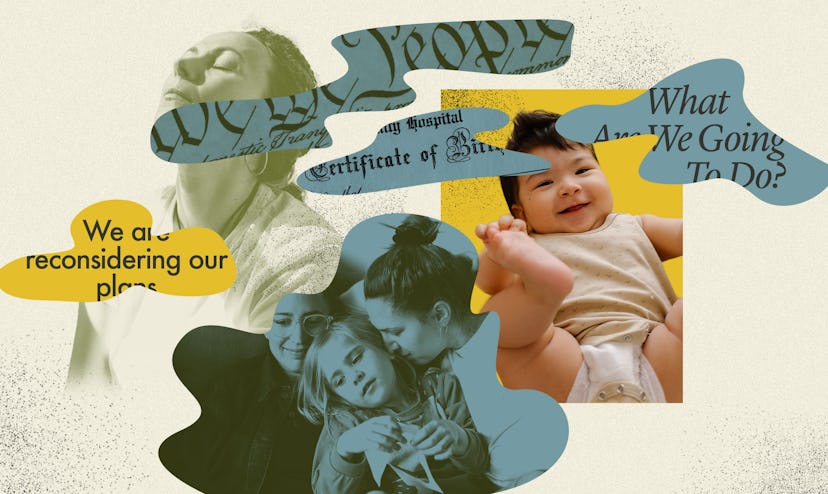
Lauren Hughes* in Michigan tells me she’s terrified to have a baby if Trump’s Supreme Court overturns same-sex marriage. “It’s already an ordeal to make sure my wife is listed on the birth certificate, even if we use her egg. She has to adopt her own child, basically. What if they take away our marriage?”
“The biggest change this time is that I am more afraid for my life than I was before.”
Megan Buck, 32, in Atlanta, agrees. “Me and my wife were considering IVF last year. We both want kids and went through a bunch of testing to see if we could. We went to baby sections of stores just to daydream; it was amazing. But now with the political animosity towards our community, it’s scary.” Buck has an autoimmune disorder and also worries about the laws surrounding abortions. “Not only are there health risks associated with me having a baby, but with the attack on trans rights, it seems like only a matter of time before they come for more in our community. The last thing I’d want to happen is for everything to go well and then have complications with my wife having rights to our baby because we’re two women.”
Baker’s not alone. And while U.S. fertility rates have been dropping for years, and cultural pressure around having a family has fortunately lessened, studies show that much of the declining birth rate can be attributed to the lack of infrastructure that makes it possible for families to grow. A recent Pew Research study found that 26% of parents under 40 cite financial reasons for not having more children, and a Gallup study found that many American families have less children than they actually want. A study at the Institute for Population Research found that while the birth rate has nosedived, Americans’ desire for children has stayed more or less the same. It’s simply less feasible.
In the time since Baker and I last spoke, the government website reproductiverights.gov went dark. An executive order removed more than 200 pages from Head Start, the federal program for low-income children, including videos on postpartum depression. The United States has been removed from the world’s main climate pact. Remote work for federal employees — a lifeline for working mothers — has all but been eliminated. There is no “family leave plan” on the table. There’s no federally protected right to abortion. There’s no hope for the climate and the state of the planet. There’s no comfort for LGBTQ communities, for transgender people, for pregnant people.
“I don’t want to die trying to have another baby. I don’t want to leave my own living child motherless.”
So as much as Baker says she’d like to give her son a sibling, she just doesn’t feel ready, not in this political climate. It doesn’t feel safe. “For me, I just want to be sure I can take care of him. And with everything going on, I’m just terrified. Like, what if he’s gay? What if I lose my remote work job? What if groceries stay so expensive?”
Some women cite the terminology in abortion laws — as some state’s abortion restrictions are blamed for the completely avoidable deaths of women like 28-year-old Amber Thurman in Georgia — as a reason why they’re changing their family plans.
Theresa Parks* lives in a blue state with one child — but she’s suffered several miscarriages. “I’ve always had to have a D&C,” she tells me. “I want more children, but I’m terrified of experiencing another miscarriage and being left to go septic or something if they completely ban abortion.” She feels “somewhat safe” in her blue state, she says, but she doesn’t trust the government or any of the pundits who say abortion is really just a states’ rights issue. “I don’t want to die trying to have another baby. I don’t want to leave my own living child motherless.”
Dr. Kecia Gaither, M.D., a double board-certified physician in OB-GYN and maternal fetal medicine, is the director of perinatal services/maternal fetal health medicine at NYC Health + Hospitals. When I spoke to her in November, before Trump was officially sworn in as president, I’d hoped she’d beam a light of hope down and declare all of our fears unfounded. This did not happen. “Reproductive health and equity has taken a major hit in the wake of the Roe v. Wade reversal. In light of that ruling, many states have banned the election of pregnancy terminations, forcing women — and the physicians who care for them — to face difficult and, many times, life-threatening situations. For my colleagues in certain parts of the country, they have been witness to their health care compatriot being threatened, coerced, and even jailed for rendering care — even in the face of their patients facing life-threatening pregnancy complications,” she tells me. “The incoming administration’s agenda, via Project 2025, apparently will end access to medical abortion, curtail birth control access, allow health facilities to deny particular emergency saving care, and establish an abortion surveillance system… to name just a few.”
Julia Mazer, a Georgia mom of a toddler, was nine weeks pregnant on Election Day 2024 with what she described as “hopefully” her second child. “I have lost pregnancies before, so I know that a pregnancy doesn’t always guarantee a baby. I think we would have stopped trying to conceive if I wasn’t already pregnant before the election,” she tells me. “The biggest change this time is that I am more afraid for my life than I was before. I have been pouncing on news articles about Josseli Barnica and others who died during miscarriage due to abortion bans. I Googled which states have bans and what the term limits are in case I need to travel out of state for abortion care — if there’s time.” Mazer says that she’s always been pro-choice, and that she can’t imagine feeling all of these debilitating pregnancy symptoms while also worrying about an abusive or absent co-parent, food insecurity, anything. “It makes me feel so privileged. I don’t know what will happen, but I do know that this pregnancy will be our last.”
Maddison Z was living in Charlotte, North Carolina, when she gave birth to her first son in early 2023. She had just moved from NYC. “I was really early in my pregnancy when Roe was overturned. It felt so heavy and scary. But I was thankfully living somewhere where I had access to the health care I needed. In July of 2024, when our son turned 18 months old, my husband and I were discussing trying for another baby. In order to feel comfortable, I knew I needed to live in a state that granted me access to all health care. If something were to happen during a pregnancy that put my life at risk, I needed to be able to choose my life, and the life of my son, who needs me,” she told me before the election.
Since then, Maddison’s ideas about having another child have have shifted: “We wonder if it is even ethical to bring another child into this world, knowing the negative impact this current administration will have on the environment, social issues, and the economy,” she says.
Lauren Hughes* in Michigan tells me she’s terrified to have a baby if Trump’s Supreme Court overturns same-sex marriage. “It’s already an ordeal to make sure my wife is listed on the birth certificate, even if we use her egg. She has to adopt her own child, basically. What if they take away our marriage?”
Baker’s not alone. And while U.S. fertility rates have been dropping for years, and cultural pressure around having a family has fortunately lessened, studies show that much of the declining birth rate can be attributed to the lack of infrastructure that makes it possible for families to grow. A recent Pew Research study found that 26% of parents under 40 cite financial reasons for not having more children, and a Gallup study found that many American families have less children than they actually want. A study at the Institute for Population Research found that while the birth rate has nosedived, Americans’ desire for children has stayed more or less the same. It’s simply less feasible.
In the time since Baker and I last spoke, the government website reproductiverights.gov went dark. An executive order removed more than 200 pages from Head Start, the federal program for low-income children, including videos on postpartum depression. The United States has been removed from the world’s main climate pact. Remote work for federal employees — a lifeline for working mothers — has all but been eliminated. There is no “family leave plan” on the table. There’s no federally protected right to abortion. There’s no hope for the climate and the state of the planet. There’s no comfort for LGBTQ communities, for transgender people, for pregnant people.
“I don’t want to die trying to have another baby. I don’t want to leave my own living child motherless.”
So as much as Baker says she’d like to give her son a sibling, she just doesn’t feel ready, not in this political climate. It doesn’t feel safe. “For me, I just want to be sure I can take care of him. And with everything going on, I’m just terrified. Like, what if he’s gay? What if I lose my remote work job? What if groceries stay so expensive?”
Some women cite the terminology in abortion laws — as some state’s abortion restrictions are blamed for the completely avoidable deaths of women like 28-year-old Amber Thurman in Georgia — as a reason why they’re changing their family plans.
Theresa Parks* lives in a blue state with one child — but she’s suffered several miscarriages. “I’ve always had to have a D&C,” she tells me. “I want more children, but I’m terrified of experiencing another miscarriage and being left to go septic or something if they completely ban abortion.” She feels “somewhat safe” in her blue state, she says, but she doesn’t trust the government or any of the pundits who say abortion is really just a states’ rights issue. “I don’t want to die trying to have another baby. I don’t want to leave my own living child motherless.”
Dr. Kecia Gaither, M.D., a double board-certified physician in OB-GYN and maternal fetal medicine, is the director of perinatal services/maternal fetal health medicine at NYC Health + Hospitals. When I spoke to her in November, before Trump was officially sworn in as president, I’d hoped she’d beam a light of hope down and declare all of our fears unfounded. This did not happen. “Reproductive health and equity has taken a major hit in the wake of the Roe v. Wade reversal. In light of that ruling, many states have banned the election of pregnancy terminations, forcing women — and the physicians who care for them — to face difficult and, many times, life-threatening situations. For my colleagues in certain parts of the country, they have been witness to their health care compatriot being threatened, coerced, and even jailed for rendering care — even in the face of their patients facing life-threatening pregnancy complications,” she tells me. “The incoming administration’s agenda, via Project 2025, apparently will end access to medical abortion, curtail birth control access, allow health facilities to deny particular emergency saving care, and establish an abortion surveillance system… to name just a few.”
Julia Mazer, a Georgia mom of a toddler, was nine weeks pregnant on Election Day 2024 with what she described as “hopefully” her second child. “I have lost pregnancies before, so I know that a pregnancy doesn’t always guarantee a baby. I think we would have stopped trying to conceive if I wasn’t already pregnant before the election,” she tells me. “The biggest change this time is that I am more afraid for my life than I was before. I have been pouncing on news articles about Josseli Barnica and others who died during miscarriage due to abortion bans. I Googled which states have bans and what the term limits are in case I need to travel out of state for abortion care — if there’s time.” Mazer says that she’s always been pro-choice, and that she can’t imagine feeling all of these debilitating pregnancy symptoms while also worrying about an abusive or absent co-parent, food insecurity, anything. “It makes me feel so privileged. I don’t know what will happen, but I do know that this pregnancy will be our last.”
Maddison Z was living in Charlotte, North Carolina, when she gave birth to her first son in early 2023. She had just moved from NYC. “I was really early in my pregnancy when Roe was overturned. It felt so heavy and scary. But I was thankfully living somewhere where I had access to the health care I needed. In July of 2024, when our son turned 18 months old, my husband and I were discussing trying for another baby. In order to feel comfortable, I knew I needed to live in a state that granted me access to all health care. If something were to happen during a pregnancy that put my life at risk, I needed to be able to choose my life, and the life of my son, who needs me,” she told me before the election.
Since then, Maddison’s ideas about having another child have have shifted: “We wonder if it is even ethical to bring another child into this world, knowing the negative impact this current administration will have on the environment, social issues, and the economy,” she says.
Lauren Hughes* in Michigan tells me she’s terrified to have a baby if Trump’s Supreme Court overturns same-sex marriage. “It’s already an ordeal to make sure my wife is listed on the birth certificate, even if we use her egg. She has to adopt her own child, basically. What if they take away our marriage?”
“The biggest change this time is that I am more afraid for my life than I was before.”
Megan Buck, 32, in Atlanta, agrees. “Me and my wife were considering IVF last year. We both want kids and went through a bunch of testing to see if we could. We went to baby sections of stores just to daydream; it was amazing. But now with the political animosity towards our community, it’s scary.” Buck has an autoimmune disorder and also worries about the laws surrounding abortions. “Not only are there health risks associated with me having a baby, but with the attack on trans rights, it seems like only a matter of time before they come for more in our community. The last thing I’d want to happen is for everything to go well and then have complications with my wife having rights to our baby because we’re two women.”
Jessica Hernandez* lives in the South and tells me she won’t have any more babies if there’s even a chance of an ICE agent showing up at the hospital while she’s in labor. “Would they take my kid?” she asks.
Miranda Lynch is a birth photographer and around babies and families constantly. She decided a long time ago that she didn’t want children, and after years of debilitating endometriosis, PCOS, and autoimmune disorders that make her periods unbearable, she’s found a solution that works for both her pain and to keep her from getting pregnant: hormonal birth control pills. “Not an IUD, not a shot, not whatever — my pills,” she tells me over the phone. “And if I cannot access my hormonal birth control pills, my life will go back to being unmanageable. So the solution is to have my organs cut out, unfortunately, before it becomes illegal to do so.” Lynch has a hysterectomy scheduled. “I’m also unmarried. I don’t have a husband to sign off on anything. I have to get it done now.”
Lynch is also nervous about this new administration and how its policies may affect the families she works with in the delivery room. “There are going to be a lot more upsetting incidents that I’m witness to. There are going to be more scared parents and fewer just elated and confident ones. It’s going to change. And how does birth worker culture shift into that space?”
Gaither says it’s impossible to gauge how things will go right now until we actually see how the reproductive landscape will look in 2025. But the truth of the matter is that women will die if reproductive rights are not upheld. When I ask Gaither to explain why abortion is health care, she’s succinct. “The question becomes this: if a woman is carrying a baby with a lethal anomaly, or carrying a molar pregnancy, or other obstetric complication that may impact her survival? We need to have options.”
The current Republican Party, who has so desperately tried to claim the title “party of family values,” has made no secret about what they wanted or how they wanted this country to look. Eliminating free lunches at school, insisting that you can just “ask grandparents to help” (when what we really need is free, universal child care), not to mention the prospect of risking our autonomy and our lives in pregnancy, with near-constant dread about the viability of the planet — it all adds up. The prospect of building a family under the current administration is becoming less like the American dream than, for too many people in this country, a potential nightmare.
*Names have been changed for safety reasons.
.
 “I want more children, but I’m terrified of experiencing another miscarriage and being left to go septic or something if they completely ban abortion.”
.
.
Click the link below for the complete article:
.
__________________________________________
 James' World 2
Leave a comment