
Click the link below the picture
.
Heart disease is the top cause of death for women in the U.S.; it kills more of them than all forms of cancer combined. But the unique signs and symptoms of heart disease in women are more likely go undetected and untreated than those in men.
The dangers heart disease poses to women may be about to get worse, according to a new analysis. Based on national data between 2010 to 2020, researchers project that, by 2050, the prevalence of serious cardiovascular disease and stroke in women in the U.S. will rise from 10.7 percent to 14.4 percent—affecting more than 22 million people. And that’s not counting high blood pressure.
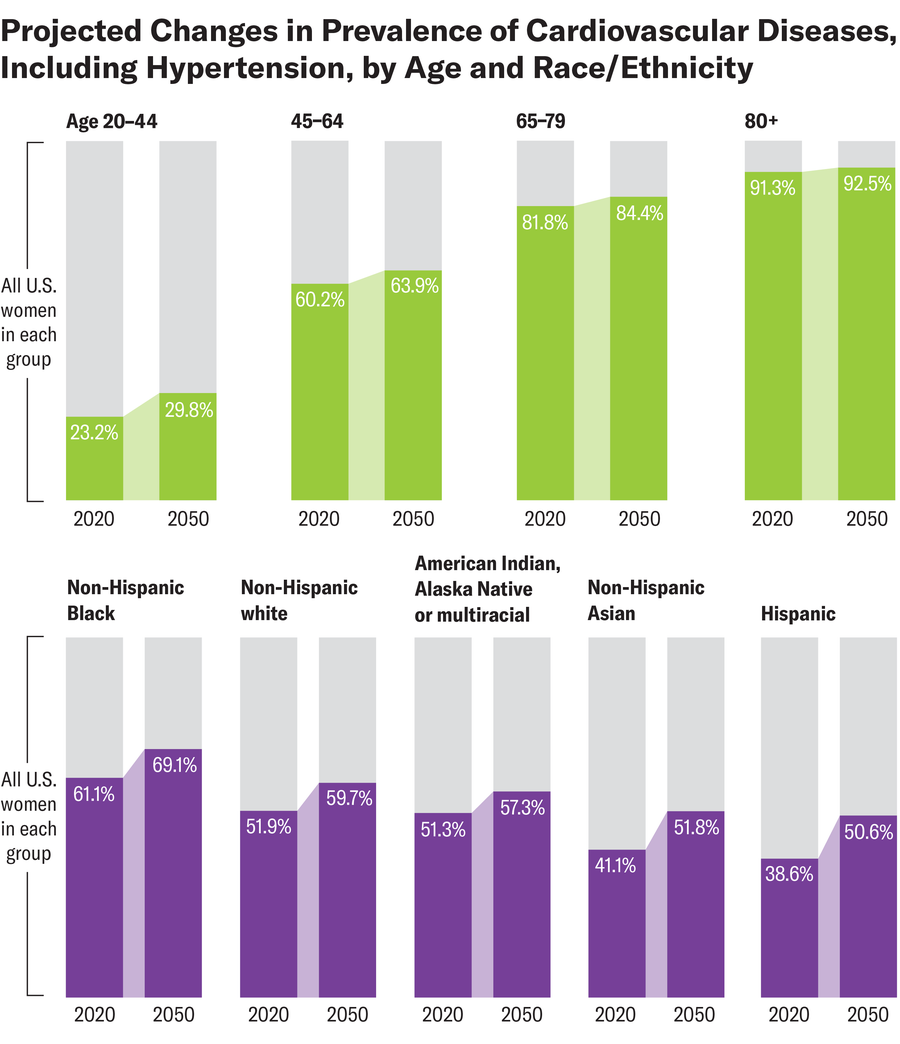
The study, published today in Circulation, also shows an alarming uptick of disease in younger women: nearly a third of all women between age 20 and 44 will be diagnosed with some form of cardiovascular disease by 2050.
Amanda Montañez; Source: “Forecasting the Burden of Cardiovascular Disease and Stroke in Women in the United States through 2050: A Scientific Statement from the American Heart Association,” by Karen E. Joynt et al., in Circulation, Vol. 153. Published online February 25, 2026 (data)
The projection is “really a wake-up call,” says Karen Joynt Maddox, lead author of the study and a cardiologist at Washington University in St. Louis. She is also vice chair of the Council on Quality of Care and Outcomes Research at the American Heart Association, which publishes these forecasts every year.
“Despite all of our amazing advances in treating cardiovascular disease, we have not made many advances in preventing the disease. And in fact, the projections would suggest that we’re doing worse and worse in preventing the cardiovascular risk factors,” she says.
The estimates represent a setback in the fight against cardiovascular disease, says C. Noel Bairey Merz, a cardiologist at Cedars-Sinai Medical Center in Los Angeles, who was not involved in the study.
“We had this idea that maybe by the end of this century, cardiovascular disease would be a rare condition,” Bairey Merz says. “Up until 2010, we had gotten cardiovascular disease down to one in four women, and now we’re back to one in three. It’s a sad reality.”
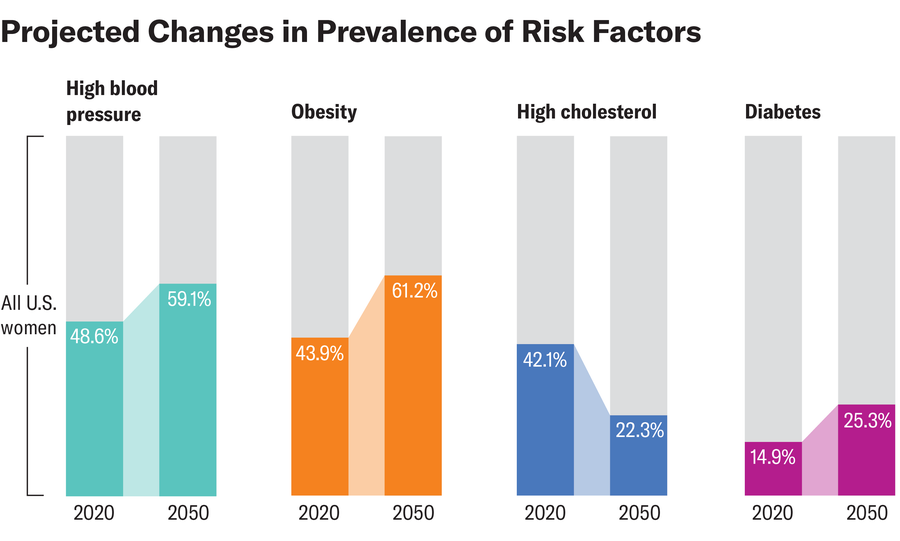
Hypertension—a form of high blood pressure that is an early risk factor of heart disease—could spike, according to the projections. Nearly 60 percent of women will have high blood pressure by 2050—up from 50 percent in 2020. And the rates of numerous cardiovascular conditions, such as coronary disease, heart failure, stroke and atrial fibrillation could all rise slightly, according to the study. By 2050, the prevalence of diabetes could increase by 10 percent, while that of obesity may increase by about 17 percent. Similar trends were observed in girls aged two to 19, with obesity predicted to increase from 19.6 percent to 32 percent by 2050.
“Cardiovascular disease is a life course disease. We can see risk factors start in childhood,” Joynt Maddox says. “I worry a lot about the increases that we’re projecting in young people, about setting people up for having heart problems when they’re in their 30s and 40s and 50s instead of their 60s and 70s and 80s.”
Amanda Montañez; Source: “Forecasting the Burden of Cardiovascular Disease and Stroke in Women in the United States through 2050: A Scientific Statement from the American Heart Association,” by Karen E. Joynt et al.,
Older women have a higher prevalence of disease, but cardiovascular risk factors are high and rising in younger groups. Those two trends could feed each other in a vicious cycle, Joynt Maddox explains. As women age, they might experience greater rates of cardiovascular disease associated with a prior heart or metabolic issue. People with a past history of stroke and heart attacks are more likely to die from heart failure years later.
Similar trends could be seen in men, Joynt Maddox says. “It’s not that women are uniquely experiencing the increase in obesity or high blood pressure, but there are additional layers on top of that,” she adds.
Part of the reason why women may be at particular risk could relate to the significant hormonal changes they experience throughout life, including during menstruation, pregnancy and menopause, Joynt Maddox says. Determining how these life events affect heart health will require more research, but these are “issues that we can definitely build upon,” Bairey Merz says.
Socioeconomic and demographic factors also affect outcomes. For example, Black women have the highest incidence of high blood pressure, obesity and diabetes, which are all cardiovascular disease risk factors, and this is expected to still be the case in 2050. They could also see the gr
eatest jumps in heart failure and stroke, according to the new predictions.
“The double whammy is these intersectionalities—you’re Black or brown, and you live in a rural or underserved area, and you have absolutely no access to health care or insurance,” Bairey Merz says.
These racial health disparities are well documented, but the new forecast underscores the need for better prevention measures and health care policies, Joynt Maddox says. New glucagonlike peptide 1 (GLP-1) drugs, for example, could help mitigate rates of cardiovascular disease and obesity. How much GLP-1 drugs will do this “is an enormous unanswered question,” says Joynt Maddox, adding that the data the projections are based on do not fully overlap with the rise in GLP-1 drugs. “But I’m optimistic that it’s going to be part of helping us bend the curve.”
.
 KATERYNA KON/SCIENCE PHOTO LIBRARY/Getty Images
.
.
Click the link below for the complete article:
.
__________________________________________
 James' World 2
Leave a comment