Deep down in the Arctic Ocean, life becomes bizarre. One might suppose that at its greatest depths, the icy, dark water would be inhospitable to much, but a new discovery reminds us that that is far from the case.
Off the coast of Greenland, the deep seafloor is littered with towering mounds made of crystallized methane and other gases. Known as the Freya hydrate mounds, these structures act like a “frozen reef,” a haven for creatures that have evolved to live in environments unlike any other on Earth.
In a new paper published in Nature Communications, scientists document the deepest ever found of these mounds, at 3,640 meters—or some 2.26 miles—below the surface. The discovery was made as part of the Ocean Census Arctic Deep–EXTREME24 expedition to explore and research the Arctic environment and document ocean life using tools such as underwater robots.
Incredibly, the mounds, which are also known as gas hydrate cold seeps, release methane gas flares some 3,300 meters up into the water—the tallest such flares ever recorded. Over time, the mounds collapse and reform, a dynamic process that the researchers say gives insights into the Arctic’s various ecosystems.
“These are not static deposits,” Giuliana Panieri, a study co-author and a professor at the Arctic University of Norway, said in a statement about the new research. “They are living geological features, responding to tectonics, deep heat flow, and environmental change.”
Gathered at the mounds are chemosynthetic creatures—life that has evolved to depend not on sun-powered photosynthesis for food but on chemical reactions instead. Some of the creatures seen at the Freya mounds are also found at hydrothermal vents, or fissures in the seafloor through which hot, chemical-laden water erupts, the researchers said, suggesting these ecosystems may be more intertwined than previously thought.
“The links that we have found between life at this seep and hydrothermal vents in the Arctic indicate that these island-like habitats on the ocean floor will need to be protected from any future impacts of deep-sea mining in the region,” said Jon Copley, a study co-author and a professor at the University of Southampton in England, in the same statement.
Film and Writing Festival for Comedy. Showcasing best of comedy short films at the FEEDBACK Film Festival. Plus, showcasing best of comedy novels, short stories, poems, screenplays (TV, short, feature) at the festival performed by professional actors.

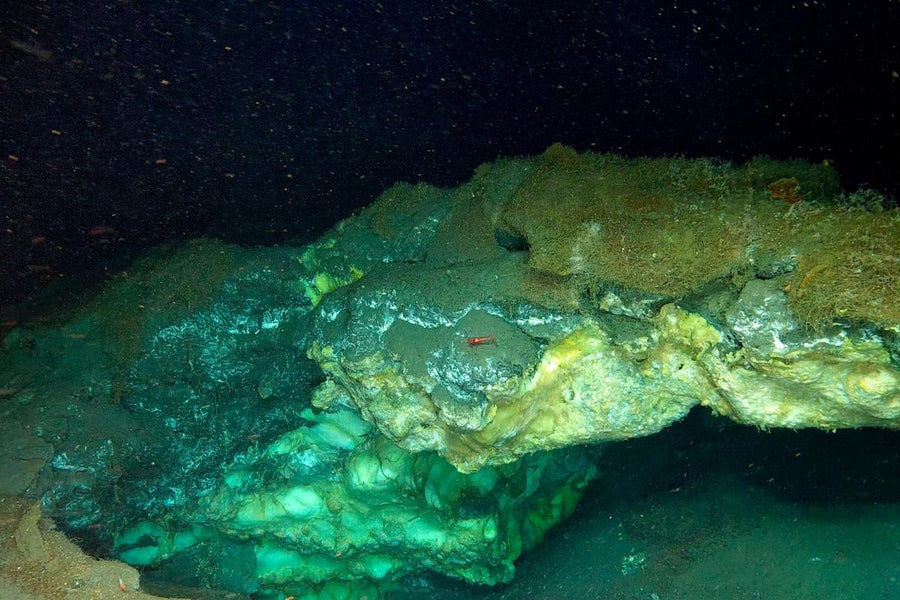 UiT / Ocean Census / REV Ocean
 James' World 2
Leave a comment