From graceful figure skaters to brutish ice hockey players, the act of wearing ice skates can transform a frozen pond from a nightmare to navigate into a dream.
Although ice itself is normally a slick, low-friction surface that’s very hard to steady yourself on and move across in a controlled fashion, the act of ice skates makes it not only possible, but easy.
This is due to a combination of properties that are specific to water and its solid form, ice, that are only rarely found in nature. The ability to ice skate truly is a miracle of physics.
Imagine there’s a large, flat sheet of ice out in front of you, and someone unceremoniously shoves you across it at a high speed. What are you to do? If you’re wearing conventional shoes without crampons or blades attached to them, you’re going to have a difficult time. Ice is a very low-friction surface, and there’s very little you’re going to be able to do to change your momentum without slipping and perhaps falling down. You’re bound to simply slide along until either you run into an obstacle or slowly come to rest, likely a long way from where you began.
But if you put thin blades on the bottoms of your shoes — e.g., wear ice skates — you’ll discover that the situation is very much different in this case. As long as you can remain on your feet, with only your blades touching the ice, you’ll find that you can control your motion relatively easily, simply by applying forces through your feet (and the blades) to the ice down below. You can speed up, slow down, or change direction at will, and only if you fall or lose control of your skates (and body) will you wind up in a similar situation to the no ice skate case. It might seem miraculous, but there’s physics behind what you’re experiencing at each and every step. Here’s how it all works.
On Earth, the most common form that ice takes is with a hexagonal crystalline ice structure, which explains why snowflakes typically exhibit hexagonal symmetry as well as the shape of these lab-grown plate-on-pedestal crystals.
Credit: K.G. Libbrecht, arXiv preprint, 2015
Here on the surface of Earth, at normal atmospheric pressure and wherever you have sub-freezing temperatures, almost all of the ice you’ll encounter comes in a very specific configuration: normal hexagonal crystalline ice, sometimes known as Ice Ih. Ice, just like water, is made up of primarily a very simple molecule (H2O) with two hydrogen atoms anchored by a single oxygen atom, and with a very specific bond angle between them. Whereas in liquid water, the bond angle is 104.5° between the connecting lines of each O-H bond, in normal hexagonal crystalline ice, the bond is lengthened into the shape of a more perfect tetrahedron: 109.5°.
Under different temperature and pressure conditions found on Earth and elsewhere in the Universe, different possibilities arise for how those various molecules bind together, creating a massive variety of possible configurations. At present, there are a whopping 20 known phases of ice, including:
Ice Ih, which is normal hexagonal crystalline ice and the most common form of ice found on or near Earth’s surface,
Ice Ic, which is a cubic crystalline variant of ice whose oxygen atoms are arranged in a diamond structure, that often appear at the lower temperatures found in the upper atmosphere.
And amorphous ice, which has no crystalline structure and is sometimes formed at ambient atmospheric pressure,
in addition to the higher-pressure/temperature phases of ice: Ice 2 through Ice 18.
At a variety of temperatures and pressures, water will take on a variety of states: solid, liquid, and gas. With high enough pressures, so long as your ice temperature remains above -8 F (-22 C), ice can melt from the Ih phase, the most common phase found on Earth, into the liquid phase.
Credit: Cmglee/Wikimedia Commons
However, it’s the most common form of ice, plain old Ice Ih, that’s relevant for the problem of ice skating. Normally, under this configuration, the water molecules within ice are arranged in a hexagonal crystal lattice, and adding new water molecules to these icy structures will simply result in the growth of the main crystal in the same ongoing pattern. Adding more molecules won’t change the structure of your ice; it will simply cause those new molecules to bind together to the available spaces open in the underlying lattice, keeping the same “type” of ice but just making more and more of it.
If you want to change the form of ice that you have, you can always either heat it or cool it, or apply a varying amount of pressure to it. Those changes in temperatures and/or pressures can often coax ice into a new configuration, as it’s sometimes more energetically favorable for those molecules (and the atoms within them) to arrange themselves into a different form of ice.
However, the most common fate of hexagonal crystalline ice — the type of ice found on Earth’s surface — is that either heating it or compressing it will simply cause it to melt.
.
The grooves seen on the rink ice after ice skaters have passed over it aren’t due to the ice skates “scratching” the surface of the ice, but rather to the pressure from the blades melting the ice beneath them, with the ice then re-freezing after the blades have left them. Credit: Adobe Stock/Big Think/Ben Gibson
Film and Writing Festival for Comedy. Showcasing best of comedy short films at the FEEDBACK Film Festival. Plus, showcasing best of comedy novels, short stories, poems, screenplays (TV, short, feature) at the festival performed by professional actors.

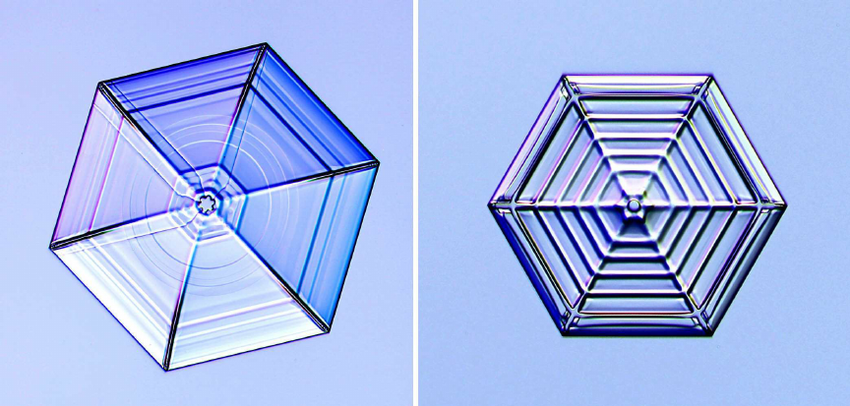 On Earth, the most common form that ice takes is with a hexagonal crystalline ice structure, which explains why snowflakes typically exhibit hexagonal symmetry as well as the shape of these lab-grown plate-on-pedestal crystals.
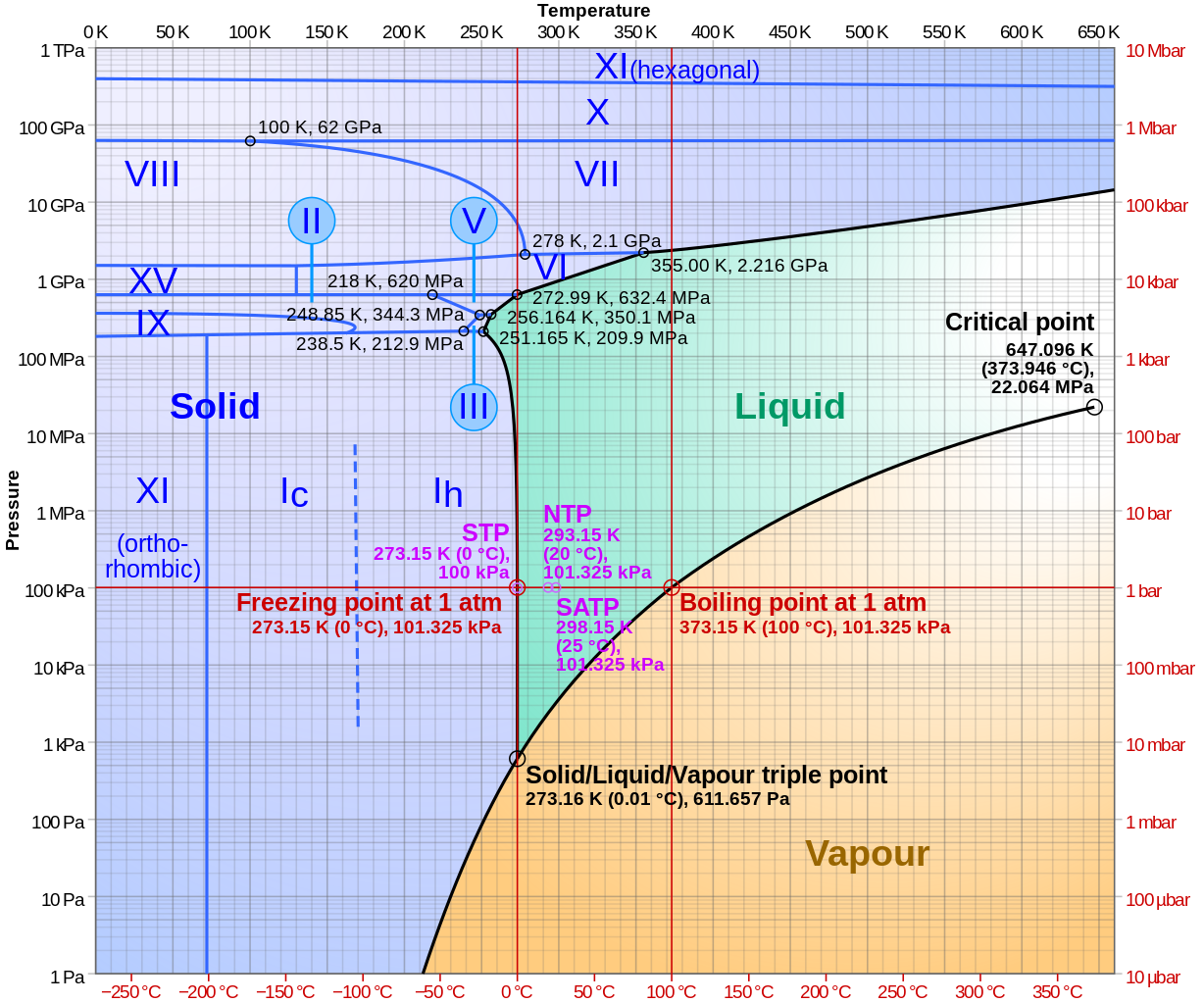 At a variety of temperatures and pressures, water will take on a variety of states: solid, liquid, and gas. With high enough pressures, so long as your ice temperature remains above -8 F (-22 C), ice can melt from the Ih phase, the most common phase found on Earth, into the liquid phase.
 The grooves seen on the rink ice after ice skaters have passed over it aren’t due to the ice skates “scratching” the surface of the ice, but rather to the pressure from the blades melting the ice beneath them, with the ice then re-freezing after the blades have left them. Credit: Adobe Stock/Big Think/Ben Gibson
 James' World 2
Leave a comment