
Click the link below the picture
.
The pill version of Novo Nordisk’s blockbuster weight-loss medication, semaglutide, failed to slow down Alzheimer’s progression in an initial analysis of two clinical phase 3 trials. The company behind the weekly injectable diabetes medication Ozempic and weight-loss drug Wegovy, which are also known as GLP-1 drugs, announced the top-line results today.
Endocrinologist Daniel Drucker says that the trials were well-done, but the results are “a setback for the field.” Novo Nordisk confirmed in a statement to Scientific American that the company is ending its semaglutide trials on Alzheimer’s, including tests involving the injectable version of the drug.
“GLP-1 [drugs] have given us so many wonderful results, but tackling these very challenging brain disorders has been disappointing,” says Drucker, who has consulted for Novo Nordisk in the past but does not currently. “No one expected that it was going to shut down the progression of Alzheimer’s disease, but there was a hope that we would see some benefit, and we didn’t.”
Animal models and reviews of real-world data have previously suggested that GLP-1 drugs might reduce the risk or slow development of Alzheimer’s. The reason why remains elusive, although researchers, including Drucker, suggest that these drugs might reduce inflammation associated with certain neurological conditions.
“GLP-1 does reduce inflammation in many parts of the body, and inflammation does drive part of the pathology of Alzheimer’s,” he says.
Novo Nordisk’s trials, called evoke and evoke+, involved 3,808 people aged 55 to 85 who had early-stage Alzheimer’s, classified as having mild cognitive impairment as a result of the disease. During most of the 156-week trial, the researchers gave half the participants 14 milligrams of oral semaglutide once a day, while the other half received a placebo.
Participants who took the drug did show some improvements in Alzheimer’s biomarkers, but treatment didn’t delay disease progression, according to the company.
Drucker says there are many potential explanations why oral semaglutide didn’t work as hoped. The fatty-acid structure surrounding semaglutide might have prevented it from being able to penetrate certain brain regions, such as the hippocampus, which controls memory and cognitive function. Past studies evaluating the connection between GLP-1 treatment and Alzheimer’s risk or development have mostly drawn from data on the injectables, raising questions on whether changing how people take the drug or the dosage could elicit a different outcome, Drucker says, though he adds that giving higher doses to some older adults may also come with additional risks.
“These are not wonder drugs that will fix everything that is wrong with us, and that’s why we have to do the clinical trials, and we need rigorous evidence,” Drucker says, adding that Novo Nordisk deserves credit for doing the trials despite the low odds of success.
Novo Nordisk plans to present the findings at the Clinical Trials in Alzheimer’s Disease (CTAD) conference next week and the full datasets at the AD/PD Alzheimer’s and Parkinson’s Diseases Conference in March 2026.
“We will continue to analyze the data and may not have the answer to the ‘why’ next week when we share the results at CTAD,” a Novo Nordisk spokesperson told Scientific American.
.
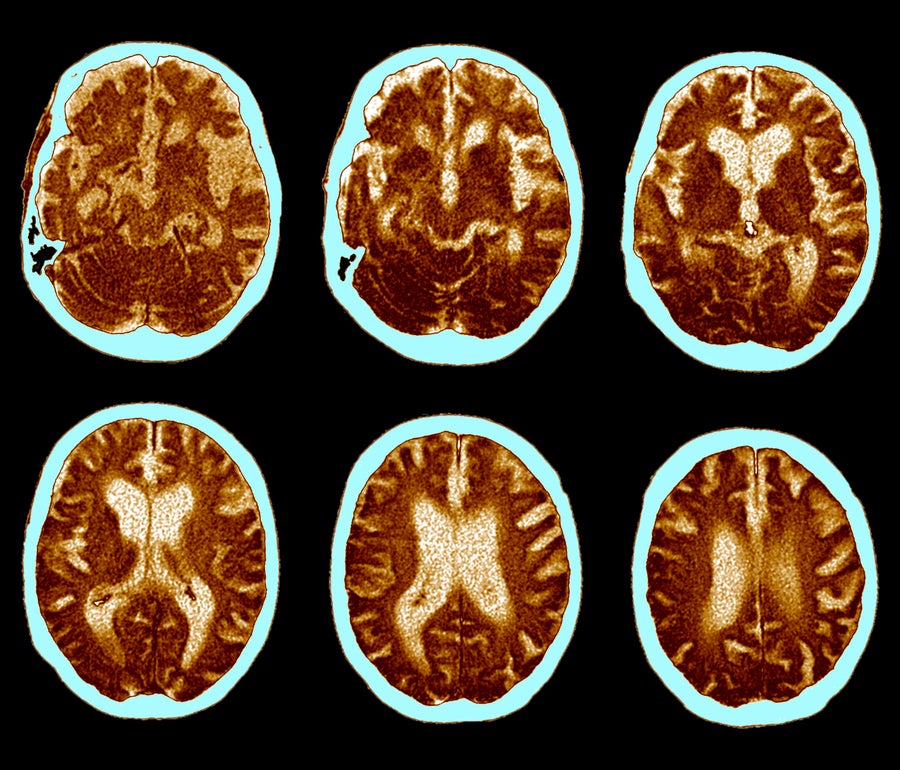
Brain CT scans of Alzheimer’s disease. ZEPHYR/Science Source
.
.
Click the link below for the complete article:
.
__________________________________________
 James' World 2
Leave a comment