
Click the link below the picture
.
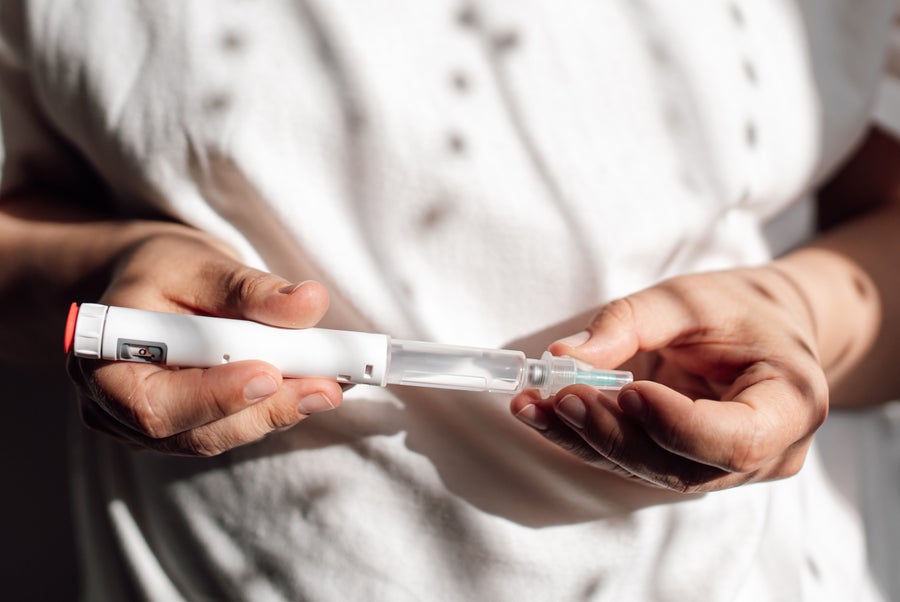
People taking popular new weight-loss drugs such as Wegovy and Zepbound often celebrate the number of pounds they shed and the related health benefits, but many doctors at weight-loss clinics are noticing a puzzling response in certain individuals. Andres J. Acosta, a gastroenterologist at the Mayo Clinic, says some of his patients have expressed frustration and disappointment as they watch friends or colleagues drop significant weight while taking the drugs but lose little or no weight themselves—even when they adhere to the medication’s instructions perfectly.
“They see themselves as a failure,” Acosta says. But the drugs’ effectiveness is likely outside of their direct control—scientists think their nonresponse could be related to what’s driving their excess weight in the first place.
About 12 percent of Americans have reported using one of the new drugs—known as glucagon-like peptide 1 (GLP-1) receptor agonists—for weight loss. Real-world data show that as many as one in four people on these drugs are “nonresponders,” which many experts define as those who lose less than 5 percent of their body weight after three months of taking a GLP-1 drug. (Five percent is the threshold above which people start to see improvements in health.) Clinical trials funded by Novo Nordisk on semaglutide, the active ingredient in the company’s weight-loss drug Wegovy and diabetes medication Ozempic, found that up to 23 percent of people fell into the nonresponder category. In Novo Nordisk’s latest trial, giving people a higher semaglutide dose didn’t decrease the proportion of nonresponders. To better understand why people show such big differences in their response to these medications, scientists have started investigating their underlying biology.
No two people respond exactly the same way to any weight-loss approach—whether it involves medication, surgery or lifestyle changes such as diet and exercise—because obesity is a complex phenomenon. GLP-1 drugs cause weight loss primarily by making people feel full. Variations in biological pathways that influence that mechanism—and that lead to excess weight or obesity—may make some people more likely to benefit from the drugs than others.
Researchers already know some factors that may influence how well someone responds to the drugs. Overall, people with type 2 diabetes who are taking the medication tend to lose less weight than those taking it for weight loss, and men, on average, lose less weight than women. But researchers suspect genetics may also play a role.
A small fraction of people with obesity carry rare, single-gene mutations that cause what is known as “monogenic obesity,” which leads to health issues at an early age. But for most people, obesity is thought to be polygenic, meaning it can originate from thousands of genetic variants. Environmental, biological, and behavioral factors also play a role, says Ruth Loos, a geneticist specializing in obesity and metabolism at the University of Copenhagen.
Acosta and his colleagues have worked on identifying four distinct biological phenotypes, or traits, of people with excess weight that may influence how they respond to the new weight-loss drugs. For example, some people have a “hungry brain” phenotype and need an abnormally high number of calories to feel full compared to others. On the other hand, people with a “hungry gut” phenotype may become full quickly but are hungry again soon after. The team’s latest study, published in August, found that some people felt full after consuming 140 calories in one sitting, whereas others needed more than 2,000. Although factors such as sex, body composition, and hormone levels helped explain this difference, genetics also seemed to play an important role.
Acosta and his team developed a score that combined genetic and physiological data to predict these differences in the number of calories needed to feel satiated. Using this score, the researchers found that people with the “hungry brain” phenotype tended to respond poorly to liraglutide, an early-generation GLP-1 drug, but they did better on phentermine-topiramate, a non-GLP-1 drug that acts on appetite suppression in the brain but is controversial for its cardiovascular risks. On the other hand, those with a “hungry gut” phenotype responded better to liraglutide. Acosta, also a founder and stockholder of an obesity precision medicine company involved in this research, says it might be because GLP-1 drugs prolong feelings of fullness after meals. The team saw similar results with semaglutide in unpublished results presented at the American Gastroenterological Association conference last year.
Other research groups are exploring specific genes that might influence GLP-1 drug response. Scientists at the Cleveland Clinic are investigating neurobeachin, a gene that appears to influence how people lose weight on GLP-1 drugs. The amount of variation—and the specific types of variations—in the neurobeachin gene can be used to create a genetic score that predicts a person’s response to the medication, says Daniel Rotroff, a precision medicine researcher at the Cleveland Clinic. In Rotroff and his colleagues’ analysis, people who had a higher score for these variations were at least 50 percent more likely than people who scored lower to not lose any weight on liraglutide. (The score was unable to predict how someone would respond to semaglutide.)
Some clues could explain why the gene might affect a person’s response to GLP-1 drugs. Variations in neurobeachin might affect how efficiently an enzyme called protein kinase A (PKA) helps the hypothalamus, a brain region that regulates appetite suppression. Because GLP-1 is known to activate PKA in other cells, genetic variations of neurobeachin may “ultimately impact how well the medication works for weight loss,” Rotroff explains.
.
 Iuliia Burmistrova/Getty Images
.
.
Click the link below for the complete article:
.
__________________________________________
 James' World 2
Leave a comment