From

Click the link below the picture
.
Weddings are beautiful. And as beautiful as they are, they are also expensive.
And while I still haven’t quite made my way down the aisle just yet, let’s say I’ve made my way through my fair share of weddings (as a bridesmaid in at least six, in fact). So I’ve seen some of the most grandiose of weddings, and also when couples decided to scale back. And almost in every instance, it’s been my friends who decided to be a bit more frugal (and use the money to invest in other ways), who have revealed being happy with the decision they made. While some of the others were kicking themselves for things they later thought just weren’t worth it.
It makes complete sense. In 2025, the national average cost of a wedding in the U.S. is hovering around $36,000. And that’s the national average. Because couples that I know in major cities such as New York, D.C., Atlanta and San Francisco have spent three and four times as much as that amount. For many couples, that’s a price tag that causes second thoughts: what if that same money went into something more lasting?
So what are we seeing happen? Well, more and more Black couples are choosing to redirect what would have been their wedding budget into buying a home. For some, that means opting for a modest courthouse ceremony and skipping the reception altogether. For others, it’s about scaling down a traditional wedding—maybe hosting a backyard gathering or an intimate dinner—so they can put tens of thousands toward a down payment instead. However it looks, the choice shows a growing sentiment that wealth-building should come before extravagance. And in this economy, when you sit and think about it, can you really blame them?
Weddings vs. Down Payments
The numbers make this decision easier to justify. A wedding that costs $36,000 is roughly equal to a nine percent down payment on a $400,000 home, the current median price in many U.S. markets. According to Bankrate, first-time homebuyers in 2024 put down a median of nine percent of a home’s purchase price. That means a wedding budget could realistically unlock the front door to a couple’s first home.
Wedding costs, meanwhile, continue to climb. And with the average income needed to buy a home increasing year after year, it can almost seem frivolous to put so much towards one day, when many can’t afford basic living expenses. So much so, that it’s painful to really even think about it if you’re a 2025 or 2026 bride. Inflation has hit everything from catering to floral design, and planners say couples can expect to pay more now than just five years ago. The “wedding tax”—the premium vendors add for bridal services—only widens the gap. Many couples leave the experience not just newly married but also newly indebted, with credit card balances or loans that linger far beyond the honeymoon. For Black couples, who already contend with systemic barriers to wealth-building, that kind of debt isn’t something we can afford to take on.
Closing The Gap
The racial wealth gap in America remains depressing, and homeownership is one of the clearest indicators of it. The National Association of Realtors reported that the Black homeownership rate in 2023 was just 44 percent, compared to 73 percent for White households. That nearly 30-point difference reflects decades of discriminatory lending practices, redlining, and unequal access to mortgage credit. But buying property is closing a generational gap that has kept Black families from accessing the same wealth-building opportunities as our White peers.
Encouragingly, the tide is shifting. In 2024, 62 percent of Black buyers were purchasing their first home, according to National Mortgage Professional. That’s a higher share than the overall first-time buyer market. It shows a determination among Black couples to prioritize ownership even if it means challenging cultural expectations around weddings. Skipping the traditional big day may raise eyebrows among family or friends, but for many couples, the long-term benefits outweigh the short-term optics.
Redefining Black Love
While the financial logic is clear, this trend is also cultural. Weddings have long been positioned as the ultimate milestone, especially in communities where public celebrations of love carry deep significance. The dress, the cake, and the first dance are rituals passed down across generations. Social media has amplified the pressure, with Instagram and TikTok serving as highlight reels of elaborate receptions (if you haven’t already been on #WeddingTok, save yourself and don’t get on that side — it can really warp your perception of how much weddings really cost). But as costs soar and economic realities shift, thankfully many Black couples are rewriting the narrative. They are showing that intimacy, stability, and shared vision can matter more than spectacle, and that’s really how it should be.
.
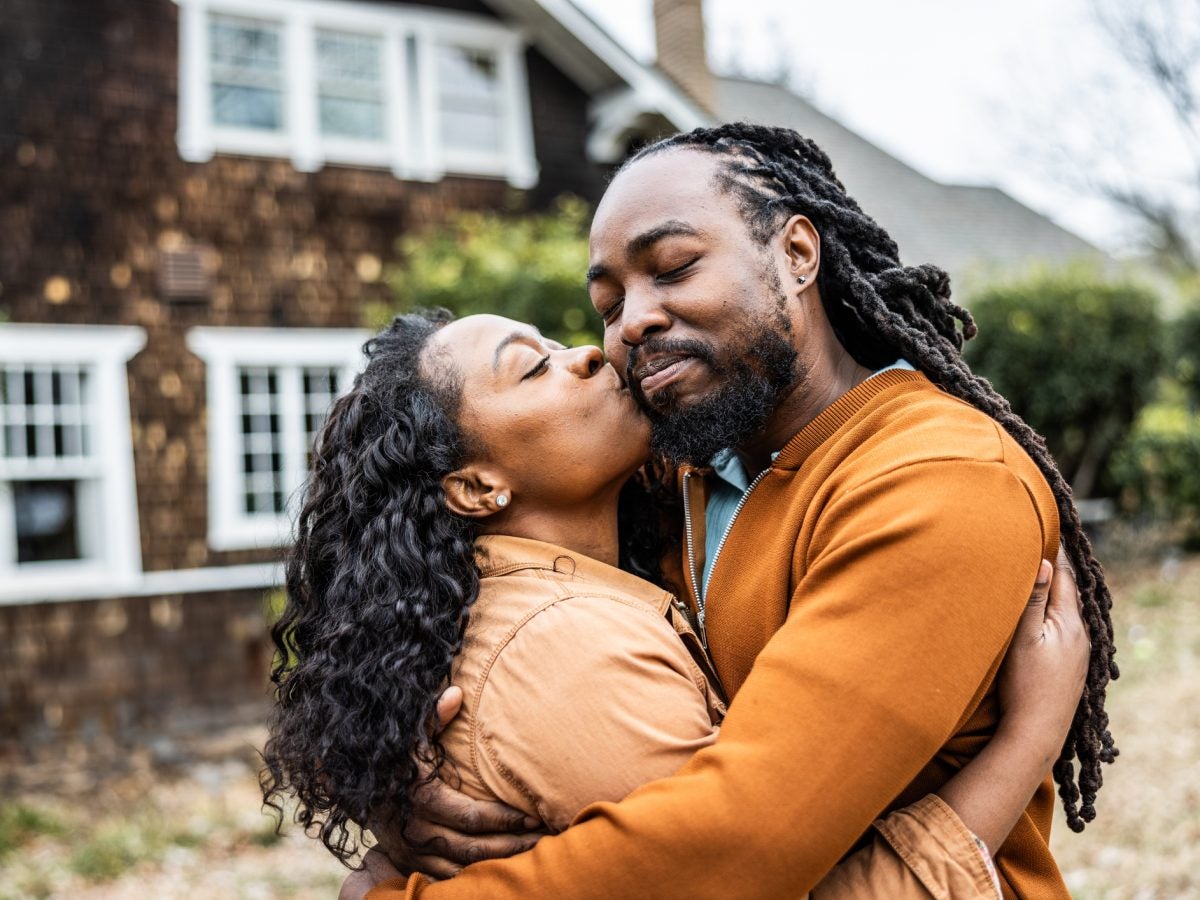 Portrait of young couple in front of their home
.
.
Click the link below for the complete article:
.
__________________________________________
 James' World 2
Leave a comment