
Click the link below the picture
.
The Supreme Court upended the constitutional separation of powers on Friday afternoon with a brief order allowing Donald Trump to unilaterally cancel $4 billion in foreign aid appropriated by Congress. In an apparent 6–3 decision, the conservative supermajority greenlit Trump’s so-called “pocket rescission,” ensuring that the money will expire before its intended beneficiaries receive it. It offered a single page of vague, threadbare justification, suggesting that the president’s authority over foreign affairs outweighs Congress’ control over spending.
This view marks a radical rewriting of the Constitution that shifts a massive amount of power from the legislative branch to the executive. It essentially awards Trump a line-item veto over any part of the budget that is remotely connected to foreign policy—and, quite possibly, every dollar appropriated by Congress. And the court did all this without full briefing, oral argument, or a signed ruling, abusing the shadow docket yet again to hand Trump one of the biggest wins of his second term so far.
Friday’s decision in Department of State v. AIDS Vaccine Advocacy Coalition revolves around $4 billion that Congress explicitly appropriated to fund various programs overseas. Lawmakers committed the money to, among other things, democracy-building work, election integrity, climate resilience projects, and gender equality initiatives. But the Trump administration refused to disburse it to its intended recipients, claiming that it was not “aligned with the foreign policy of the president.”
This executive withholding of an appropriation is called an impoundment, and it is flatly illegal. In 1974, after many tussles with Richard Nixon over this issue, Congress enacted the Impoundment Control Act (ICA) to prevent future administrations from canceling money that it had appropriated. Under the law, a president must seek Congress’ permission to rescind “discretionary” spending, and give a reason for his request. If Congress does not grant permission within 45 days, the executive branch must spend the money.
But Trump insists that he has discovered a loophole in the ICA, which his Justice Department calls a “pocket rescission.” The administration sat on the $4 billion in aid until the final 45 days of the fiscal year, which ends on Sept. 30, when the money will lapse. Then, less than 45 days out from that deadline, he sent Congress a letter asking to cancel the funds under the ICA. Congress will not approve this impoundment. But Trump contends that, because he has asked permission, he can simply refuse to spend the money until the fiscal year ends—then let it expire forever.
In response to this gambit, several intended beneficiaries of the aid filed a lawsuit demanding that the government pay out the money. Lower courts ruled in their favor, holding that the Trump administration cannot manipulate the ICA from a restriction on impoundment to a license for impoundment. So the Justice Department asked the Supreme Court for emergency relief. And, predictably, the Republican-appointed justices provided it on Friday in an unsigned shadow docket order.
The majority essentially offered two sentences of explanation. First, it held that the ICA likely “precludes” the parties’ suit “to enforce the appropriations at issue here.” Second, the president had a stronger claim of injury, because “the asserted harms to the executive’s conduct of foreign affairs appears to outweigh the potential harm faced by respondents.” Both of these conclusions are astoundingly backward, which may be why the majority did not try to flesh them out: to describe the majority’s reasoning is to refute it.
Start with the notion that the ICA bars private plaintiffs from suing to receive appropriations to which they are entitled. At the outset, this theory should raise an eyebrow, since it harms the very parties—victims of illegal impoundments—that the law was designed to help. But set that aside. The majority seems to think that private plaintiffs can’t sue because the ICA explicitly empowers only one party, the Comptroller General, to sue over impoundments. That’s what Trump’s Justice Department argued. (As Justice Elena Kagan noted in dissent, though, it only adopted this argument recently, and took the opposite position just last month.)
.
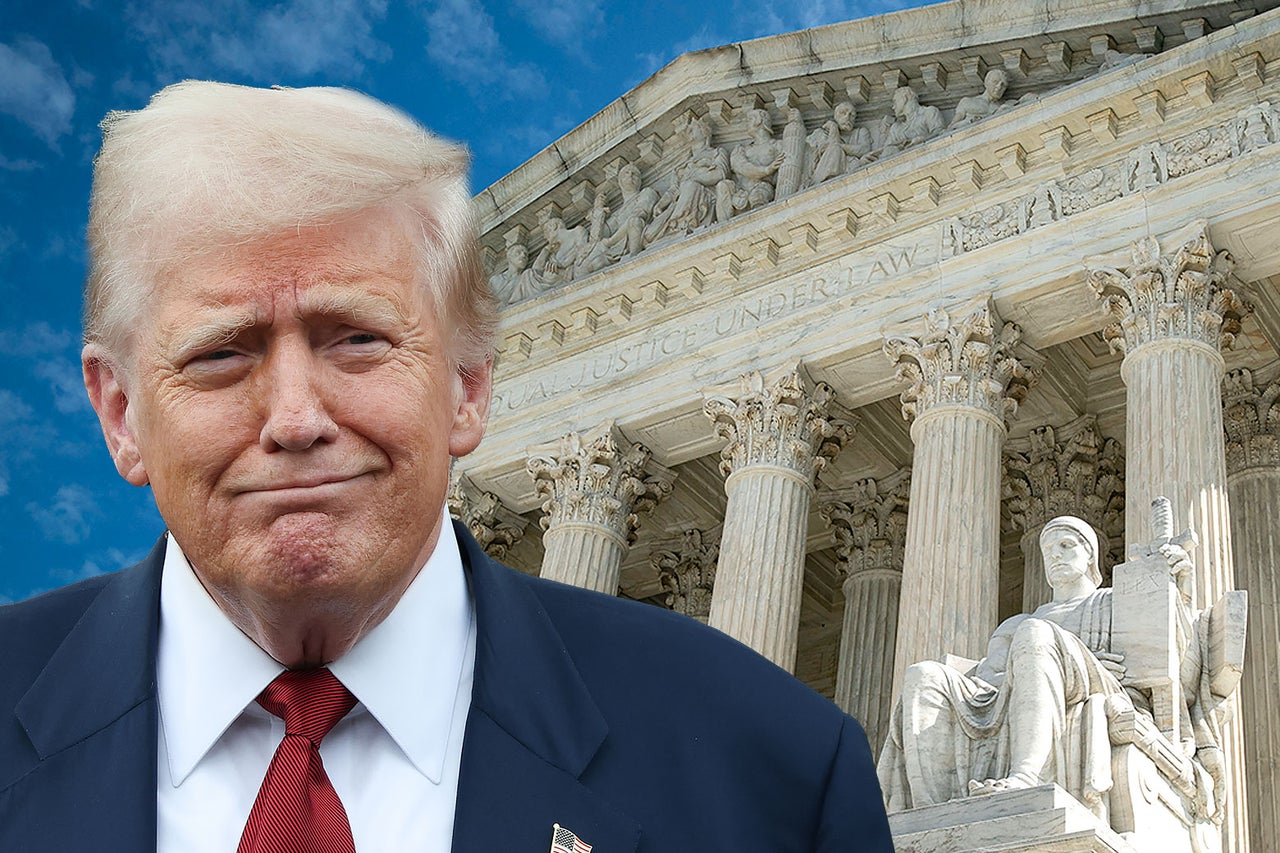
Photo illustration by Slate. Photos by Win McNamee/Getty Images and Al Drago/Getty Images.
.
.
Click the link below for the complete article:
.
__________________________________________
 James' World 2
Sep 28, 2025 @ 13:08:54
Do you believe that Congress has the power to execute laws?
LikeLike