
Click the link below the picture
.
Rattling departures of high-ranking officials at the Centers for Disease Control and Prevention appear to be sending the U.S. public health agency into unsettling disarray, experts say, after the White House abruptly dismissed CDC director Susan Monarez on Wednesday evening following alleged disagreements on health policy.
In a post on the social media platform X earlier on Wednesday, the Department of Health and Human Services initially announced that Monarez was no longer CDC director. Later that evening, Monarez’s attorneys issued a statement that said she hadn’t resigned or been told she’d been fired. White House spokesperson Kush Desai swiftly responded with a statement that said Monarez had been formally terminated. But President Donald Trump had directly appointed Monarez, and she was sworn in by the U.S. Senate on July 31; her attorneys have insisted she can only be fired from her position directly by the president, who could theoretically overturn the decision. If not reinstated, Monarez will have only held her position as CDC head for a few weeks—the shortest-serving director in the agency’s history.
The HHS and its leader, Secretary of Health and Human Services Robert F. Kennedy, Jr., “have set their sights on weaponizing public health for political gain and putting millions of American lives at risk,” wrote Monarez’s attorneys in a post on X on Wednesday evening. “When CDC Director Susan Monarez refused to rubber-stamp unscientific, reckless directives and fire dedicated health experts, she chose protecting the public over serving a political agenda. For that, she has been targeted. Dr. Monarez has neither resigned nor received notification from the White House that she has been fired, and as a person of integrity and devoted to science, she will not resign.”
A replacement CDC director has not been publicly announced. The HHS has not responded to Scientific American’s request for comment at the time of publication.
“Many of the most prominent leaders in the organization have said ‘enough.’” —Georges Benjamin, executive director of the American Public Health Association
The confusion comes amid other turmoil at the CDC. The agency has had to grapple with the administration’s unexpected terminations of staff members and advisory boards, its mixed messaging on vaccines and outbreaks, and a shooting at the CDC’s main campus that killed a responding police officer.
“This is the capstone of mismanaging the CDC: basically decapitating the head of the organization,” says Georges Benjamin, executive director of the American Public Health Association. “Because of the dysfunctional work environment, many of the most prominent leaders in the organization have said ‘enough.’ They’re beginning to leave because they know that they cannot do their job in a credible way.”
At least four top agency officials also announced resignations shortly after: Debra Houry, the CDC’s chief medical officer; Daniel Jernigan, director of the National Center for Emerging and Zoonotic Infectious Diseases; Demetre Daskalakis, director of the National Center for Immunization and Respiratory Diseases; and Jennifer Layden, director of the Office of Public Health Data, Surveillance and Technology. These major leadership vacancies are bound to have drastic ripple effects on all facets of public health in the nation—from monitoring outbreaks to rolling out vaccines and protecting against biosecurity threats.
“It’s not just about the firing of the CDC director. It’s the fact that CDC has, basically, since January, been hemorrhaging some of the world’s top experts—people who have many decades of experience in knowing how to protect the United States,” says Jennifer Nuzzo, an epidemiologist and director of the Pandemic Center at Brown University. “It should be deeply concerning to everyone because it signals an intention to destroy all of the systems that the United States has put in place, that we have built up through considerable investment over the span of decades, to make sure that we are protected from deadly health emergencies like infectious disease outbreaks or biological attacks.”
Scientific American spoke with Benjamin and Nuzzo about what has happened with the CDC leadership exodus and what it will mean for the health and safety of people in the U.S.
[An edited transcript of the interview follows.]
What do we know about the reasoning behind the CDC director’s dismissal?
NUZZO: It’s just shocking and outrageous that they suddenly felt the need to fire her, I think, without cause. Monarez has long, credible experience working for multiple presidential administrations. She’s someone who has proven herself to be driven by evidence and not dogma. They knew all that when they hired her, and she’s not changed in that way
BENJAMIN: I suspect this was a precipitous decision on the part of the HHS secretary, but the real question is, ‘Who’s going to take the job now? Who’s credible?’ I mean, why would anybody take a science-based job where you know your boss doesn’t follow science? We know that Kennedy is a longtime antivaccine proponent and has continued to put out misinformation and disinformation. This current disagreement he has with the CDC director is quite interesting because Kennedy said nobody should trust him on medical advice, and yet he’s pushing out all the people who we can trust because of their scientific expertise and knowledge.
.
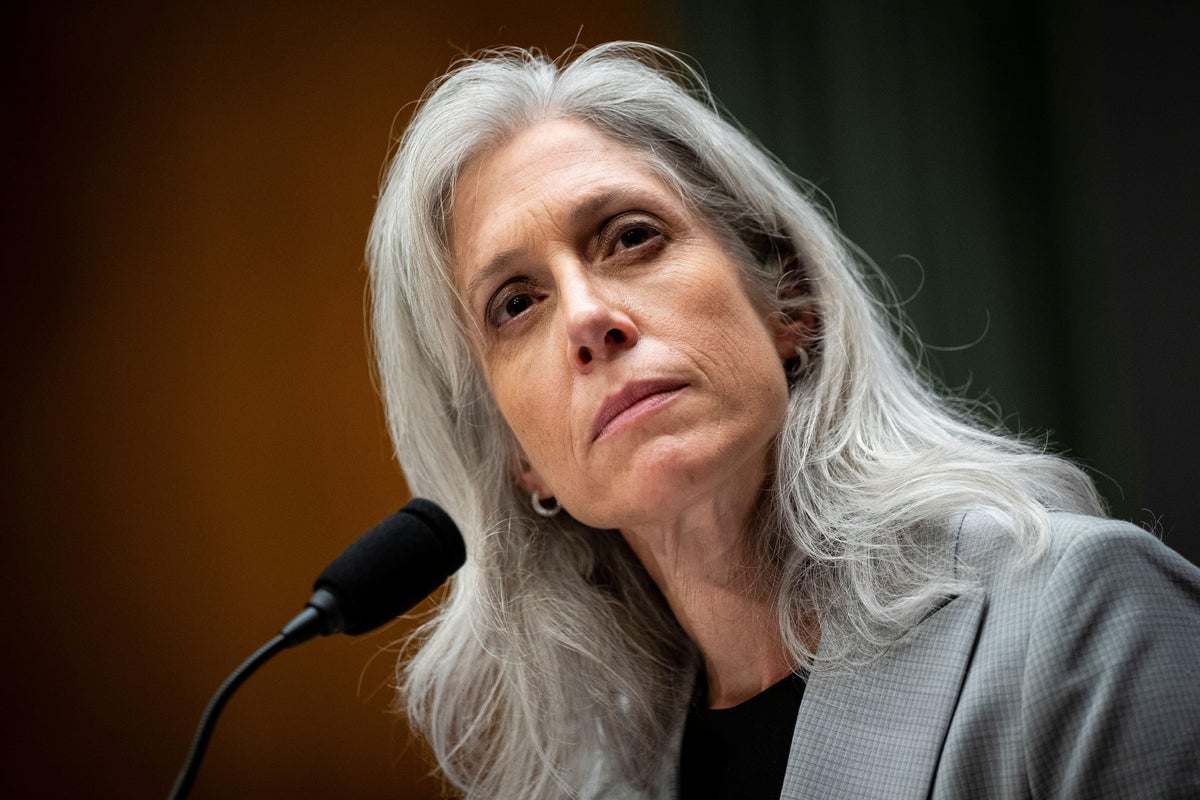
Susan Monarez testifies during a Senate Health, Education, Labor, and Pensions Committee hearing on her nomination to be Director of the CDC, at the U.S. Capitol, in Washington, DC, on Wednesday, June 25, 2025. Graeme Sloan/Sipa USA/Alamy Live News
.
.
Click the link below for the complete article:
.
__________________________________________
 James' World 2
Leave a comment