
Click the link below the picture
.
Just two months after reports warily noted that new world screwworms, flesh-eating parasites that are notorious for killing livestock, pets, and other animals, hadn’t “made it back into the U.S. yet,” they have—in the form of the country’s first human infection from the current outbreak in Central America. Screwworm larvae hitched a ride inside a person who had recently been to El Salvador, according to the Department of Health and Human Services.
The patient, a resident of Maryland, has been treated, and the threat to other people is low. “A human coming back with [larvae] is generally not going to lead to an outbreak because those humans are going to go get treated,” says veterinary entomologist Sonja L. Swiger of Texas A&M University. “These larvae are horrible. They eat your body, literally.”
The real danger is to livestock. The new world screwworm has been spreading steadily northward from Central America, mainly by traveling in infected animals, and poses a major threat to the U.S. meat industry. Last week, Secretary of Health and Human Services Robert F. Kennedy, Jr., determined that the advancing parasite signaled a “significant potential for a public health emergency” that could threaten national security, according to an HHS notice.
What is a screwworm?
Screwworms are the larvae of the fly Cochliomyia hominivorax, which lays up to 300 of them at a time inside open wounds or tender parts, such as the mouth, of warm-blooded animals. Once they hatch, the larvae corkscrew their way through living flesh as they consume it, causing extreme pain or, if left untreated, even death. After three to seven days, the larvae fall to the ground and burrow into the soil to pupate, transforming into flies. A female fly mates only once and carries around the sperm to lay about 3,000 eggs in her lifespan of up to 30 days.
How are screwworm infestations treated?
The best treatment is avoidance. Because the flies are attracted to open wounds—even something tiny such as a tick bite, according to the Centers for Disease Control and Prevention—people should cover all wounds, especially when sleeping outdoors, working near cattle or traveling in infected areas. Although the adult flies aren’t known to be in the U.S. yet, they are in southern Mexico.
If you suspect you have been attacked or infected, see a physician right away. The worms may be visible in the wounds. Each individual organism must be carefully extracted, which may require surgery. Currently, there are no drugs approved by the Food and Drug Administration for treating screwworm infestations.
Kennedy did declare, however, that the FDA can fast-track approval processes for antiparasitic drugs to be used in animals with screwworm infestations. (No cases from the current outbreak have been detected in animals in the U.S.) The FDA’s Center for Veterinary Medicine is now working with makers of animal drugs to identify promising medications. Veterinarians may also use drugs that are approved for other uses to treat screwworm infestations.
.
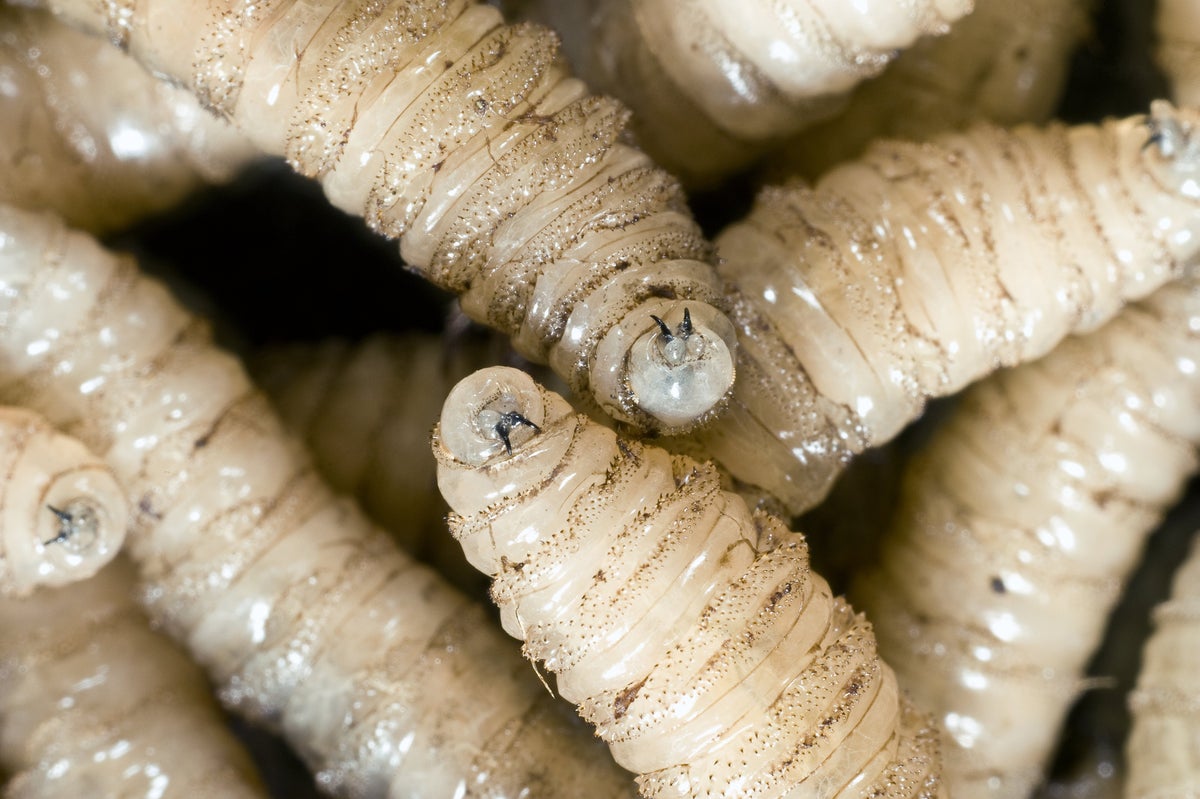
Screw-worm fly (Cochliomyia hominivorax) larvae use their sharp mandibles to dig into and eat away the living tissue of warm-blooded animals, including humans. Philippe Psaila/Science Source
.
.
Click the link below for the complete article:
.
__________________________________________
 James' World 2
Leave a comment