
Click the link below the picture
.
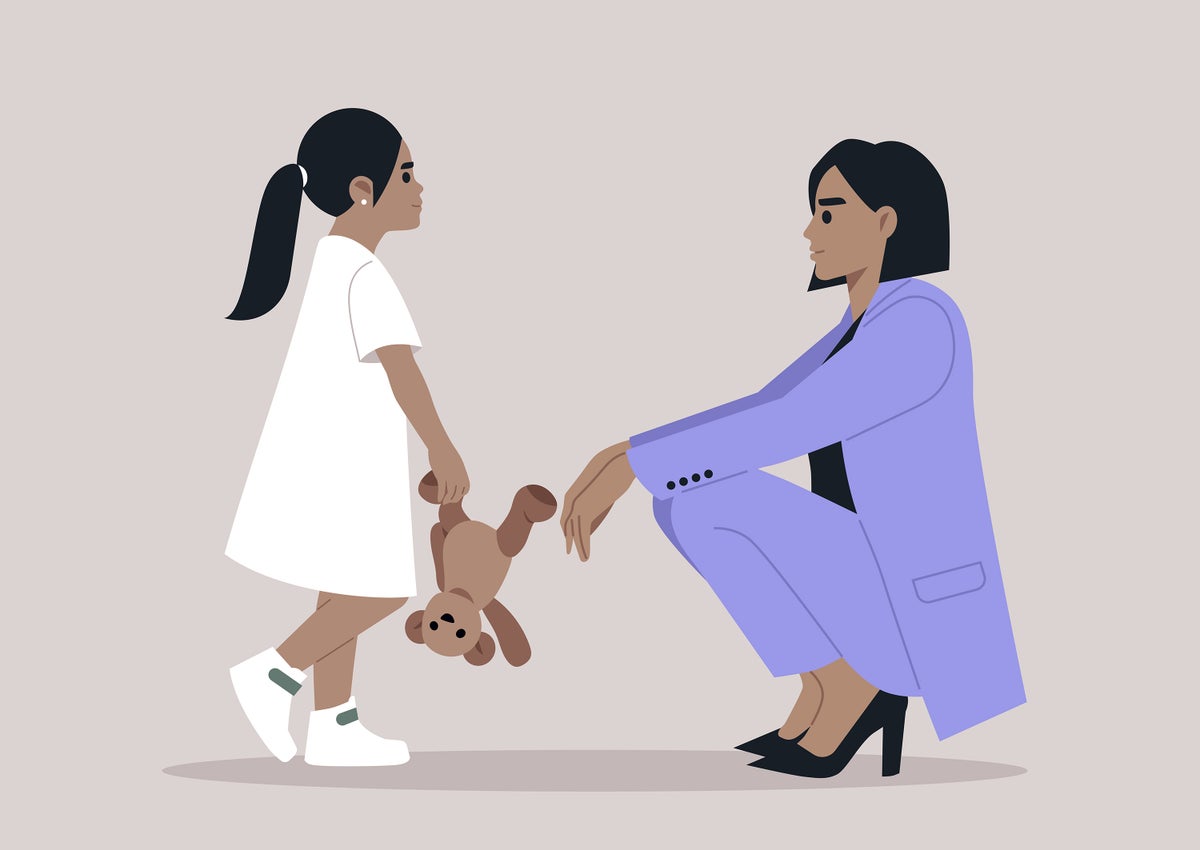
In a desperate parenting moment after dinner, I told my six-year-old, who was mid-meltdown, to “use your words!” He had just started yelling and hitting his eight-year-old sister because she wasn’t sharing a stuffed animal he believed was his. Both kids froze for a moment, giving me just enough of a pause to slow my own quickly rising emotions.
Looking back, I realize I never actually explained to my kids why words can help. But putting feelings into words is how we begin to name what’s happening inside of us, and that naming can start to change the experience itself. Sometimes, as research shows, the words we choose to describe our lives can shape our mental health for months and years to come.
As a psychologist who has spent the better part of two decades studying stress and resilience in my Health and Human Performance Laboratory at Carnegie Mellon University, I’ve been exploring how verbalizing our feelings can transform experience. They can help manage heated moments but also support healing from life’s hardest moments. Research published over the past 40 years on expressive disclosure—literally, using your words—especially about stressful life events, shows it can lead to significant health improvements. After writing about a difficult situation, people report fewer doctor visits, reduced pain, stronger immune function, and better outcomes for conditions like asthma and arthritis.
There are some rules of thumb we’ve learned from these studies with adults. First, writing about a difficult life event three or four times in close succession (such as on consecutive days) tends to be more effective than spreading the sessions out. Second, for each writing session, the sweet spot seems to be at least 15 minutes; shorter sessions can even backfire, making health worse. Third, for those who don’t like to write, talking through one’s feelings works just as well. In fact, when one study directly compared talking and writing, talking came out ahead because we can express more in 15 minutes of speech than in writing.
One reason talk therapy can be so powerful is that it helps people put words to their experiences in a safe, structured way. In one study, psychologist Jonathan Adler followed a group of adults who wrote narratives about themselves over a period of 12 psychotherapy sessions. He found that as participants in therapy began to describe themselves with a greater sense of agency—seeing themselves as active authors of their own lives—their mental health improved.
He noticed that the change in the stories came first, followed by improvements in well-being. For parents, this is a reminder that helping kids tell their own stories with a sense of choice and authorship, whether about a playground conflict or a family move, can plant seeds of resilience.
One of the surprising findings to me is that translating our feelings into words can transform the feelings themselves. For example, neuroscience studies show that the act of naming one’s emotional experience (“angry”) activates emotion regulation circuits in the brain’s prefrontal cortex. In the scientific literature, this process is called “affect labeling,” and it has powerful clinical benefits. In one study, participants with a spider phobia who labeled their feelings during exposure therapy—while sitting next to a tarantula—had a reduced physiological stress response to spiders one week later relative to participants who used other strategies, like distraction.
While taking a hot emotion and putting it into words has the potential to blunt its immediate force, expressive disclosure can also reshape our emotional memories. When we narrate difficult experiences, whether in writing or speech, we aren’t simply recalling a memory. We are pulling it back up from long-term memory, reshaping it with our words, and then putting it back into long-term storage as a new, altered memory. This process, known as memory
reconsolidation, gives us a window of time to change how that memory is structured. By describing painful or overwhelming events, we don’t just relive them. We reorganize them. We add meaning, emotional context, and resolution. In doing so, we can reduce the distress these memories trigger and make them easier to live with.
.
 Nadia Bormotova/Getty Images
.
.
Click the link below for the complete article:
.
__________________________________________
 James' World 2
Leave a comment