
Click the link below the picture
.
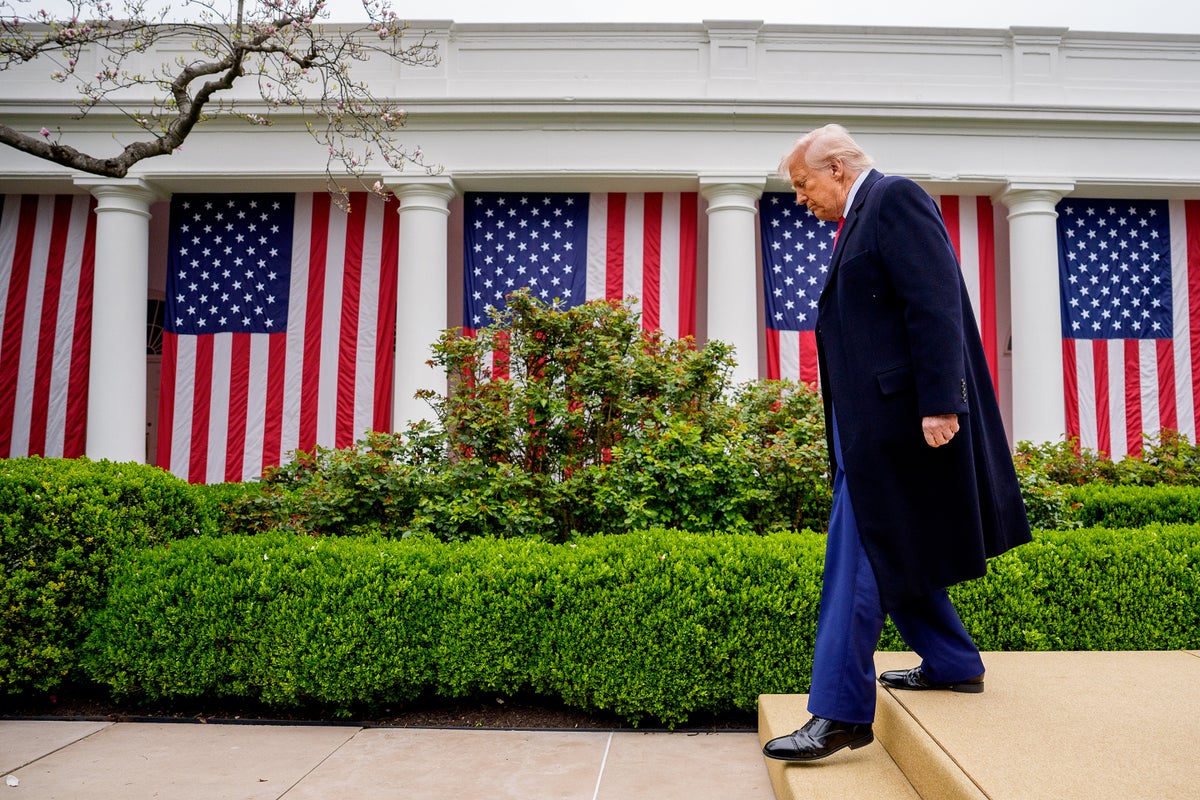
US President Donald Trump issued an expansive executive order (EO) yesterday that would centralize power and upend the process that the US government has used for decades to award research grants. If implemented, political appointees — not career civil servants, including scientists — would have control over grants, from initial funding calls to final review. This is the Trump administration’s latest move to assert control over US science.
The EO, titled ‘Improving Oversight of Federal Grantmaking’, orders each US agency head to designate an appointee to develop a grant-review process that will “advance the President’s policy priorities”. Those processes must not fund grants that advance “anti-American values” and instead prioritize funding for institutions committed to achieving Trump’s plan for ‘gold-standard science’. (That plan, issued in May, calls for the US government to promote “transparent, rigorous, and impactful” science, but has been criticized for its potential to increase political interference in research.)
Impacts might be felt immediately: the latest order directs US agencies, such as the National Institutes of Health (NIH), to halt new funding opportunities, which are calls for researchers to submit applications for grants on certain topics. They will be paused until agencies put their new review processes in place.
Trump’s EO comes after the US Senate — which, along with the House, ultimately controls US government spending — has, in recent weeks, mostly rejected his proposals to slash the federal budget for science, totalling nearly US$200 billion annually.
The White House did not respond to questions from Nature about the EO.
Negative reaction
Trump, a Republican, has previously used EOs, which can direct government agencies but cannot alter existing laws, to effect policy change. In January, on his first day in office, he signed a slew of EOs with wide-ranging effects, from pulling the United States out of the Paris climate agreement to cutting the federal workforce, which had included nearly 300,000 scientists before he took office.
Scientists and policy specialists have lambasted the latest EO on social media. “This is a shocking executive order that undermines the very idea of open inquiry,” Casey Dreier, director of space policy for the Planetary Society, an advocacy group in Pasadena, California, posted to Bluesky.
Also on Bluesky, Jeremy Berg, a former director of the NIH’s National Institute of General Medical Sciences, called it a “power grab”. Speaking to Nature, he said: “That power is something that has not been exercised at all in the past by political appointees.”
In a statement, Zoe Lofgren, a Democratic member of the US House of Representatives from California, called the EO “obscene”. It could lead to political appointees “standing between you and a cutting-edge cancer-curing clinical trial”, she said.
The EO justifies the changes to the grant-awarding process by casting doubts on past choices: it accuses the US National Science Foundation (NSF) of awarding grants to educators with anti-American ideologies and to projects on diversity, equity and inclusion, which are disfavoured by the Trump team. It also points to senior researchers at Harvard University in Cambridge, Massachusetts, and Stanford University in California who have resigned over accusations of data falsification.
To “strengthen oversight” of grants, the EO imposes several restrictions, including prohibiting grants that promote “illegal immigration” and prohibiting grant recipients from promoting “racial preferences” in their work or denying that sex is binary. In some cases, the restrictions seem to contradict Congressional mandates. For instance, the NSF has, for decades, been required by law to broaden participation in science of people from under-represented groups — an action that takes race into consideration.
In addition to these broader restrictions, the EO directs grant approvals to prioritize certain research institutions, such as those that have “demonstrated success” in implementing the gold-standard science plan and those with lower ‘indirect costs’. As part of its campaign to downsize government spending and reduce the power of elite US universities, the Trump administration has repeatedly tried to cap these costs, used to pay for laboratory electricity and administrative staff, for instance. It has proposed a flat 15% rate for grants awarded by agencies such as the NSF and the US Department of Energy, but federal courts have so far blocked such policies
.
 Andrew Harnik/Getty Images
.
.
Click the link below for the complete article:
.
__________________________________________
 James' World 2
Leave a comment