
Click the link below the picture
.
Keith Krehbiel lived with Parkinson’s disease for nearly 25 years before agreeing to try a brain implant that might alleviate his symptoms. He had long been reluctant to submit to the surgery. “It was a big move,” he says. But by 2020, his symptoms had become so severe that he grudgingly agreed to go ahead.
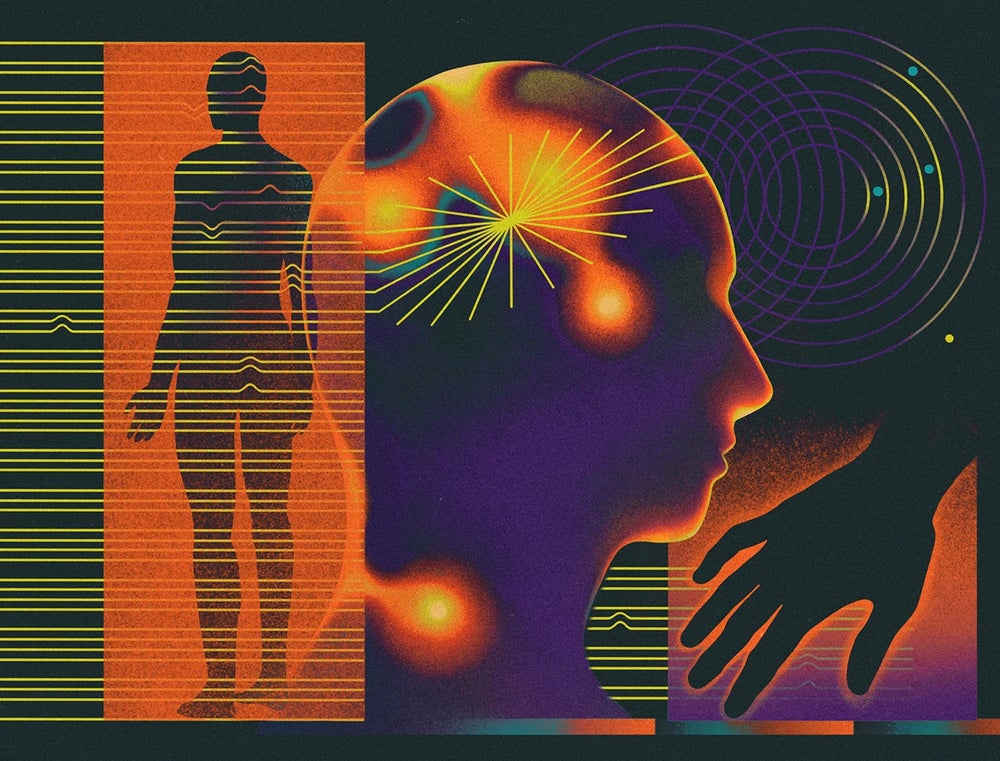
Deep-brain stimulation involves inserting thin wires through two small holes in the skull into a region of the brain associated with movement. The hope is that by delivering electrical pulses to the region, the implant can normalize aberrant brain activity and reduce symptoms. Since the devices were first approved almost three decades ago, some 200,000 people have had them fitted to help calm the tremors and rigidity caused by Parkinson’s disease. But about 40,000 of those who received devices made after 2020 got them with a special feature that has largely not yet been turned on. The devices can read brain waves and then adapt and tailor the rhythm of their output, in much the same way as a pacemaker monitors and corrects the heart’s electrical rhythms, says Helen Bronte-Stewart, a neurologist at Stanford University in California.
Bronte-Stewart received approval to start a clinical trial of this new technology, known as adaptive deep-brain stimulation (aDBS), the same week that Krehbiel was preparing for surgery. He recalls the phone call in which she asked him if he wanted to be her first participant: “I said, ‘Boy, do I!’”
Five years on, the results of this 68-person trial, called ADAPT-PD, are under review for publication. Although the exact details are still under wraps, they were convincing enough to earn approval for the technology earlier this year from both US and European regulators.
The results of this study could be a boon for the estimated one million people in the United States and 1.2 million people in Europe who now live with Parkinson’s disease — and for Medtronic, the health-care technology company based in Minneapolis, Minnesota, that manufactures the implants. The seeming success also clears a path for other companies around the world that are racing for approval on advanced devices, says Martijn Beudel, a neurologist at Amsterdam University Medical Center who worked on the trial.
The approaching wave of therapies promises to level up DBS for Parkinson’s and other motor conditions. The technology might even help to treat neurological disorders such as Tourette’s syndrome and psychiatric conditions, including obsessive–compulsive disorder (OCD) and depression. Several clinicians suggest that the new technology could have even more profound health implications — that is, if funding for US brain-implant research isn’t cut.
Deep trade-offs
Since DBS was first approved in Europe and the United States in the late-1990s, the vast majority of devices have been given to people with Parkinson’s disease. Parkinson’s is a progressive disorder, typified by the death of neurons that produce the neurotransmitter dopamine, which is key to controlling movements.
Existing drugs that aim to increase dopamine levels can only manage the symptoms. They can’t match the constant dopamine production of a healthy brain. “No matter how clever we are with it, we have never been able to exactly mimic the way the brain supplies it,” says Bronte-Stewart. This means that symptoms vary throughout the day — from the unwanted involuntary movements induced by the morning flood of dopamine-mimicking drugs to increased rigidity later in the day as the drugs wear off. The medication also comes with other side effects that vary from person to person. For Krehbiel, it was nausea so severe he had to lie down multiple times a day.
When these become overwhelming, a neurologist might recommend DBS. Implants typically dispense pulses of electrical energy deep into the brain 24 hours a day to regulate aberrant brain signals associated with uncontrollable body movements. Before this year, this always-on approach was the only commercially available form of the therapy.
But continuous DBS can sometimes amplify the drugs’ effects — or generate new symptoms. Some of these are harmless: one man with OCD developed a passion for the music of Johnny Cash when his stimulator was turned on, but was uninterested in the artist when it was off. Other symptoms are cause for more concern, including sudden-onset gambling disorders and other temporary changes in impulse control. More frequently, the addition of stimulation can induce speech impairments, such as slurring, raise the risk of falling, and cause some involuntary movements.
.
 Ada Zielińska
.
.
Click the link below for the complete article:
.
__________________________________________
 James' World 2
Leave a comment