
Click the link below the picture
.
George Slavich recalls the final hours he spent with his father. It was a laughter-packed day. His father even broke into the song ‘You Are My Sunshine’ over dinner. “His deep, booming, joyful voice filled the entire restaurant,” says Slavich. “I was semi-mortified, as always, while my daughter relished the serenade.”
Then, about 45 minutes after saying goodbye outside the restaurant, Slavich got a call: his father had died. “I fell to the ground in a puddle of shock and disbelief,” he says.
Slavich recognized the mental and emotional trauma he was feeling, and could imagine how it would affect his health. He studies stress for a living, after all. Yet even after he brought up his concerns, his health-care provider didn’t evaluate his stress.
“If stress isn’t assessed, then it isn’t addressed,” says Slavich, a clinical psychologist at the University of California, Los Angeles. “The experience highlighted a paradox between what I know stress is doing to the brain and body, and how little attention it gets in clinical care.”
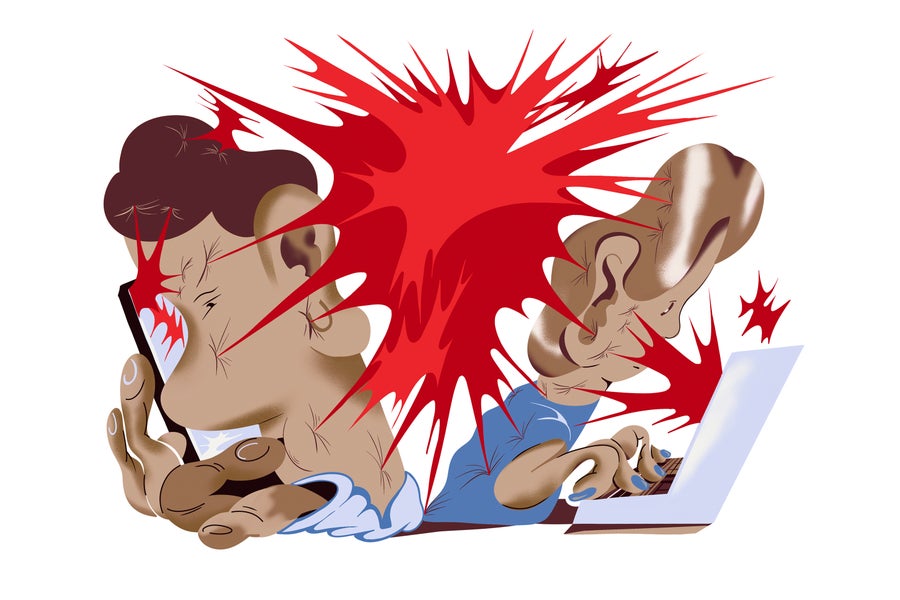
Decades of research have shown that, although short bursts of stress can be healthy, unrelenting stress contributes to heart disease, cancer, stroke, respiratory disorders, suicide, and other leading causes of death. In some cases, prolonged stress drives the onset of a health problem. In others, it accelerates a disease — or induces unhealthy coping behaviours that contribute to chronic conditions.
Stress also seems to be on the rise. It increased globally during the recession of 2007 to 2009 and the COVID-19 pandemic, says David Almeida, a developmental psychologist at Pennsylvania State University in University Park, who studies historical shifts in stress as well as everyday stressors. Polls show that globally, including in the United States, stress hasn’t gone back down to previous levels.
“Any time there is uncertainty in society, we see increases in reports of stress,” says Almeida. Uncertainty can ramp up our responses to stressors that are usually minor, he says: “Being stuck in traffic might make you more upset than it did before.”
Although people tend to be aware of their stress, they often don’t know what to do about it. A physician might recommend leaving a stressful job, engaging in talk therapy, or eating and sleeping better, but those options are not always possible. In fact, many of the individuals who face the greatest stressors also face the greatest barriers to treatment. What’s more, some people take pride in how many demands they can juggle, wearing stress like a badge of honour, says Slavich.
He, Almeida, and other researchers are trying to change the current thinking. Emerging assessment tools, along with basic advances in stress science, now make it possible to answer questions such as ‘When does good stress turn bad?’ and ‘How can we intervene effectively?’ An improved understanding of stress, says Slavich, could “fundamentally transform health care”.
Good versus bad stress
Sources of stress run the gamut: a high-stakes presentation at work, a disagreement among friends, trauma from military conflict, living in poverty, structural racism, divorce, a lost job, or a lost loved one.
When the body perceives a threat, stress hormones, including cortisol, flood the bloodstream. Muscles tense, and blood sugar levels rise. The heart beats faster and stronger, and blood vessels dilate, shuttling extra oxygen through the body to help you think and move quicker. The immune system is put on call for rapid healing and recovery.
This fight-or-flight response has, over millennia, helped humans to survive. But it didn’t evolve to cope with traffic, cyberbullying, credit-card debt and the countless other stressors of modern life.
“There is an evolutionary mismatch happening right now,” says Almeida.
Issues arise when the body fails to control the on–off switch, says Wendy Berry Mendes, a psychologist at Yale University in New Haven, Connecticut. Stress becomes problematic if the body overreacts to situations that are not life-threatening, anticipates a stressor too soon or dwells on negative feelings after the stressor has passed — or if a source of stress sticks around for too long. When cortisol and the sympathetic nervous system are dialled up for extended periods, good stress can turn bad. But how would someone know when the line is crossed?
Stress assssments tend to rely on self-reported symptoms, such as anxiety or trouble sleeping, plus, in some cases, on measurements of blood pressure, cortisol levels or heart rate. These tools aren’t always sufficient. An elevated cortisol level or heart rate, for example, could be explained by exercise or “that cup of coffee you just had”, says Almeida.
Blood pressure, cortisol, and heart rate also rise and fall naturally throughout the day. The timing of the measurement matters, as do patterns over time. Mendes says she is most confident in cortisol measurements that are taken approximately 30 minutes after waking, when a healthy person should experience a strong spike. Heart-rate variability, a measure of the natural fluctuation in the time between beats, is also much more informative as to how the body regulates stress than is the heart rate itself, she says.
Access to many more types of measurement might offer a fuller picture, say researchers. Nearly the entire body reacts to stress, including the nervous, respiratory, digestive, cardiovascular, immune, circadian, and endocrine systems. In a study that has not yet been peer reviewed, Slavich and his colleagues found that the expression of more than 1,500 genes, especially those involved in inflammation and antiviral responses, can change after a person is socially stressed for as little as 10 minutes.
With this complex cascade in mind, Slavich and his colleagues are investigating a broad array of self-reported measures, including past stress and trauma exposure, as well as data on neurotransmitters, hormones, genetics, gene expression, gut bacteria, inflammatory markers, glucose levels, lipid function, and metabolites. These data are now easier to obtain, often with affordable at-home tests.
The COVID-19 pandemic spurred the creation of simple-to-use devices to collect blood, saliva, and stool samples. In parallel, there are increasingly small and powerful wearables that can continuously assess physical activity, sleep, heart rate, heart rate variability, vestibular balance, and galvanic skin response. Sensors under development aim to detect real-time levels of cortisol and other stress hormones through sweat. Meanwhile, researchers are designing ways to gauge blood pressure when people are on the go.
There are limitations to the wearables currently on the market, says Mendes: “Many physiological measures that wearables can detect are simply easy to obtain rather than being the most informative about stress or health.” Still, optimism is high that measures that can be taken quickly and with little or no effort will help people to become more aware of their stress level and will advance stress science.
.
 Karol Banach
.
.
Click the link below for the complete article:
.
__________________________________________
 James' World 2
Leave a comment