
Click the link below the picture
.
“What’s your support system like?” my doctor asked as I tried to calm my baby. I was at my PCP’s office to get some insight into the persistent elbow pain that was making it difficult for me to open my apartment door or pull the covers over me at night — not to mention feed, hold, and soothe my baby who especially liked to fall asleep in the crook of that injured elbow.
My daughter had arrived six weeks early and needed to be fed in a specific position that required me to hold her head up with my left hand, the weight of her tiny body settling into my joint. But, like a lot of people I encountered in those early days, my doctor was having trouble getting past the single mother thing. “I’m worried about you,” she said, when I made the mistake of mentioning that I wasn’t sleeping. I was worried about me too, but I really needed help with my elbow.
“What’s your support system like?” was the first question almost anyone asked when finding out I was raising a baby without a partner — from potential mom friends at tot gyms to all kinds of medical professionals.
When I was pregnant, I got “what’s your support system like?” from a homeowner who was renting out an upstairs suite in a cohousing community. In cohousing, people usually live in separate houses on shared land, sharing resources. Because buying into a cohousing community can be expensive, I saw renting as a way in for me. But the homeowner balked as we tried to nail down a time for a tour. Instead, she wanted to schedule a call to talk about my support system.
The question was tough for me — it was something I had been asking myself, with some trepidation, since before I had gotten pregnant. Would the life I had made, the seeming haphazard connections collected over the years, be enough to sustain both me and a baby? I didn’t particularly want to get into this with my future landlord or, worse, be evaluated based on my ability to obtain this magic system. I told her that I thought her question was discriminatory (since she was not asking non-parents the same thing), she apologized profusely, and we parted ways.
But the incident jolted me: It was the first of a series of interactions that made me aware that by deciding to have a baby, I had stepped into a role loaded with cultural baggage.
The question about my support system was not about my own trepidations, romantic failures, or giddy hubris in deciding to get pregnant on my own. It was about the asker. “Are you going to need too much from me?” my potential housemate was asking. “Should I pity and worry for you?” my doctor wanted to know. “Can I view you as having agency?” the mom at the tot gym tried to clarify.
“Where do I place you on the scale of superhero to sad sack?” was how the question sounded to me.
“We are seeing the fabric of this country fall apart, and it’s falling apart because of single moms,” Pennsylvania Senate candidate (and future U.S. senator) Rick Santorum said in a speech in 1994. I was a teenager in the 1980s and 1990s when “unwed mothers” were used as cultural (and racial) boogeymen to push through Bill Clinton’s welfare cuts. Single mothers, the rationale went, were a drain on federal resources.
In the intervening years, with the rise of single parents by choice, an alternative narrative has taken hold, one of people who can afford to have babies on their own and are doing just fine. Yet, the words “single mother” remain a powerful cultural and political category that bring up anxieties about the cracks in our social system. And conservatives still seek to punish us, using the flawed logic that this will somehow force people into nuclear family structures.
.
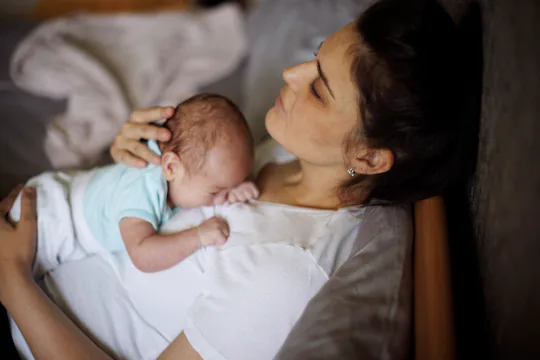 damircudic/E+/G
.
.
Click the link below for the complete article:
.
__________________________________________
 James' World 2
Leave a comment