
Click the link below the picture
.
Ellen Stromdahl was at a garden party in coastal Virginia in June 2023 when her friend Albert Duncan stood up from where he was sitting and abruptly fainted. Duncan is an outdoorsman in his mid-80s — still active and healthy for his age. Stromdahl, an entomologist who works for the United States Army Public Health Center, the Army’s public health arm, rushed to his side. As Duncan came to, she noticed that his tanned skin was tinged with yellow. “This man looks jaundiced,” she thought to herself.
Duncan spent the next several days in and out of the emergency room. His doctors administered countless blood tests and ruled out the usual suspects for an octogenarian — heart disease, diabetes, pneumonia. Finally, on Stromdahl’s recommendation, Duncan’s wife, Nancy, asked his doctors to test him for babesiosis, a rare malaria-like disease caused by microscopic parasites carried by black-legged ticks. The test came back positive not just for babesiosis but also for Lyme disease, another far more common illness caused by the same type of tick.
If Duncan’s doctors had caught the infections sooner, they could have eradicated them with a combination of oral antibiotics and antiparasitic medications. But Duncan, weeks into his illness, needed a procedure called an exchange transfusion. Doctors pumped all of the infected blood out of his body and replaced it with donor blood. About two weeks after the garden party, he was well again.
Babesiosis is rare — the Centers for Disease Control and Prevention reports around 2,000 cases in the United States every year. But what made Duncan’s case even more unusual is that he contracted babesiosis in Virginia, a state that registered just 17 locally acquired cases of the disease between 2016 and 2023.
It got Stromdahl wondering if babesiosis could be becoming more common in Virginia and neighboring states. She spent the following two years working with a team of 21 tick researchers from across the eastern U.S. and South Africa to assess the prevalence of Babesia microti, the parasite that causes babesiosis, in ticks and humans in those states from 2009 to 2024.
The results of the study, published in April in the Journal of Medical Entomology, reveal that the Babesia parasite is rapidly expanding through the mid-Atlantic. This shift, which has coincided with changing weather patterns, could pose a serious threat to people in communities where the disease has long been considered rare.
“Wherever we found positive ticks, there were cases,” Stromdahl said. “They’re small numbers, but that’s why we want to give the early warning before more people get sick.”
One in four cases of babesiosis is asymptomatic. People who do develop symptoms, especially older adults and immunocompromised people, can get quite sick with fever, chills, anemia, fatigue, and jaundice. Untreated, the parasites, which infect and destroy red blood cells, can lead to organ failure and death.
Babesiosis is typically found in the Northeast and the Upper Midwest. Between 2015 and 2022, case counts in the states that regularly report the disease — Connecticut, Massachusetts, Minnesota, New Jersey, New York, Rhode Island, and Wisconsin — rose by 9 percent every year, a development researchers attribute in large part to warmer temperatures caused by climate change, which afford black-legged ticks more opportunities to bite people in a given year and more habitat to spread into.
.
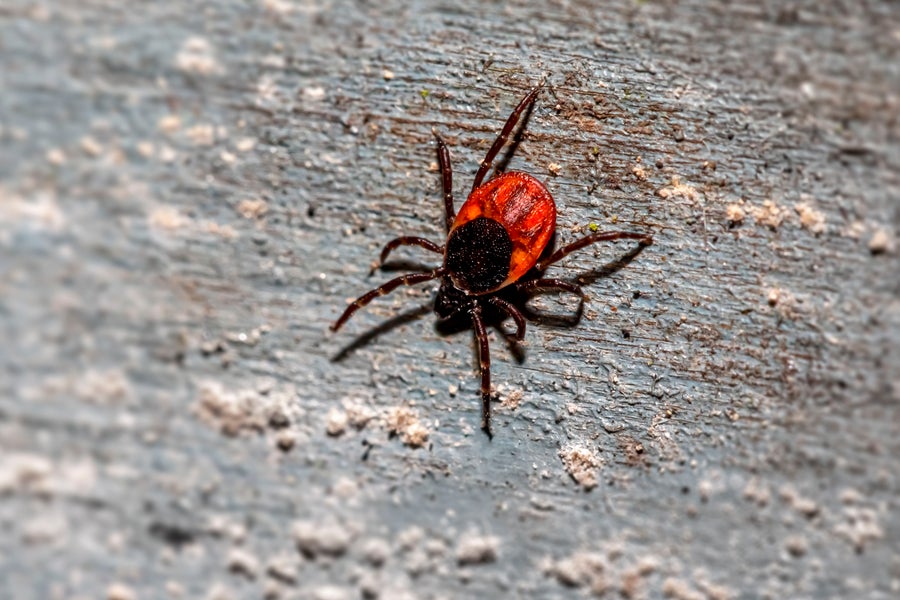
Castor bean tick (ixodes scapularis). ErikKarits/Getty Images
.
.
Click the link below for the complete article:
.
__________________________________________
 James' World 2
Leave a comment