
Click the link below the picture
.
CLIMATEWIRE | One of the biggest mysteries surrounding President Donald Trump’s EPA is how it plans to revoke the endangerment finding — the lifeblood of most climate regulations.
Hints about its strategy may have been hiding in plain sight for a month now, ever since EPA announced a slew of deregulatory actions in a single afternoon.
Experts said EPA may be betting that it can upend the scientific finding, which paved the way for the nation’s rules on climate pollution on cars, power plants, and across other sectors, without taking direct aim at the overwhelming evidence that greenhouse gases are driving up global temperatures.
Instead, EPA Administrator Lee Zeldin and other officials whom the president tasked in January with undoing the finding could raise questions about whether a sector — or even the whole country — contributes enough climate pollution globally to warrant regulation.
They may also try to redefine how air pollution can harm the public — a necessary predicate for regulating greenhouse gases under the Clean Air Act.
“Maybe they’ll change their mind, but they seem to have an idea of how they want to go about revoking the finding,” said Jeff Holmstead, who served as EPA’s air chief under President George W. Bush.
Jettisoning the endangerment finding could allow the Trump administration to tear out U.S. climate rules by the roots, helping it avoid years of painstaking work to finalize replacement rules that would likely be weaker, according to experts. It would also make it harder for future presidents to regulate other sectors that are contributing to climate change, because the scientific finding would have to be resurrected first.
Experts see hints of that strategy in a relatively detailed press release the agency issued last month, when it announced a barrage of steps it plans to take to roll back climate rules.
Holmstead called the document “very telling.”
He and other experts say the administration may take aim at the cost increases that regulations have on energy and other pillars of Americans’ lives, not at atmospheric science directly. That could allow EPA to skip the cumbersome process of assembling panels of contrarian scientists to build an alternative record on the indisputable link between human emissions and global warming
“They can probably get it out in the next few months,” Holmstead said of a proposed endangerment finding that focuses on regulatory costs. “They won’t need to spend a lot of time — and Federal Register pages — reviewing the science.”
EPA did not respond to requests for comment for this story, but Zeldin offered new details in a combative press conference last week about how he intends to revise the finding. He said the agency plans to undertake a formal rulemaking process with public comment.
“There isn’t a set timeline here,” Zeldin said, in response to a question by POLITICO’s E&E News. “As we go through the process with regards to the dozens of different actions that we are going to start rulemakings on, they each will follow the Administrative Procedures Act, and we’ll make sure that the actions that we take on everything are as durable as possible.”
That indicates the endangerment finding won’t be killed overnight using an executive order, as Trump effectively did earlier this month on rules requiring showerheads to use less water.
But EPA could still move quickly to revoke the finding.
“It’s going to get done,” said Michael McKenna, an energy lobbyist who led Trump’s transition team at the Department of Energy in 2017. “It’s just a question of when and what it looks like, and how long is it going to take.”
McKenna noted that some people in Trump’s orbit have been thinking about how to revise the endangerment finding for more than 15 years, since it was finalized under President Barack Obama, who issued the first rules based on it.
.
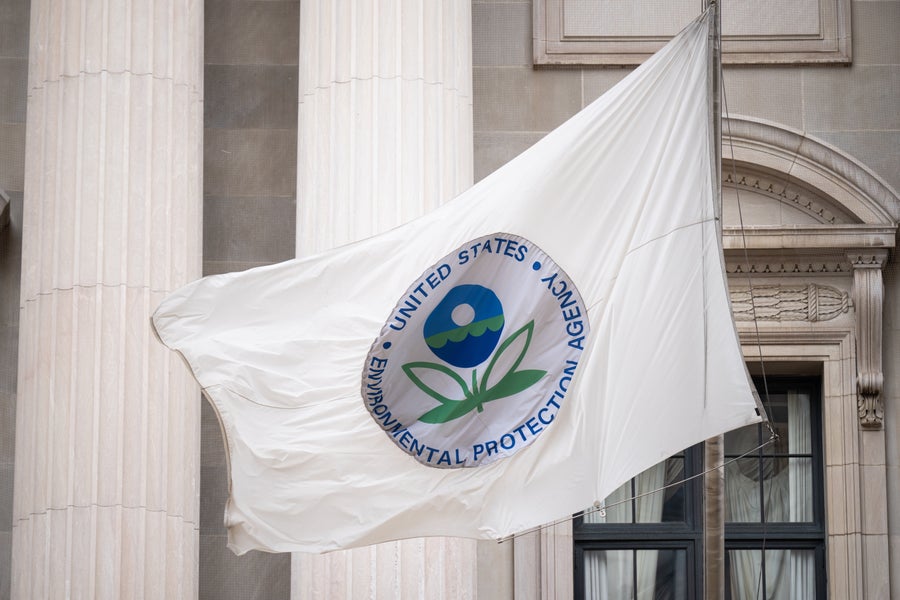
The Environmental Protection Agency flag flies outside the EPA headquarters in Washington on Thursday, February 6, 2025. EPA Administrator Lee Zeldin’s strategy for unraveling a key finding that underpins climate rules is taking shape. Bill Clark/CQ-Roll Call, Inc via Getty Images
.
.
Click the link below for the complete article:
.
__________________________________________
 James' World 2
Leave a comment