
Click the link below the picture
.
Human papillomavirus (HPV) causes nearly 38,000 cancers a year, including most cervical and throat cancers. Now, recent research suggests HPV infection also increases the risk of heart disease. An analysis of seven studies with a total of nearly 250,000 participants found that those who tested positive for HPV were 33 percent more likely than those who tested negative to develop cardiovascular disease.
Now, Stephen Akinfenwa, an internal medicine resident at the University of Connecticut School of Medicine and one of the lead authors of the analysis, says he would like to study whether the HPV vaccine, which can prevent 90 percent of cervical cancers, also reduces the risk of heart disease.
The vaccine, which has been recommended for adolescents since 2006, protects against infection with nine strains of HPV, including high-risk types that are the most likely to cause cervical cancer, as well as strains that cause genital warts. The Centers for Disease Control and Prevention recommends that boys and girls receive a series of two HPV shots at ages 11 or 12 as part of their routine childhood vaccinations—and that people receive three shots if their first dose is instead administered between the ages of 15 and 26. The vaccine is most protective when given before people become sexually active.
The HPV vaccine has been strikingly effective. Cervical cancer deaths in women under age 25—the first generation eligible to receive the vaccine—fell by 65 percent from 2012 to 2019.
Learning that heart disease may be related to HPV is exciting because HPV infection is preventable, Akinfenwa explains. “It feels like good news,” he says. “We’re hoping that [the vaccine] will be a powerful tool for prevention.”
Akinfenwa and his colleagues presented a condensed version of their analysis in March at the annual meeting of the American College of Cardiology. It has not yet been published as a peer-reviewed study. The analysis included studies published between 2011 and 2024 that followed women for three to 17 years.
The largest study included in the analysis was published by researchers in South Korea in 2024 and followed apparently healthy women who were tested for 13 strains of high-risk HPV as part of a routine screening for cervical cancer. The women returned for health checks every year or two for an average of 8.6 years. Although heart disease and death were rare among these women, who had an average age of 40, those who tested positive for high-risk HPV were nearly four times as likely as those who tested negative to develop blocked arteries or die from heart disease, the study found.
Women aren’t the only ones at risk, Akinfenwa says. In one paper included in the analysis, a 2017 study of people undergoing radiation therapy for head and neck cancer, 75 percent of patients were men. (Head and neck cancers are more than twice as common in men as they are in women, according to the National Cancer Institute.) The 2017 study found that people who tested positive for HPV were more likely to have strokes compared with those who tested negative.
HPV is ubiquitous and the most common sexually transmitted infection in the U.S. Among sexually active people, more than 90 percent of men and more than 80 percent of women are infected with HPV during their lifetime. About half of HPV infections involve high-risk strains that cause the bulk of cancers of the cervix, throat, vagina, vulva, anus and penis.
Vaccine hesitancy and lack of awareness about HPV has kept many parents from vaccinating their children against the infection, research shows. Some parents are reluctant to vaccinate their kids against HPV because they don’t think their children will have sex as teenagers. Only 61 percent of adolescents are up to date on all HPV vaccines.
Even without a study that has specifically analyzed the effect of HPV vaccination on heart disease, the link between HPV and heart disease suggests that “vaccination is a good idea, and our study definitely supports that,” Akinfenwa says.
.
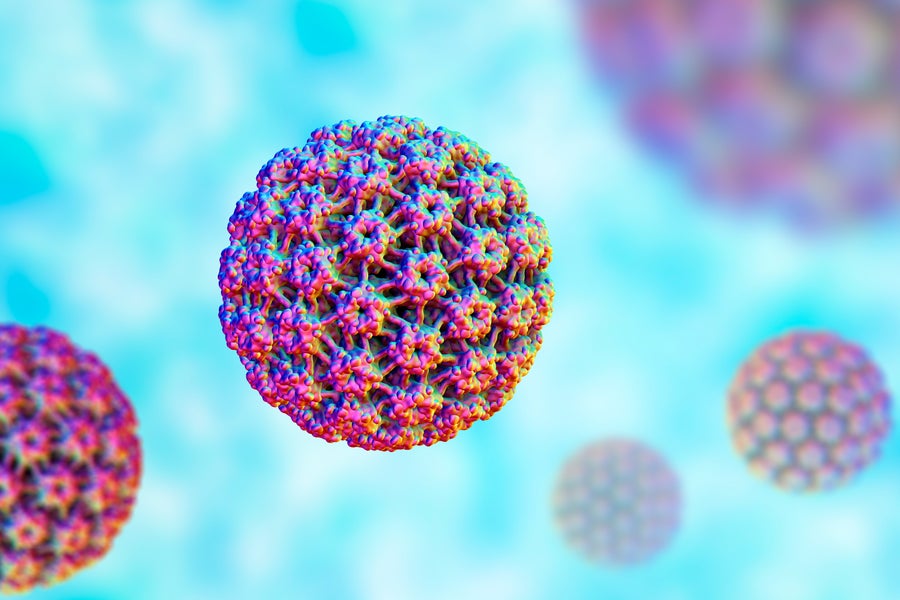
Human papilloma virus (HPV) illustration. Kateryna Kon/Science Photo Library/Getty Images
.
.
Click the link below for the complete article:
.
__________________________________________
 James' World 2
Leave a comment