
Click the link below the picture
.
For more than half a century planetary exploration and space science have been a hallmark of American achievement and excellence. From Mercury to Pluto and beyond, we have gained enormous understanding about planetary origins and evolution. We have learned about the atmospheric, surface and interior dynamics of other worlds. All those discoveries have carried implications for what’s happening here on Earth. In classrooms around the world, exploring new worlds and probing the mysteries of the universe is an emblem of America.
But that may now end; the Trump administration is poised to take the chainsaw to space science, just as it has to almost everything else in the U.S. science portfolio. Trump officials are planning huge, destructive cuts for space science, according to news reports, likely killing all new mission plans for this decade, including the long-sought, all-important Mars Sample Return mission. This flight was meant to return now-waiting samples from the red planet.
China is already leading the way to the moon and Mars with robotic vehiclelike rovers and sample returns and is also likely to do so with human missions. The U.S. human space program, meanwhile, is bogged down with a stumbling Artemis program, built with a convoluted architecture marked so far by failures and delays in nearly every major component. The latest is the repeated failure of SpaceX’s Starship, which twice now has exploded in flight. Reminiscent of the 1980s, when we paused planetary exploration after the success of Viking and launch of Voyager 1 and 2, the U.S. has iced new Mars missions, with plans to cancel Mars Sample Return, and redirected our once great lunar capability to small experimental landers built by inexperienced new companies. Beyond specific missions, the loss of space science research capability will be a generational calamity.
So what? Does it matter if the U.S. is No. 2 on other worlds? Space is a pretty distant arena—even more distant if it is the moon, Mars and beyond you are thinking of. Compared with the “America First” emphasis on AI chips, rare earth metals, tariffs and trade wars, promoting Teslas and cutting foreign aid, space is a minor political and economic player. But we are becoming No. 2 in such areas of focus too (see China’s advances in DeepSeek AI, BYD electric cars and developing hydropower in Africa). Our failures on Earth are not unrelated to our narrow and shortsighted vision for the moon and Mars, and the broader dismissal of science.
Focusing inward is what China’s Ming dynasty did in the 15th century and the Portuguese and Dutch did in the 18th. Our step back from exploration of new worlds is one deep into mediocrity or even obscurity. It’s tied together—the Apollo program was not about a race to the moon; it was about a race between geopolitical powers to prove their economic and technological superiority to the world. So too now. Africans will feel the U.S. retreat as we withdraw humanitarian and infrastructure aid. They will also feel the U.S. retreat from science and exploration just as China goes forward with theirs.
I don’t think it matters to Africans if it is Chinese or Americans there, engaged and helping them. I also don’t think it matters to the moon or Mars whether it is China or the U.S. building things there. But if we accept mediocrity and turn our focus inward, it will matter to us, especially to our children. The isolationist or island mentality expresses to our children and to the world that we have given up on ambition and growth and understanding the universe, that we will be satisfied with being less than we can be.
.
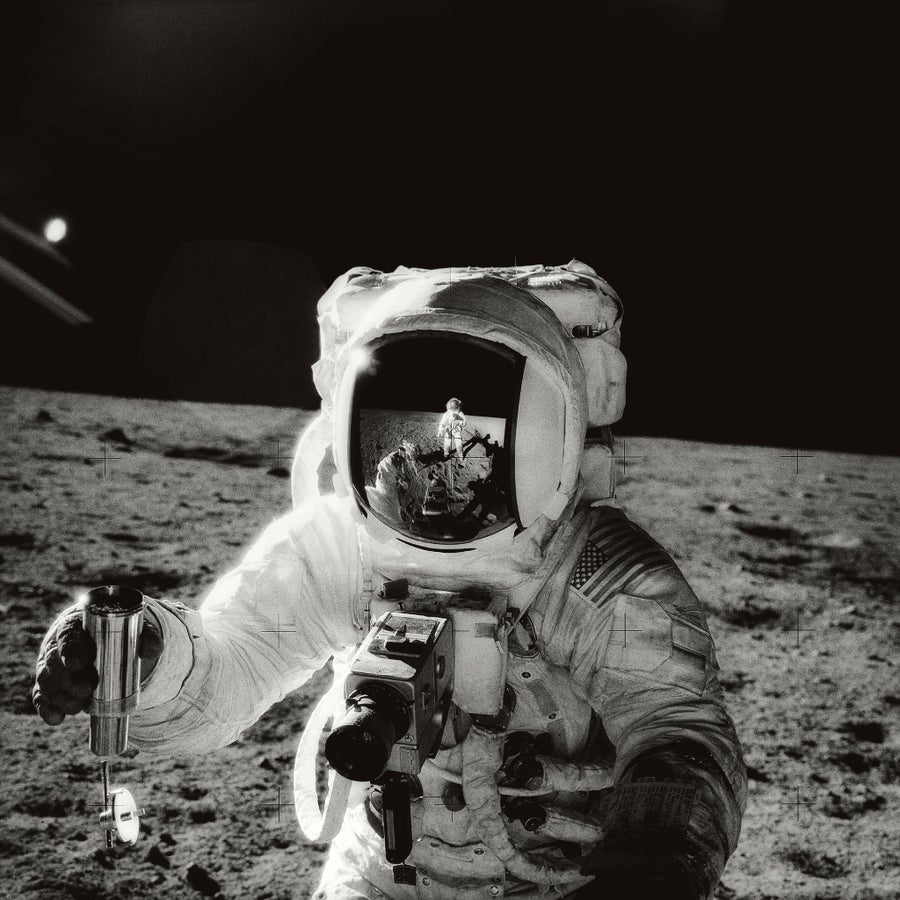
Apollo 12 astronaut Alan Bean during the second moonwalk EVA. NASA/Recall Pictures/Alamy Stock Photo
.
.
Click the link below for the complete article:
.
__________________________________________
 James' World 2
Leave a comment