
Click the link below the picture
.
I’m a bit of a masochist. I can’t help but read the comments whenever the local news posts anything political on social media — especially when it’s related to public education.
I’ve spent most of my life building a career as a public educator who emphatically embraces and promotes diversity, equity and inclusion, and I live in Florida, where public education is very much on the chopping block and our pouty, petulant goblin of a governor has made the classroom the front line of his culture war.
In recent years, whenever I read the comment section of these stories, there are scores of MAGA folks screeching in chorus about evil liberal teachers indoctrinating kids with vegan transgender socialism.
“Their [sic] teaching are [sic] kids CRT [critical race theory]!” insists one commenter. “They want white kids to feel guilty about their race!” cries another. On and on they go — affirming, commiserating and spreading their noxious grievances.
And almost none of what they claim is true.
Although I’m in public higher education now, I was a public high school teacher for over a decade. I worked at three radically different schools in three radically different counties. Most of my social circle is made up of teachers. If indoctrination were occurring at scale, I’d know about it.
It’s just not happening.
Almost every teacher I’ve ever met (and that number is in the high hundreds at this point) is exceedingly careful not to discuss politics or religion while at school — even with other adults, even in the relative privacy of the break room, even one-on-one in their own classrooms during lunch or planning. It’s a simple matter of self-preservation — if a single student were to hear you say, “God, I hate Gov. Ron DeSantis,” they’d tell their friends, those friends would pass it on, and by the end of the day, you’d be in the principal’s office explaining that no, you do not, in fact, have a “Fuck DeSantis” tattoo on your chest.
There are exceptions, of course. In the 13 years I spent teaching high school, a handful of teachers have been openly political. I was helping a fresh-out-of-college teacher set up his classroom in 2014 when he asked me, “Can you believe they let these Muslim kids wear their habibs [sic] in class?” This was within 15 minutes of meeting him for the first time.
“I guess the dress code doesn’t apply to them. I don’t know why we bend the rules for them,” he continued. He had no idea if I was Muslim. He also didn’t know if I was an immigrant — even though I’m visibly Hispanic — before he then went on a rant about “the ESOL kids,” aka students in an English for Speakers of Other Languages program, who were “probably illegal.”
Another teacher I worked with at least had the patience to ratchet his way up to vocal bigotry. He started off slow, talking about the kids with “crazy hair colors,” and later, “the alphabet kids,” his way of labeling students who identified as LGBTQ+. Within a few weeks, he had started complaining about “how sick and stupid” pronouns are. “They can call themselves whatever they want,” he said, “just don’t expect me to play pretend too.”
Those two cases are essentially the extent of educators expressing their personal beliefs at work that I ever encountered. Most teachers simply don’t want to risk termination by talking about potentially contentious topics at work. To this day, aside from teachers who I’ve befriended and spoken with outside of work, I don’t know the political or religious affiliation of nearly any of my former colleagues. Teachers are that averse to potentially career-ending conflict.
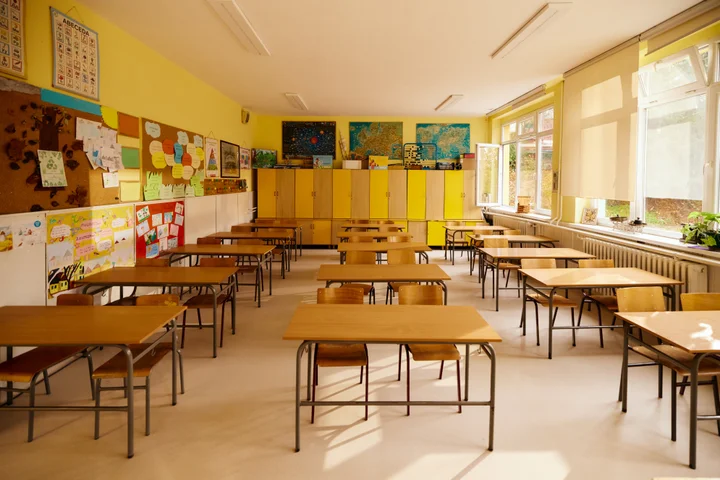
Of course, that’s my experience with teachers interacting with other teachers. But what about inside the classroom? I couldn’t possibly know what happens in every other class while I’m busy teaching my own, right?
.
.
.
Click the link below for the complete article:
.
__________________________________________
 James' World 2
Leave a comment