
Click the link below the picture
.
As norovirus surged across the U.S. last winter, the only thing more horrifying than descriptions of the highly contagious illness—violent projectile vomiting!—was learning that nothing seemed to kill the microbe that causes it. Hand sanitizers made with alcohol are useless. Water needs to be above 150 degrees Fahrenheit to kill the virus, which is too hot for handwashing. Rubbing with soapy water and rinsing can physically remove the virus from your hands and send it down the drain, but won’t effectively kill it. Bleach dismantles norovirus, but you can’t spray bleach on skin or food or many other things, and norovirus can live on surfaces for weeks.
During the early days of the COVID pandemic, however, I had learned about a disinfecting agent called hypochlorous acid, or HOCl. My dad, a now retired otolaryngologist, had been wondering whether there was something he might put up patients’ noses—and his own—to reduce viral load and decrease the chance of COVID infection without, of course, irritating the mucosa or otherwise doing harm. He was imagining a preventive tool, another layer of protection for health-care workers in addition to masks and face shields.
Hypochlorous acid is a weak acid with a pH slightly below neutral. It should not be confused with sodium hypochlorite (NaClO), the main active ingredient in household bleach products, even though they both involve chlorine. Chemically, they are not the same. Sodium hypochlorite is a strong base with a pH of 11 to 13, and when added to water for consumer products, it can be irritating and toxic. Hypochlorous acid, in contrast, is safe on skin.
All mammals naturally make hypochlorous acid to fight infection. When you cut yourself, for instance, white blood cells known as neutrophils go to the site of injury, capturing any invading pathogens. Once the pathogen is engulfed, the cell releases biocides, including hypochlorous acid, a powerful oxidant that kills invading microbes within milliseconds by tearing apart their cell membranes and breaking strands of their DNA.
Hypochlorous acid is a well-studied disinfectant that appears to be extremely effective and safe, so why isn’t it a household name? The synthetic form of hypochlorous acid destroys a broad spectrum of harmful microbes, including highly resistant spores and viruses such as norovirus. Like most disinfectants, it kills pathogens by penetrating their cell walls. But compared with bleach, hypochlorous acid has been shown to be more than 100 times more effective at much lower concentrations, and it works much faster.
Hypochlorous acid isn’t new. It’s listed as one of the World Health Organization’s essential medicines and is approved by the U.S. Food and Drug Administration for use on food products and in certain clinical applications. It’s increasingly used in industrial and commercial settings, such as water-treatment plants, hospitals, and nursing homes. It doesn’t irritate the skin, eyes, or lungs. In fact, optometrists use it to clean eyes before procedures, and people have been treating wounds with it for more than a century. It breaks down quickly, doesn’t produce toxic waste, and isn’t harmful to animals or the environment. The U.S. Environmental Protection Agency lists it as a surface disinfectant for the COVID-causing virus SARS-CoV-2.
Hypochlorous acid is a well-studied disinfectant that appears to be extremely effective and safe, so why isn’t it a household name?
.
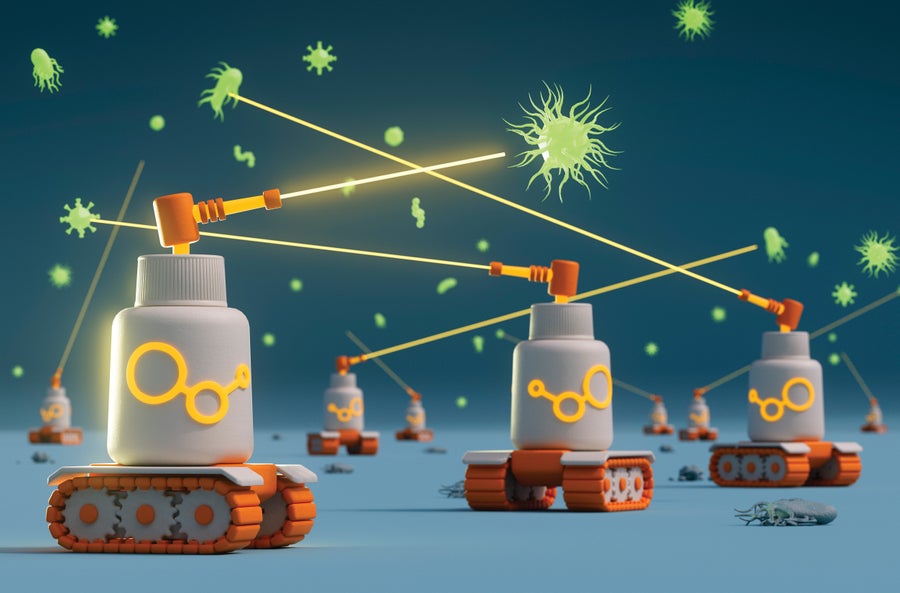 Richard Borge
.
.
Click the link below for the complete article:
.
__________________________________________
 James' World 2
Leave a comment