
Click the link below the picture
.
When my older son Jack, was in high school, he accepted a summer job selling solar panels door-to-door. My first reaction was to tell him not to do it. I felt protective—afraid of the rejection he would face on doorsteps all summer long. I just couldn’t see how my thoughtful son, a good athlete and straight A student, could cope with so much failure.
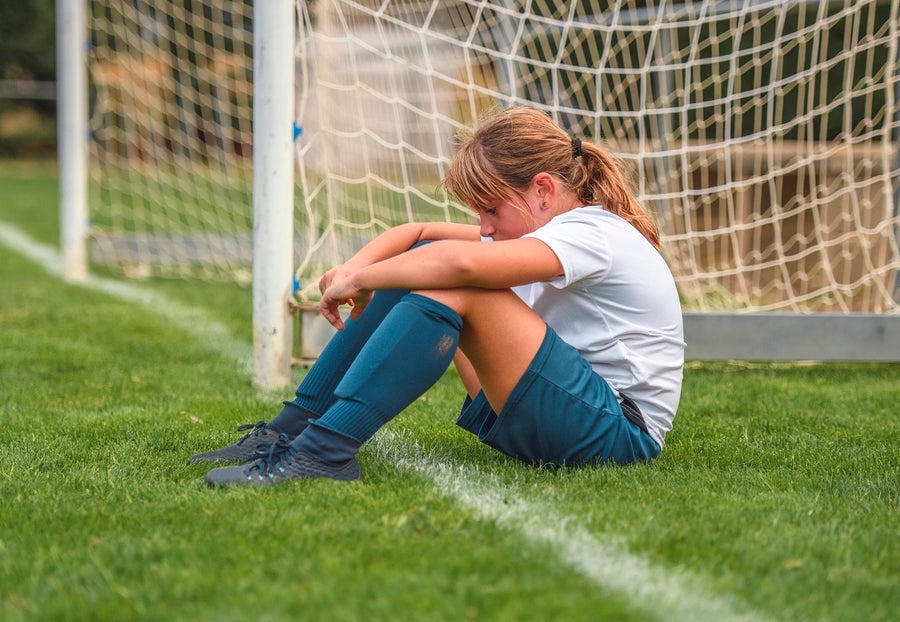
As a parent, it’s natural to want to shield your kids from failure. But we often hover over our kids in what are arguably low-stakes situations, inadvertently robbing them of essential learning experiences and causing anxiety rather than the confidence we had intended to build.
Instead, we can learn to let kids fail well.
To be fair, we are in a bind: if we overprotect, we are ridiculed as helicopter parents, but if we underprotect, we suffer the potentially catastrophic consequences of a child’s immature decision-making. Making the job even harder, every few years the parenting pendulum seems to swing: the three-martini playdate replaces the anxious co-piloted playdate and back again. It’s easy to see why parents are torn: Should you let children make their own mistakes, or stay close by, removing obstacles, limiting risks, and preventing failure? Struggling to manage the bind, parents suffer. And so do their kids.
But there is a path forward that avoids either/or thinking and helps kids build good judgment to accompany a learning-oriented, adventuresome spirit. It supports kids in pursuing the right kind of failures, while helping them avoid danger. Extrapolating from my organizational research and personal experience, I think it’s a parent’s responsibility to help children develop the failure muscles they need to stretch and learn, and to grow into responsible members of society. To do this, we need to examine two dimensions of failure science: assessing the context for risk and understanding that failures are not all alike.
Consider three kinds of failure I’ve identified in my research: basic, complex, and intelligent.
Basic failures have single causes—usually a simple mistake. They are preventable. This is why we childproof our homes when children are small, and ensure that medicine bottles can’t be opened without the strength to twist and pinch. Basic failures don’t bring new knowledge, and most of us would be better off avoiding them (such as by paying attention when we’re following a recipe). But they’re part of the experience for any child learning to master a new topic or skill, and it’s good to remind children to take the time to learn from mistakes, so they can keep improving.
Complex failures have multiple causes—each innocuous on its own—that come together to produce havoc. You forget to charge your cell phone, get stuck behind an overturned truck on the highway, can’t reach your spouse, and miss the day care pick up. Most complex failures can be prevented with vigilance, but we’ve all had days where everything goes wrong, and these kinds of failures will continue to slip through in our increasingly complex and interconnected world. We should learn from them and move on.
The intelligent failures are the ones that matter here, the ones parents should let happen to help children thrive.
It starts with learning to reframe failure as a source of discovery and personal development. I believe that most of us, to live the fullest lives, should experience more failures, not fewer. Whether it’s tennis champion Roger Federer winning only 54 percent of the thousands of points he played in his illustrious career (proving that, as he put it, “even top-ranked tennis players win barely more than half of the points they play”) or top chemistry professor Jennifer Heemstra saying that 90 percent of the experiments in her lab end in failure, the most successful among us have long demonstrated that you have to be willing to fail. So why do so many parents feel a need to protect their children from failure?
.
 AzmanL/Getty Images
.
.
Click the link below for the complete article:
.
__________________________________________
 James' World 2
Leave a comment