Spring has finally arrived in the U.S., bringing its bright spectacle of budding trees and migrating birds, along with more subtle but equally important changes—among them, the first emergence of native bees.
But “native bees” doesn’t actually include the insect most of us picture upon hearing the word “bee.” That yellow-and-black-striped, hive-living, honey-making critter—formally Apis mellifera—hails from Europe. Farmers rely on these tiny imports as, essentially, livestock animals that pollinate food crops and produce honey. But their wild, native counterparts are something completely different.
“Take the majority of what you know about honeybees and throw it away,” says Sydney Shumar, a biologist and manager of the U.S. Geological Survey’s Bee Lab. “It does not apply to our native bee friends.” To celebrate spring, Scientific American spoke with Shumar about North American native bee species’ variety, differences from honeybees, and importance in their ecosystem.
Do I have this right that there are more than 4,000 native bee species in the U.S.? How is that number so big?
The reason why there are so many native bees is you have all these different little things evolving to pollinate groups or species of plants. So they all have very different characteristics. When you look at pictures of our native bees, they look totally different than a honeybee, and you have huge ranges of color, size, how they collect pollen and how they nest.
There are no native bees in North America that live in a hive or produce honey. Most of them live in very small family units, or you could think of it as more like an apartment where you might have families aggregating together.
“If you go anywhere in the United States, you are bound to find some native bees.” —Sydney Shumar, biologist
None of them produce honey; none of them produce wax; none of them make big structures like you would think of with a honeybee. Some are stem-nesting; most of them are ground-nesting, so when you’re walking around in the winter, you are walking on top of millions of ground-nesting bees that are just laying low until it’s time for them to come out with spring.
Is this true even in cities? Do they have preferences or types of ground that they need?
A lot of our native bees are specialists, so they do like a particular type of soil; we have a couple that particularly like sand. In cities and more urban areas, you have a lot of impervious surfaces, so that is going to make it harder for them. But if you have loose soil, if you have native plants, you’re most likely going to find native bees.
Are there any U.S. ecosystems that don’t have native bees, such as deserts or something?
No, we worked on a project on xeric habitat, and when you think of xeric, you think of dry; you think of nothing blooming, just arid—and the researchers caught hundreds—hundreds—of bees. If you go anywhere in the United States, you are bound to find some native bees.
Are there any species or groups that you find particularly cool?
Besides all of them? I am very fond of this group that’s called squash bees. They’re medium-sized; they’re very cute and fluffy. But as you’d guess, they are squash specialists. They come out super early in the morning; you have to get there at first light. And if you have squash plants, then you most likely have them. The scientific name of the most widespread species is Peponapis pruinosa, and you’ll find them just relaxing in the big squash bloom, usually early in the morning.
.
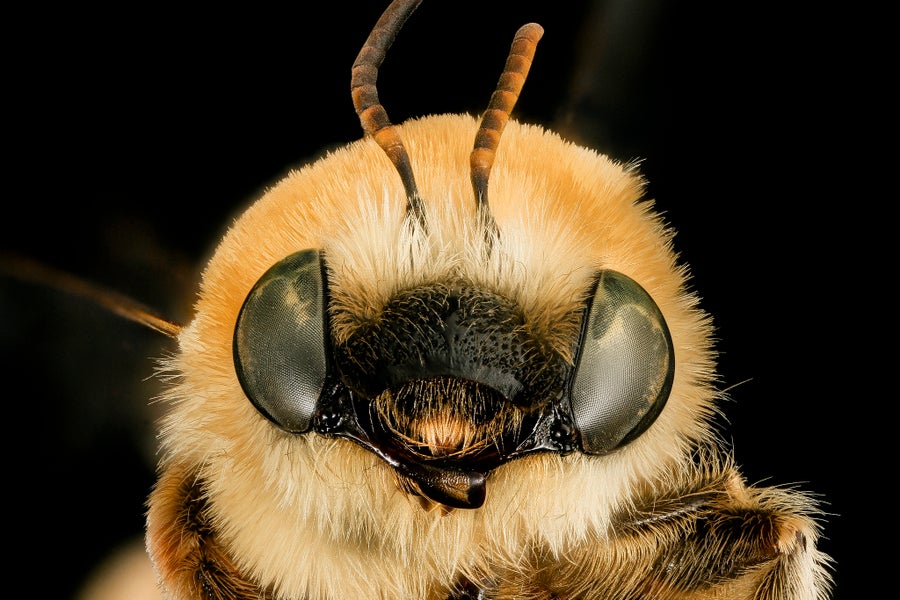
A Martinapis luteicornis bee found in the desert in Cochise County, Arizona.Amanda Robinson//USGS Bee Lab via Flickr
Film and Writing Festival for Comedy. Showcasing best of comedy short films at the FEEDBACK Film Festival. Plus, showcasing best of comedy novels, short stories, poems, screenplays (TV, short, feature) at the festival performed by professional actors.

 James' World 2
Leave a comment