
Click the link below the picture
.
I often ask my kids to help around the house. Feed our dog. Put clean dishes in cabinets and drawers. Sweep up crumbs after dinner. We are a Montessori family, so a lot of this stuff falls under Practical Life, and it’s supposed to help with motor skills, executive functioning, and caring for our spaces. We are also a Scouting family so, “How do Girl Scouts leave a place?” I ask my troop far too often. “Better than we found it!” Indeed.
But the kvetching. “Moooooommmmmm. I can’t. My legs don’t work.” “None of my friends have to do this stuff.” And my favorite: “I neeeeeeed to be a kiiiiiiid.”
The drama. But that last complaint resonates. Every family handles chores differently. Some parents hold off to “let kids be kids,” with the idea that children will eventually learn how to do laundry and clean dishes and do all the adult things. But is there any value in chores? Are the kids who do them benefiting in any way? I turned to Rebecca Scharf at the University of Virginia Medical School, a pediatrician who investigated this question in a recent study. Our conversation is below, edited lightly, as I stare down stacks and stacks of laundry that certain children might have to participate in folding. Assuming their arms don’t suddenly stop working.
The term “chore” has kind of this negative connotation, at least according to my kids. What qualifies as a chore?
Yeah, I hear that. From my perspective, it is something that a child has responsibility for that’s contributing to the household. It’s those daily tasks that we do that keep up our environment or help us participate in family life.
And you decided to study how children who do chores fare?
Yes. I’m a developmental pediatrician, and lot of the things I’ve researched come out of clinical practice. For this one, I was working with one of my colleagues, Dr. Elizabeth White, and she and I were talking about children’s sense of agency, or competence, especially girls, around science. We were looking at this dataset and came upon these questions. The surveyors asked third graders across the U.S. to rate themselves on a variety of things, like “I am good at math. I am good at science.” The sense was, “I am capable. I can do things.” So part of this dataset asked parents, “Does your child have chores?” And we found that children who were doing chores often, or very often, as the survey asked, were more likely to have a sense of capability or more of a sense of being able to do things in the future than children who were doing chores rarely or never. The chores we looked at were in kindergarten or first grade, and then we’re looking at third-grade outcomes that the children self-reported.
So by the time they were in third grade, they were like, “I’m a badass.”
Exactly. We were looking at prosocial behaviors. We were looking at peer relationships. We were looking at, “Do they feel they’re good at academics?” And you could make the case that children who are good at things are perhaps more likely to be given chores by their parents. However, we did look at this across time and hopefully that takes that into account as well.
Was it surprising that all these kids said, you know, that they were more confident?
These weren’t huge differences, but I think it was interesting that they were happier with their lives and that they felt they were better at academics, even a little bit. But it was also interesting to me that the concept of chores is not just the work you learn how to do but the contribution to the family and the household. It’s important in terms of thinking outside yourself or thinking of the ways you can make a difference in the lives of something else.
There’s also something to the technical aspect of yes, young children can learn to do dishes or help with laundry or sweep the floor and there’s the competence there, the fine motor skills that are developed, the gross motor skills, the language needed and the social negotiation needed, which is all useful for children and developing brains.
.
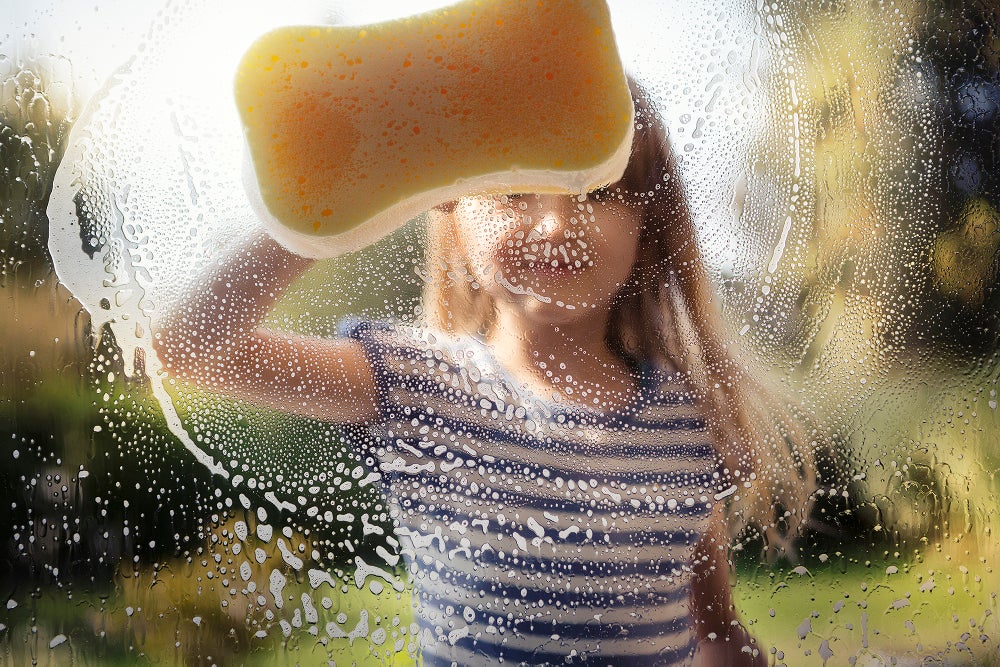 Elva Etienne/Getty Images
.
.
Click the link below for the complete article:
.
__________________________________________
 James' World 2
Leave a comment