
Click the link below the picture
.
On a low hill near the coast of Maine, the fresh petals of double daffodils shake frills of gold and peach in a gusting breeze. It is the middle of May, a clear blue sky overhead, and the lacy burgundy foliage of peonies and new stalks of twiggy curly willow are poking through swaths of black landscape fabric. Against the walls of a greenhouse, seedlings of cosmos and celosia, lisianthus, and snapdragons rise in plastic trays. Mud season is barely over, but the turf is vivid green.
Those fragrant, frilly blooms will make up wedding arches and table settings, and bouquets, the mainstays of the profitable farm and floral studio that farmer Bo Dennis, 35, has built since he bought this parcel several years ago. “When people come to us, we say, this is what we’re good at: local flowers that are sustainably grown,” he says, tucking a curl of light hair back under his beanie with muddy hands. “Sometimes I do get clients that say, ‘We want all hydrangeas and all roses, and we want them in May’”—a date when those popular flowers won’t yet have bloomed in Maine. “I will say, ‘Great! Have a good celebration. I don’t think we’re the vendor for you.’”
What Dennis grows won’t be found among the blooms that cram the entrances of supermarkets, big-box stores, downtown florists—most of the places where people buy flowers in the U.S. The bouquets that fill those spaces overwhelmingly come from equatorial countries, such as Ecuador and Ethiopia, where cheap labor and minimal environmental regulation make growing affordable. Those flowers are part of an enormously successful international market that sells blooms thousands of miles from their fields of origin and earns more than $25 billion every year.
But pesticides and other agrochemicals required to sustain that scale of production can injure workers and their families. One ongoing study of children in Ecuador whose parents work at flower farms has documented deficits in attention and eye-hand coordination, particularly after periods when these chemicals are heavily sprayed. Children born to women who work in floriculture regions have higher-than-normal rates of birth defects, another study found. And the risks extend to people around the world. In Belgium, florists with imported flowers had unhealthy levels of pesticide chemicals on their gloves, levels high enough to burn the skin if it wasn’t protected. And in the Netherlands, prolific use of antifungals on the country’s signature tulips has fostered the emergence of deadly drug-resistant fungi.
The remedy for at least some of these problems is rising in small U.S. operations such as Dennis’s Dandy Ram Farm and others in North Carolina and Utah and throughout the country. Dennis came to floriculture out of a desire for economic self-sufficiency and career-long concern for the environment. He and other growers are building a new, surprisingly lucrative agricultural model—a “slow flower movement,” akin to the Slow Food movement, that offers a cleaner, greener alternative to modern floral production. They aim to protect ecosystems and build new economic pathways while bringing a bit of beauty—ungroomed, imperfect, unpredictable—back into the world.
Flowers are so present in our lives that we almost do not see them: sheathed in paper in every market, plunked in a vase on a table in any cafe. But while they are quotidian, they are also monumental; in many cultures, they memorialize the most important days of our lives, from graduations and promotions to weddings and funerals. They are vital to Catholic rituals, Hindu festivals, Buddhist temple offerings, and Mexico’s Day of the Dead—and also, via chrysanthemums, to the quasi-religion of U.S. college football homecoming games. (Mums are funeral flowers in parts of Europe and Asia, which might be a comfort to the losing team.) We invest them with so much meaning that we demand they always be perfect—although like any crop, they are fungible and fragile, subject to weather, diseases, and decay.
And like any product, they are subject to the lure of cheaper production offshore. The movement of American manufacturing to countries with fewer regulations over land and labor is an old story, reenacted in products from furniture to cars to food. But the relocation of flower growing was not an accident of global economics. It was deliberately fostered by the U.S. government, part of the 20th-century war on drugs.
.
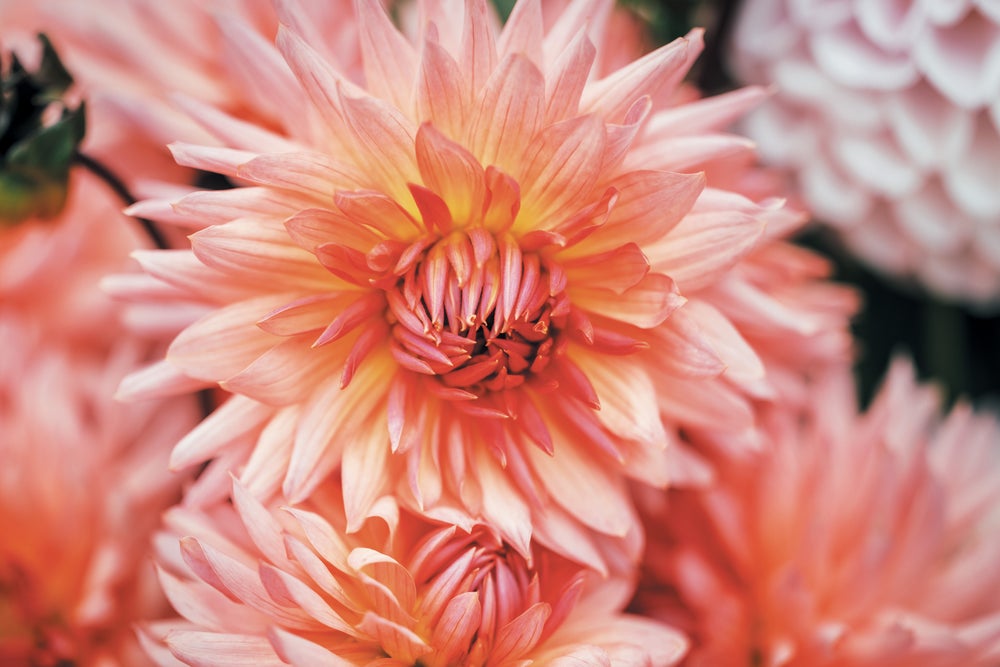
Dahlias bloom at the Maine Flower Collective, a group of local growers. Jesse Burke
.
.
Click the link below for the complete article:
.
__________________________________________
 James' World 2
Leave a comment