
Hmmm…Impeachment?
Click the link below the picture
.
The U.S. National Institutes of Health announced on February 7 it was immediately cutting some $4 billion a year in funding to biomedical researchers nationwide. The move would reduce the share of NIH grants paid to “indirect” costs—lab upkeep, administration, and operation—to 15 percent, cutting their historical rate almost in half, overnight.
In the announcement, NIH said that of roughly $35 billion spent funding 300,000 researchers nationwide in 2023, $9 billion went to indirect costs. The move to a lower indirect cost rate, it argued, put them more in line with those put in place by private foundations.
On February 10 in response, 22 states filed a federal lawsuit, “to protect their states and residents from unlawful action by the National Institutes of Health (‘NIH’) that will devastate critical public health research at universities and research institutions in the United States.”
Donald Trump proposed dropping NIH’s indirect cost rate to 10 percent in 2017, but faced congressional resistance. As was the case then, the newly proposed cuts have triggered widespread criticism from scientists, who say it endangers patients and the U.S. strategic advantage in research. “Frankly, this means that the lives of my children and grandchildren—and maybe yours—will be shorter and sicker,” medical professor Theodore Iwashyna of Johns Hopkins University told CNN.
Indirect costs eating into lab grants have long triggered complaints from scientists, but a 2014 Nature analysis concluded that “overall, the data support administrators’ assertions that their actual recovery of indirect costs often falls well below their negotiated rates.”
Scientific American spoke to David Skorton, president of the Association of American Medical Colleges, which represents all the medical degree–granting schools in the U.S., about this shift, and its effects on medicine.
[An edited transcript of the interview follows.]
How does this affect people who may have never heard of “indirect” NIH grants before, but who get sick or know people who could benefit from better medicine?
So the idea of biomedical research is multifaceted. Some of it is meant to help understand the way life works. Over a decade of research led to the idea that messenger RNA, a basic building block of biology, for example, could actually be used as a platform for vaccines. That knowledge was very basic, very fundamental, and eventually fed into Operation Warp Speed and the development of vaccines against COVID-19. So that’s one thing.
Then there are research projects that you might call applied research, like cancer clinical trials. Someone unfortunately has cancer, and basic research has shown that perhaps a new approach, like immunotherapy, harnessing the immune system to fight off cancer cells, might help. We need to find out, so it goes to human, clinical trials. Those clinical trials are also research projects. And then there are research projects that have to do with diagnosing illnesses. Not treating it. I did some research early in my career on computer processing medical images from the cardiovascular system. The idea there was to develop better diagnostic techniques that could lead to a quicker way to diagnose an illness. So that you know the right treatment.
.
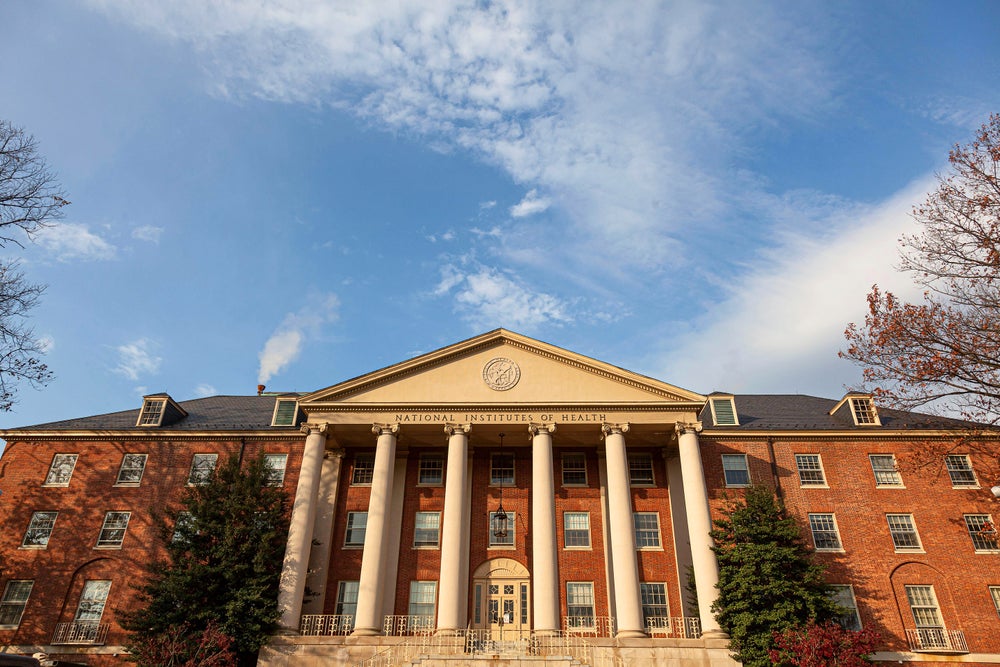
National Institutes of Health (NIH) campus, Bethesda, Maryland. Grandbrothers/Alamy Stock Photo
.
.
Click the link below for the complete article:
.
__________________________________________
 James' World 2
Leave a comment