
Click the link below the picture
.
Soccer fans sometimes imagine that they themselves could potentially perform at the highest levels of the sport, just like the athletic heroes they watch on the pitch. But if they ever do find the chance to try, they will learn that their body simply won’t cooperate—and they might even get seriously hurt. And many of them are ignoring the fact that the “beautiful game” is also a brain game. Reporting in the Proceedings of the National Academy of Sciences USA, an
international research group says it has now confirmed that success on the soccer field is about mind as well as body. The team, co-led by Leonardo Bonetti of Aarhus University in Denmark and the University of Oxford, examined elite soccer players’ intelligence and personality types and discovered they have exceptional cognitive abilities—as well as a typical psychological profile.
The participants comprised more than 200 professional players from Brazil and Sweden, about 9 percent of whom were women, along with a control group of 124 Brazilian nonathletes with a similar education level and social background. The subjects filled out a personality questionnaire and completed several cognitive tests. The researchers compared the results for the athletes with the same measures in the control group and the general population.
Among other things, the professional players demonstrated a better working memory and showed better performance in planning and problem-solving. But above all, they really shined when it came to executive function—the regulation of information processing in higher-order brain areas that helps someone adapt to fast-changing events. In particular, the elite athletes performed far above the norm on the design fluency test, a measure of cognitive flexibility.
The design fluency test had proved to be a good marker of intelligence on the soccer field in previous studies, with higher scores indicating players who had superior skills in developing strategy and analyzing the play around them. “The ability to plan several steps ahead in order to reach a goal in a quickly changing environment may be one of the most crucial cognitive processes related to successful behavior in complex ball sports such as soccer,” Bonetti and his colleagues write in their new paper.
In the personality test, the professional athletes also demonstrated pronounced self-discipline, energy, extraversion and other factors—all unsurprising results. But at first glance, one thing did not fit the picture of success in a team sport: the players were assessed to be less sociable and cooperative than other people, perhaps because they were so focused on their own performance.
Other studies had previously shown that professional soccer players have a unique cognitive profile—but these investigations had smaller samples that often did not include top players. “Our novel study reproduced previous results but can also be regarded as the first conclusive study,” says Predrag Petrovic, co-senior author of the new paper and a senior lecturer of clinical neuroscience at the Karolinska Institute in Stockholm. (Elite players demonstrate cognitive skills above the norm. But the nature of the game can compromise those superior abilities. The frequent heading of the ball and the collisions with other players can lead to head injuries that put players at higher risk for dementia.)
.
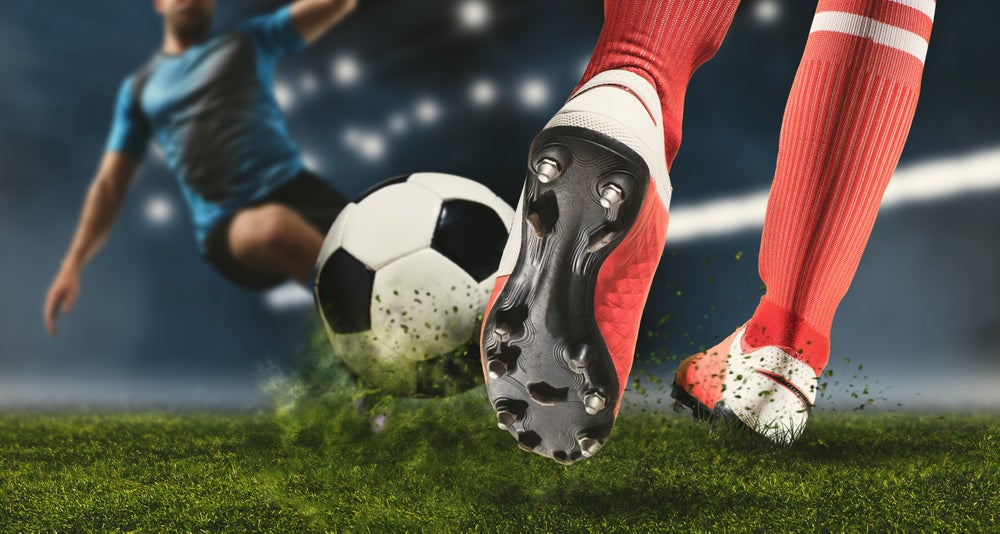 Andreyuu/Getty Images
.
.
Click the link below for the complete article:
.
__________________________________________
 James' World 2
Leave a comment