
Click the link below the picture
.
Plastics floating in a massive “garbage patch” in the Pacific Ocean are home to strange new mixes of coastal and marine species that might increase the odds of biological invasions wreaking havoc on nearby ecosystems.
Scientists have long known that critters such as worms, crustaceans and mollusks could make their home on plastic debris. Animals have even crossed the Pacific Ocean on these makeshift rafts after a devastating tsunami struck Japan in 2011. But new research published on April 17 in the journal Nature Ecology & Evolution adds two details that could be concerning for existing ecosystems. First, it finds that plastic is providing a home for coastal species to thrive in the open ocean thousands of miles from shore. Second, some of these species are reproducing despite the alien environment.
“It’s probably one of the least-known environments, the sea surface,” says Martin Thiel, a marine biologist at Catholic University of the North in Chile, who was not involved in the new research. “It’s a very, very particular community that we are disturbing now at a massive scale.”
For the new study, researchers identified species living on just more than 100 pieces of plastic that were fished out of the so-called Great Pacific Garbage Patch—a region in the northern Pacific Ocean where currents converge to deposit an estimated 79,000 metric tons of plastic debris. The scientists identified 484 invertebrates from a surprising range of species on the plastic. Many of these animals were species that are more commonly found near coastlines of the western Pacific. These coastal species included “moss animals” or bryozoans, jellyfish, sponges, worms, and other organisms.
“I just remember the first time [study co-author] Jim [Carlton of Williams
College and Mystic Seaport Museum] and I pulled out a piece of plastic and saw the level of coastal species present, we were just blown away,” says Linsey Haram, lead author of the study. Haram, who was a research associate with the Smithsonian Environmental Research Center during the study, specializes in marine ecology.
Nearly all the debris hosted pelagic, or open-ocean, species—which makes sense considering that weathering on much of the plastic suggested it had spent several years at sea. But all told, about 70 percent of the debris the researchers analyzed carried at least one species usually found in coastal waters—a much higher tally than Haram and her colleagues expected going into the work, she says.
And as they looked closer, the scientists found that some two thirds of the debris pieces were home to coastal and open-ocean species living side by side. Plastic isn’t just carrying coastal species out to sea; it’s also creating unnatural neighborhoods that the researchers call “neopelagic communities.”
“What’s new, the ‘neo’ part of that, is that we now—likely because of plastics—are seeing coastal species and these native pelagic species together, interacting quite frequently on debris,” Haram says. “We’re essentially creating new communities in the open ocean.”
And these unnatural communities may come at a cost for traditional open-ocean residents that are used to living on natural debris, she adds, because coastal creatures could be competing for space and food or could even be eating their neighbors.
.
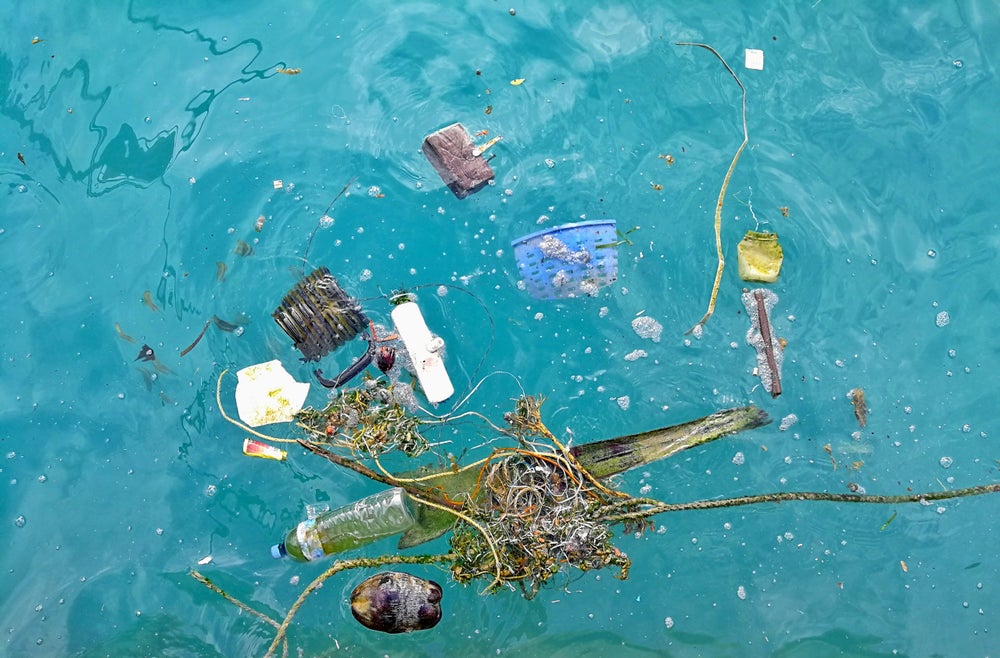
Plastic and other debris seen in water off the Maldives. Jakchai Tilakoon/EyeEm/Getty Images
.
.
Click the link below for the complete article:
.
__________________________________________
 James' World 2
Jan 22, 2025 @ 20:03:33
Wow
LikeLike
Jan 23, 2025 @ 00:14:42
Yes it’s scary!
LikeLike