
Click the link below the picture
.
On Friday the Supreme Court affirmed that it would be legal to force TikTok owner ByteDance to sell the immensely popular app to a non-China-based company or to ban it in the U.S. Last week an attorney for TikTok had argued before the Supreme Court that a bipartisan law that mandated the sale or ban infringed on the company’s First Amendment rights. The Court disagreed. In an unsigned opinion, the justices wrote that the U.S. government’s security concerns—“countering China’s data collection and covert content manipulation efforts”—were “compelling” and that the law “was narrowly tailored to further those interests.”As a result, TikTok—which about 170 million Americans use to watch short-form videos and shop—is likely to close in the U.S. as soon as next Sunday. (TikTok didn’t immediately respond to a request for comment from Scientific American.) TikTok’s attorney told the Supreme Court last week that when the law goes into effect on January 19, the app will “go dark.”
What’s Going to Happen to TikTok?
Reuters reported this week that TikTok plans to formally shut down in the U.S.: it will greet users with a message about the ban and give them an option to download their own data from the app.
If TikTok were to remain active in the country, the law would penalize Internet service providers for permitting access to the platform on a browser. Although the law does not make it illegal for people in the U.S. to have TikTok on their phones, it fines app stores, such as Apple’s or Google’s, whenever people download or update TikTok. Because the fines are up to $5,000 per user (which, multiplied by millions, would add up extremely quickly), app stores are expected to remove TikTok next Sunday. If users cannot update TikTok, the app will eventually stop working anyway.
What Might U.S. TikTokers Do?
Hundreds of thousands of U.S. TikTokers have joined other apps. These have included a newly popular China-based app named RedNote.
Additionally, there are potential work-arounds for the U.S. ban—namely, virtual private networks, or VPNs. In India, which banned TikTok in 2020, users have accessed the blocked app via these networks; they can make traffic appear as though it’s coming from a country where TikTok is allowed. This is not necessarily an easy solution, though. People in the U.S. may need a foreign billing address to access TikTok, one popular VPN service has pointed out, and their other apps or subscriptions could stop working.
Will Elon Musk buy TikTok? Will enforcement of the law be delayed? And can incoming president Donald Trump halt the ban—as he asked the Supreme Court to do—to negotiate a deal?
.
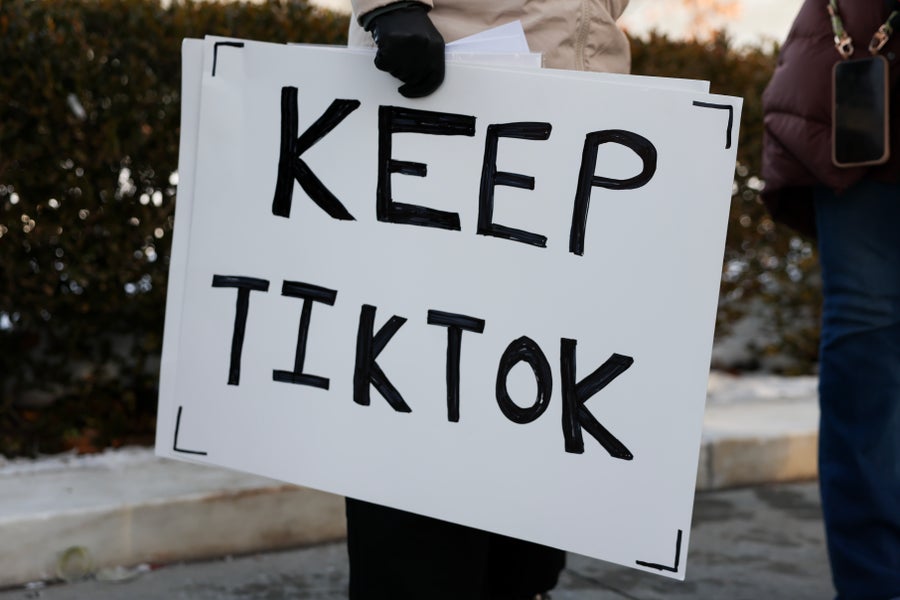
A TikTok influencer holds a sign that reads “Keep TikTok” outside the U.S. Supreme Court Building as the court hears oral arguments on whether to overturn or delay a law that could lead to a ban of TikTok in the U.S., on January 10, 2025, in Washington, D.C. Kayla Bartkowski/Getty Images
.
.
Click the link below for the complete article:
.
__________________________________________
 James' World 2
Leave a comment