
Click the link below the picture
.
On Nov. 30, 2022, traffic to OpenAI’s website peaked at a number a little north of zero. It was a startup so small and sleepy that the owners didn’t bother tracking their web traffic. It was a quiet day, the last the company would ever know. Within two months, OpenAI was being pounded by more than 100 million visitors trying, and freaking out about, ChatGPT. Nothing has been the same for anyone since, particularly Sam Altman. In his most wide-ranging interview as chief executive officer, Altman explains his infamous four-day firing, how he actually runs OpenAI, his plans for the Trump-Musk presidency, and his relentless pursuit of artificial general intelligence—the still-theoretical next phase of AI, in which machines will be capable of performing any intellectual task a human can do. Edited for clarity and length.
Your team suggested this would be a good moment to review the past two years, reflect on some events and decisions, to clarify a few things. But before we do that, can you tell the story of OpenAI’s founding dinner again? Because it seems like the historic value of that event increases by the day.
Everyone wants a neat story where there’s one moment when a thing happened. Conservatively, I would say there were 20 founding dinners that year [2015], and then one ends up being entered into the canon, and everyone talks about that. The most important one to me personally was Ilya 1 and I at the Counter in Mountain View [California]. Just the two of us.
And to rewind even back from that, I was always really interested in AI. I had studied it as an undergrad. I got distracted for a while, and then 2012 comes along. Ilya and others do AlexNet. 2 I keep watching the progress, and I’m like, “Man, deep learning seems real. Also, it seems like it scales. That’s a big, big deal. Someone should do something.”
2 AlexNet, created by Alex Krizhevsky, Sutskever, and Geoffrey Hinton, used a deep convolutional neural network (CNN)—a powerful new type of computer program—to recognize images far more accurately than ever, kick-starting major progress in AI.
So I started meeting a bunch of people, asking who would be good to do this with. It’s impossible to overstate how nonmainstream AGI was in 2014. People were afraid to talk to me, because I was saying I wanted to start an AGI effort. It was, like, cancelable. It could ruin your career. But a lot of people said there’s one person you really gotta talk to, and that was Ilya. So I stalked Ilya at a conference, got him in the hallway, and we talked. I was like, “This is a smart guy.” I kind of told him what I was thinking, and we agreed we’d meet up for a dinner. At our first dinner, he articulated—not in the same words he’d use now—but basically articulated our strategy for how to build AGI.
What from the spirit of that dinner remains in the company today?
Kind of all of it. There’s additional things on top of it, but this idea that we believed in deep learning, we believed in a particular technical approach to get there and a way to do research and engineering together—it’s incredible to me how well that’s worked. Usually when you have these ideas, they don’t quite work, and there were clearly some things about our original conception that didn’t work at all. Structure. 3 All of that. But [believing] AGI was possible, that this was the approach to bet on, and if it were possible it would be a big deal to society? That’s been remarkably true.
One of the strengths of that original OpenAI group was recruiting. Somehow you managed to corner the market on a ton of the top AI research talent, often with much less money to offer than your competitors. What was the pitch?
The pitch was just come build AGI. And the reason it worked—I cannot overstate how heretical it was at the time to say we’re gonna build AGI. So you filter out 99% of the world, and you only get the really talented, original thinkers. And that’s really powerful. If you’re doing the same thing everybody else is doing, if you’re building, like, the 10,000th photo-sharing app? Really hard to recruit talent. Convince me no one else is doing it, and appeal to a small, really talented set? You can get them all. And they all wanna work together. So we had what at the time sounded like an audacious or maybe outlandish pitch, and it pushed away all of the senior experts in the field, and we got the ragtag, young, talented people who are good to start with.
.
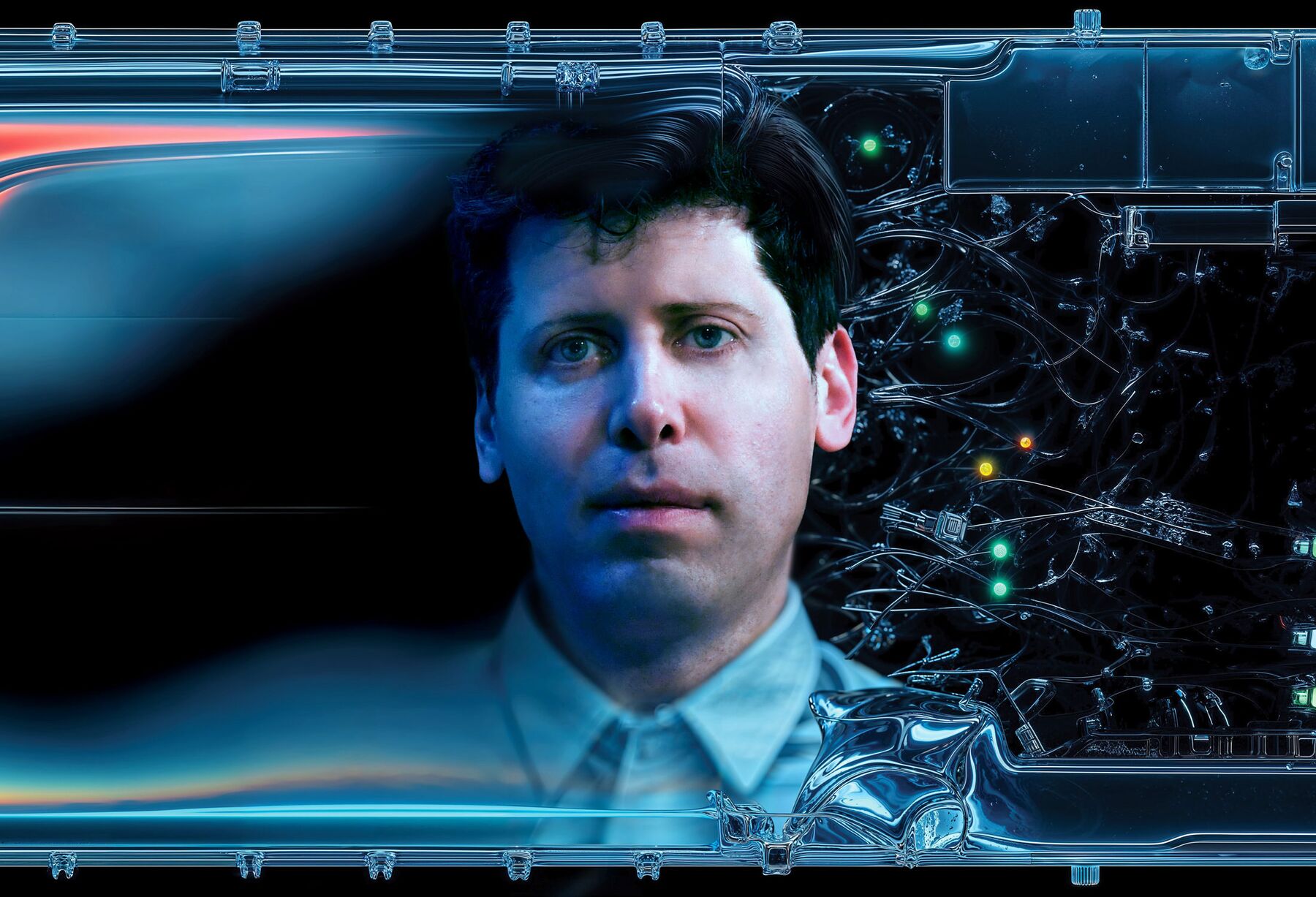 Photo illustration by Danielle Del Plato for Bloomberg Businessweek; Background illustration: Chuck Anderson/Krea, Photo: Bloomberg
.
.
Click the link below for the complete article:
.
__________________________________________
 James' World 2
Leave a comment