
Click the link below the picture
.
Between jobs, school, kids, and other physical and mental tolls on our time and energy, we could all use better, more restful sleep. There’s no question that good shut-eye is important for our health. Research has linked poor sleep with imbalanced sugar levels and metabolism and with elevated risk of cardiovascular issues and neurological conditions, including dementia. And slumbering bodies are very fickle: sleep quality can be easily thrown off by any number of environmental disturbances or emotional or physical stressors.
We’re channeling some of the most helpful science-backed tips and findings that sleep experts have shared with us this year—so hopefully we feel more refreshed and reenergized in 2025.
Short Daytime Naps Sharpen the Mind
If you’re feeling sluggish in the middle of the day, a short snooze could be the refresher the brain needs. Growing evidence suggests that daytime power naps can actually give a boost to critical thinking skills, memory, productivity, and mood. As Science of Health columnist Lydia Denworth reports, there is a science to napping effectively.
It’s best to keep napping sessions 20 to 30 minutes long and before 5 P.M., for those who are regularly awake during daytime hours. That’s enough time to get in a cycle of “light sleep,” which is easier to wake up in, while avoiding disruptions to regular sleep at night. But note that regularly taking very long naps could be a sign of an underlying health issue.
Staying in Bed All Day, or “Bed Rotting,” Can Worsen Sleep
“Bed rotting,” or opting to stay in bed for prolonged periods of time, is one of social media’s favorite mental health trends. Conditions or disabilities may cause people to remain in bed, but bed rotting is seen as a kind of elective counterculture to “productive” activities—the opposite of working, exercising or studying. People who bed rot often claim that they feel rejuvenated after hours or even days during which they stay in bed, only leaving to go to the bathroom or get food.
But experts say this behavior can throw off the body’s internal clock, or circadian rhythm, which controls sleep-wake cycles. This could alter someone’s sleep drive (making them feel restless when they should be normally asleep) and sleep cues (making them less likely to associate their bed with sleepy times). To get out of a bed rotting cycle, experts say to first evaluate the reason why you feel the need for that kind of mental recharge. Then try to consistently wake up early in your sleep-wake cycle, no matter what time you went to sleep, and get natural light for an hour upon waking, if possible.
The “Sleepy Girl Mocktail” Reminded Us Magnesium Is Important for Sleep
The “sleepy girl mocktail,” a concoction of cherry juice, seltzer, and magnesium, was another trend that took off this year. People on TikTok touted that the homemade sip helped them slip into slumber more easily. But evidence that it works is up in the air. That said, one of the ingredients, magnesium, has been shown to play a role in sleep. The mineral can help relax muscles and affect pathways in the brain that stabilize mood and anxiety. Magnesium supplements can be found at local drugstores—but some types can act as a laxative that can disrupt sleep.
.
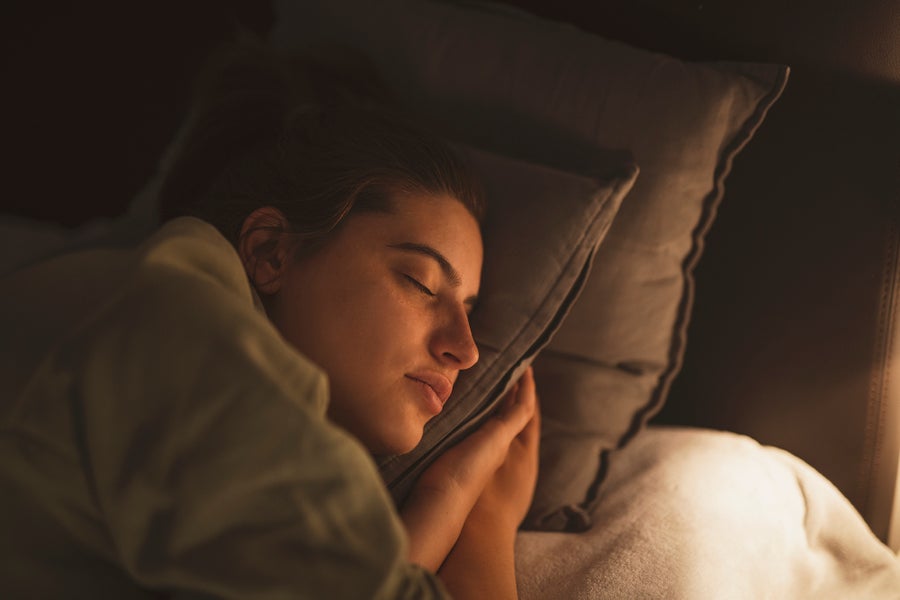 ArtistGNDphotography/Getty Images
.
.
Click the link below for the complete article:
.
__________________________________________
 James' World 2
Dec 17, 2024 @ 07:16:25
it’s crucial to nap at the right time, usually in the early afternoon when energy levels naturally di
LikeLike
Dec 17, 2024 @ 15:14:22
Thanks for that information!
LikeLike