
Click the link below the picture
.
Sweeping restrictions on abortion across the U.S. have already had major ripple effects in reproductive health care. During president-elect Donald Trump’s next administration, restrictions on abortion are likely to ramp up, and birth control may be next. The double hit is causing some people to urgently consider long-acting reversible contraception such as intrauterine devices (IUDs), or permanent contraception such as sterilization.
“I’ve definitely noticed a change post-Dobbs,” says Rachel Flink-Bochacki, an ob-gyn who practices in New York State, referencing the 2022 Supreme Court decision in Dobbs v. Jackson Women’s Health Organization that eliminated the nationwide right to abortion. In particular, Flink-Bochacki noticed an increased level of interest in sterilization among her patients. “It was a common conversation among ob-gyns, where we were all sort of saying, ‘Does anyone feel like we’re getting way more consults for this?’”
The data suggest this perception had some truth to it, says Xiao Xu, a health economist at Columbia University Irving Medical Center. In a recent report in JAMA, she and her colleagues found a statistically significant increase in sterilization procedures nationwide in the immediate aftermath of the Dobbs decision, which overturned the 1973 Roe v. Wade ruling that legalized abortion. The study also found that states with abortion restrictions continued to show higher rates of sterilization six months later. Other research has shown increases in long-acting reversible contraception use and sterilization procedures since Dobbs. These measures can prevent pregnancy for years at a time or for the rest of someone’s life. They are also less prone to failure than a daily pill and other short-term and temporary contraception.
The results of the 2024 election appear to have further amplified this interest: reports from Planned Parenthood, which provides family planning and other reproductive health services, suggest sharp increases in appointments for vasectomies, IUDs, and birth control implants at centers nationwide. That’s not surprising. “If abortion is becoming more difficult to do, women may turn to contraception to prevent a need for abortion,” Xu says. “Any abortion-targeted policy can have an impact broader than abortion care itself.”
Long-Acting Contraception
Three methods of long-term birth control are currently available: an arm implant, several varieties of IUDs, and sterilization procedures. All are extremely effective, with fewer than one pregnancy per year for every 100 people using them. In a survey conducted between 2017 and 2019, when abortion remained legal nationwide, some 24 percent of women relied on either their own or a partner’s sterilization for birth control, while 10 percent relied on an IUD or arm implant. People interested in any of these approaches will first consult with their doctor before scheduling the IUD or implant insertion or surgery, all of which are usually outpatient procedures.
Sterilization involves procedures such as a vasectomy, which cuts or blocks the tubes that carry sperm out of the testes, or a bilateral salpingectomy, which removes the fallopian tubes that carry eggs to the uterus. Both procedures are conducted under anesthesia but are typically minimally invasive; they are also irreversible. Flink-Bochacki notes that the consultation process includes a doctor evaluating that someone has fully thought through the decision, although some practitioners may refuse to perform these procedures on people without children. In the wake of Dobbs, she notes, reproductive health advocates have created online lists of doctors who are willing to perform these procedures on people without children.
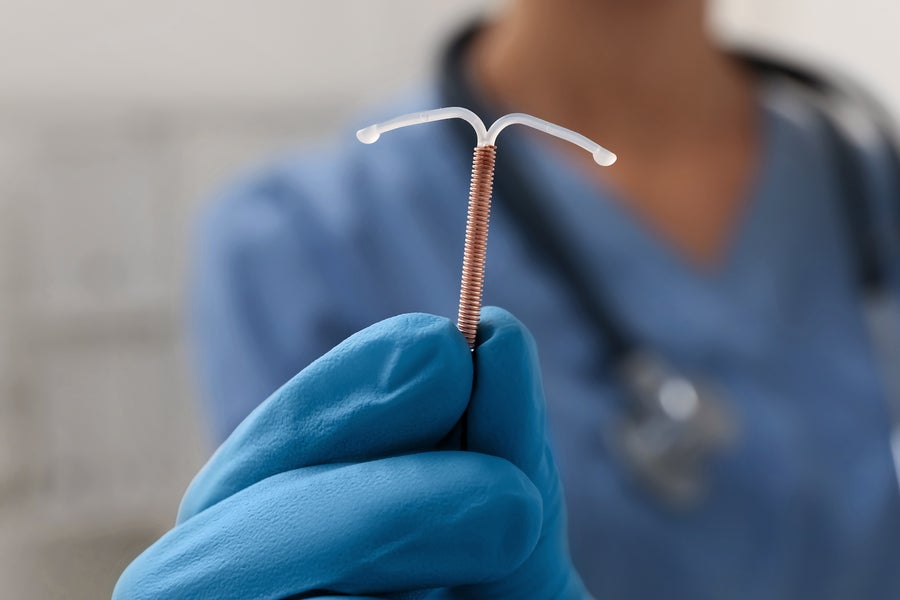
The arm implant and IUDs only work on people who can get pregnant, and they are long-lasting but not permanent. “They are phenomenal options, and they are reversible, so if you don’t like [them], you can obviously have [them] removed, and your fertility returns and there’s no long-term effects,” Flink-Bochacki says. (She notes that IUDs and implants are also the most popular form of contraception among ob-gyns themselves.)
.
 Liudmila Chernetska/Getty Images
.
.
Click the link below for the complete article:
.
__________________________________________
 James' World 2
Leave a comment