
Click the link below the picture
.
Women have endured critiques over their appearance since their entry into public spaces. But since Vice President Kamala Harris’s loss in the United States presidential election, criticism of women and their bodies has become even more explicit and misogynistic. The goal is to tell women to “get back in the kitchen” at home and stay out of the public domain. Combatting this bias against women is more important than ever, as disapproval of women’s appearance and bodies still happens to women at work every day in subtle and overt ways.
When one professional worked at a public relations agency, the male chief executive officer told her to “help the receptionist lose some weight.” He considered the female receptionist’s “sloppy appearance” a bad first impression to people coming into the office. Another professional worked in an organization where there were plenty of women in director roles, but almost all were “thin, blonde, white, [and] usually tall as well.”
Yet being attractive may not be an advantage either. Colleagues told a scientist that she was “too cute to be taken seriously” and that she “must struggle to convey [her] intellect.” In another case, the female
supervisors of a social worker were concerned that she was too distracting to male clients. The social worker felt she was to blame. So, she dressed very conservatively and gained weight to “make [herself] less attractive.”
Lookism, also known as pretty privilege, explains that physically attractive people have advantages in the workplace. While research on this beauty advantage exists, it does not sufficiently address differences between women and men. Like so many workplace generalizations, what is true for men is not necessarily true for women. Not only do women perceived as unattractive encounter workplace disadvantages, but attractive women do as well. In fact, women are criticized for their appearance no matter how they look. The femaleness of their body stands out, considered abnormal in a traditionally male space.
Through our research of 913 women leaders, social media posts, articles, and our own experiences, we found myriad ways that women’s appearance at work is “never quite right.”
‘The impossible tightrope of looking good but not too good at work’
Women walk a fine line when it comes to clothing at work. A health services researcher noted that some women were criticized for dressing “too sexy” while others were deemed “too sloppy.” She called it “the impossible tightrope of looking good but not too good at work!” One woman working a $30,000 per year job was told she needed to purchase a new wardrobe because her clothing was not “professional enough.” She said, “With what money am I to purchase professional attire?”
.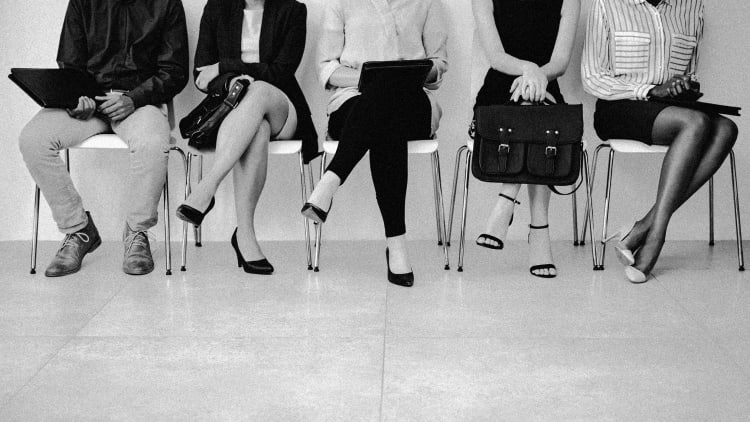
[Photo: Peopleimages/Getty Images]
.
.
Click the link below for the article:
.
__________________________________________
 James' World 2
Leave a comment