
Click the link below the picture
.
In troubling times, how do we move forward? What mindsets help us bounce back from adversity?
When the world ground to a halt because of the COVID-19 pandemic in 2020, few industries felt the impact quite like the performing arts. Venues shuttered and crowds dispersed. Musicians, actors, and production crews faced an unprecedented challenge: they needed to stay resilient despite the fact that their livelihood had vanished overnight.
Along with my colleagues at Clemson University and North Carolina State University, I wanted to explore what helps people persevere through such moments, so we partnered with MusiCares, a nonprofit that supports music industry professionals, to study how artists maintained their resilience during the pandemic’s darkest days. We were particularly interested in two mental approaches: mindfulness (being present and aware in the moment) and hopefulness (believing in and working toward a better future). In psychology, these concepts can be used to describe a general state of being, one that reflects both personality (some people are naturally more mindful or hopeful) and actions, such as regularly practicing meditation to improve one’s focus on the present. Many researchers also view mindfulness as a metacognitive process, that is, something that enables people to consciously monitor and modulate their attention, emotions and behaviors to attend to the current moment in an open and curious, nonjudgmental way. Hope, meanwhile, functions as a future-oriented state that helps people to reflect on one’s perceived ability to generate pathways around challenges.
Mindfulness—a buzzword in wellness circles—might seem to be the obvious key to weathering a storm such as the pandemic. After all, staying grounded in the present moment seems like a good way to avoid spiraling into anxiety about an uncertain future. But our research tells a different, somewhat
surprising story. Although mindfulness is a powerful tool for well-being, it does have limitations—and learning to cultivate a hopeful mindset is another critical strategy.
Our study followed 247 performers for 18 months, much of which was spent in lockdown. We asked them about their mindset and well-being at different stages of the pandemic. As part of this effort, we gathered data through questionnaires that we sent out in 2021. People told us about their early experiences of the pandemic and their level of work-related tension and resilience. We also asked them about how much they agreed with various statements related to mindfulness or hopefulness in relation to the pandemic specifically. A higher state-of-mindfulness score suggested someone working to maintain awareness of their experiences in a nonjudgmental way, and a higher hopefulness state indicated someone who was actively envisioning potential solutions to pandemic-related obstacles. This allowed us to assess people’s mental strategies and better understand how each approach had helped people navigate the unprecedented challenges of COVID-19.
We found, unsurprisingly, that these artists were indeed adversely affected by COVID-19’s challenges. More intriguingly, we did not find evidence that mindfulness was particularly helpful to them as a pandemic coping strategy. Although it wasn’t harmful, it also didn’t significantly help artists bounce back or stay engaged with their work during this prolonged period of stress.
Instead hope was the real superstar. Those who maintained a hopeful outlook reported higher levels of work-related resilience and engagement, even as their industry remained in limbo. They were also more likely to experience positive emotions, which in turn boosted their ability to cope with the ongoing crisis. Hopefulness also contributed to their ability to stay productive by exploring new ways to deliver their craft, such as virtual performances and online collaborations.
.
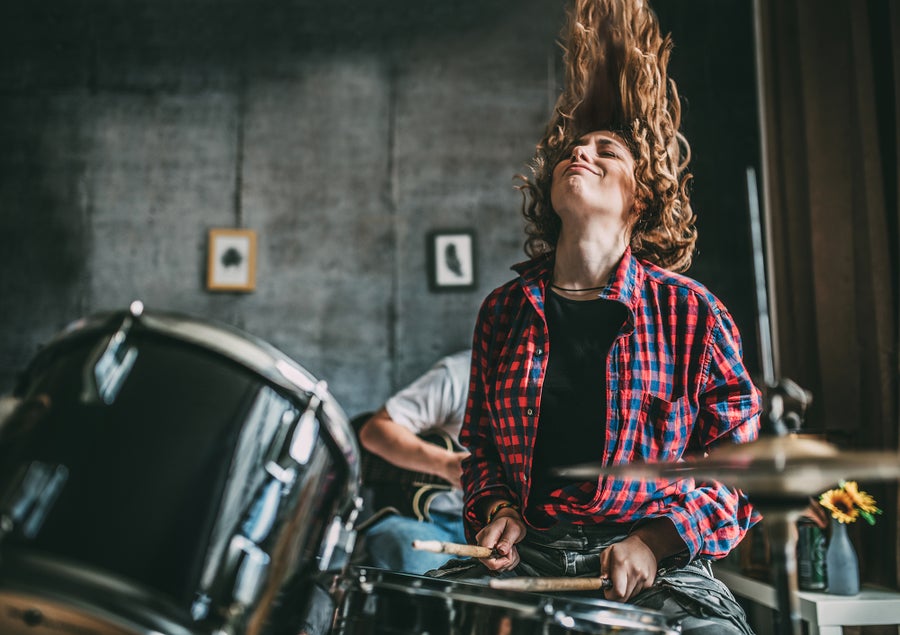 zeljkosantrac/Getty Images
.
.
Click the link below for the article:
.
__________________________________________
 James' World 2
Leave a comment