
Click the link below the picture
.
In the weeks before and after the U.S. presidential election, many of us are asking about the role of empathy in American politics. Does it matter whether candidates express care for their constituents, and what does a person’s vote says about their ability or willingness to empathize with others?
Empathy is important to democracy—but it’s complicated to understand, as scientists and philosophers have long tried to study in practice. I am one of those scientists. As we use it in our day-to-day lives, we often mean sharing others’ emotions, such as feeling someone else’s sorrow or joy, but can also mean showing compassion or concern for their suffering or understanding and believing their hurt or joy.
In terms of the November election, how much did empathy matter? And in a challenging, exhausting, and polarized political environment, how do we remain empathetic? Do we even need to? Here, I argue that we need to remember our responsibility to choose and control the expanse of our empathy—and we can do so by reflecting on why we care and engage, whether that be to uphold our values, feel good, or better know the world. As research in my lab and in my field has shown, callousness is a decision—we are the authors of our empathy, and numbness isn’t a foregone conclusion.
I believe that showing empathy is a choice. We must be mindful of social pressures that might steer these choices in particular directions if we don’t take the effort to manage our empathy ourselves. Extending empathy across political divides can be important, but so too can sustaining motivations to empathize with the most marginalized, particularly if they are targeted by other political groups. Common ground may risk minimizing such harms.
To me, empathy is a strength, not weakness—a way to attend to the people we value most. If we let ourselves become callous to others’ needs, we risk losing sight of democracy and the importance of treating each other with dignity. Especially in the current climate, we should double down on desires to empathize, and remember that the willingness to empathize may be just as important as the ability to do so. The effort matters.
Exit polls tell us that having empathetic leaders may not be as important to many voters. Of four qualities ascribed to candidates in the 2024 U.S. presidential election, only 18 percent ranked empathy (“cares about people like me”) as most important. Though perhaps surprising, this is consistent with findings that people value leaders who care impartially, and who exhibit schadenfreude and relish pain in political opponents. Of that 18 percent that prioritized empathy, only one quarter supported Trump. Yet the pressing question may not be for whom empathy mattered most, as our research has shown that voters can overestimate partisan differences in concern.
What matters more is how we sustain willingness to empathize, as a value and social norm. How do we avoid numbness, as in the New Yorker cartoon about isolation as self-care?
Before politics enters the picture, we know that people find empathy to be exhausting and effortful. My team has found that people typically choose to avoid empathizing with strangers, finding it taxing. If empathy is like complex math, then people might take the easy road and avoid the problem set. But it matters who these feelings are about, as people choose empathy and compassion more for close others. When adding in political dynamics—such as what political opponents or peers think of our empathizing—it may make the calculus of empathy even more challenging.
.
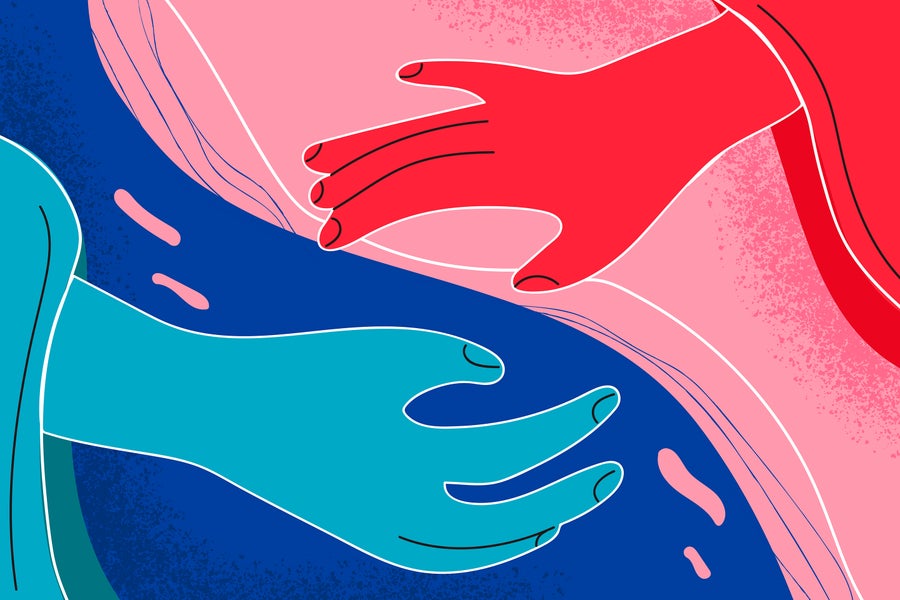 Denis Novikov/Getty Images
.
.
Click the link below for the article:
.
__________________________________________
 James' World 2
Leave a comment