For supporters of reproductive health care, a glaring contradiction stands at the center of the 2024 election. Most pro-abortion ballot initiatives passed, and the American people reelected the president who was responsible for overturning Roe v. Wade through his Supreme Court appointments.
How to reconcile this contradiction? In many ways, the results reflect the complicated dynamics of a post-Roe America.
In the two and a half years since the loss of our federal constitutional right to abortion with the Supreme Court’s Dobbs decision, the legal landscape has been upended, with 13 states currently banning abortion completely and many others banning abortion at different points throughout pregnancy that would have been unconstitutional under Roe. The consequences have been nothing short of disastrous, as the scientific evidence foretold. They include the documented tragic deaths of at least four women, the denial of care for women experiencing pregnancy complications, and the increased criminalization and surveillance of pregnant people. At the same time, the number of abortions has risen. That’s likely a result of monumental efforts by clinics, abortion funds, and practical support organizations to expand access to care and reduce stigma, as well as broader availability of telehealth for medication abortion and new supportive policies in protective states like shield laws that offer protection for abortion providers treating patients in other states via telemedicine and the removal of public insurance coverage restrictions that make abortion care more affordable.
No quick fix offers escape from this complicated legal and policy landscape. No one election can fully restore our rights or—as we needed even while Roe stood—bring us closer to true abortion access for all. There is only the steady, ongoing organizing work necessary, state by state, to deliver deep and lasting change. Ballot measures have become a key tool: between the June 2022 Dobbs decision and November 2023, voters in all seven states where measures on abortion were on the ballot came down decisively in favor of retaining or expanding abortion rights. While in November’s voting, the post-Dobbs winning streak of ballot measures on abortion was ultimately broken, seven new proabortion ballot measures passed while three failed. In sum then, voters in 13 states (Montana had measures in 2022 and 2024) have used direct democracy to declare their desire for legal abortion, in frank opposition to the Dobbs decision.
Amanda Montañez; Source: Guttmacher Institute (abortion ballot measures data)
Those results show voters are clearly comfortable splitting tickets, both in terms of candidates (for example, Wisconsin voters returned Trump to Washington alongside Senator Tammy Baldwin, an abortion rights champion) but also when it comes to abortion rights ballot measures. In Missouri, about 52 percent of voters supported establishing a constitutional right to abortion, making Missouri the first to clear the way for overturning a total ban. With their same votes, over 58 percent of voters supported Donald Trump. Similarly, 57.8 percent of voters approved Montana’s abortion rights ballot measure, while 58.4 percent of them supported Trump.
.
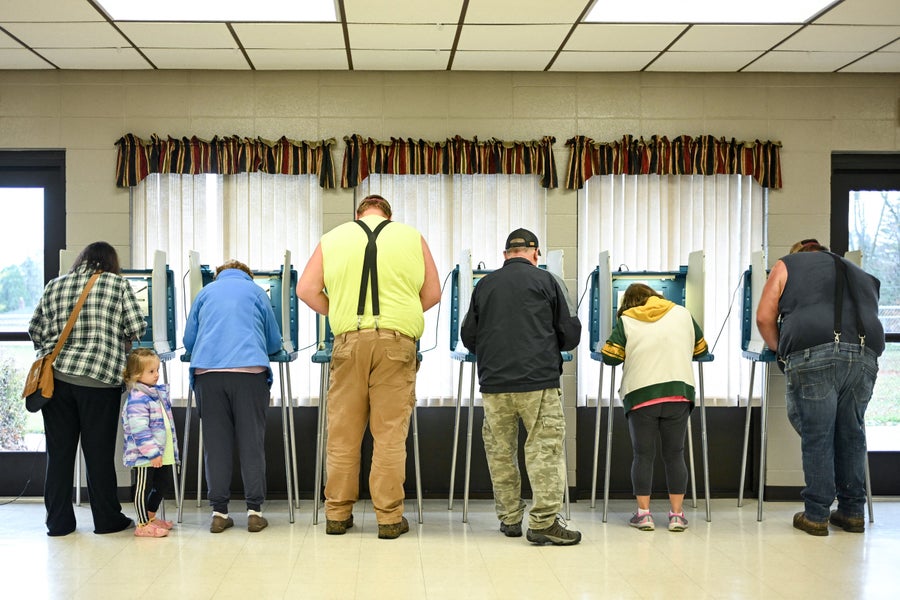
People vote at a polling station at Addison Town Hall in Allenton, Wisconsin, on Election Day, November 5, 2024. Alex Wroblewski/AFP via Getty Images
Film and Writing Festival for Comedy. Showcasing best of comedy short films at the FEEDBACK Film Festival. Plus, showcasing best of comedy novels, short stories, poems, screenplays (TV, short, feature) at the festival performed by professional actors.


 James' World 2
Leave a comment