
Click the link below the picture
.
Most Americans could probably guess that heart disease, diabetes, and cancer are among the world’s fastest-growing causes of death. Yet one rapidly accelerating health threat now lurks under the radar, despite its devastating consequences.
The threat comes from antimicrobial resistance, or AMR, the evolved immunity of dangerous microbes to lifesaving drugs. AMR killed 1.27 million people in 2019, more than malaria and HIV combined—according to the most recent comprehensive global analysis. Now, a groundbreaking study published in the Lancet estimates that, without action, AMR will kill more than 39 million people in the next quarter century. Average annual deaths are forecast to rise by nearly 70 percent between 2022 and 2050.
We don’t have to stay on this trajectory. But changing direction will require decisive moves from the U.S. government. As the global leader in pharmaceutical development, the U.S. has a moral obligation to lead the way on solving this global problem. We need to jump-start research and development on new antimicrobial drugs and shore up the patent system that enables us to bring so many new medicines to market.
AMR occurs when disease-causing microbes—most often bacteria—evolve to evade the drugs created to kill them, turning them into so-called “superbugs.” Some better-known ones include methicillin-resistant Staphylococcus aureus (MRSA), multidrug-resistant tuberculosis, and Streptococcus pneumoniae, a bacterium that causes pneumonia and can be resistant to penicillin. In 1993 U.S. hospitals recorded fewer than 2,000 MRSA infections. In 2017 that number had jumped to 323,000—according to the latest data available from the Centers for Disease Control and Prevention. Preliminary data shows that cases of another superbug called C. auris jumped five-fold between 2019 and 2022.
A major cause of AMR is overuse and misuse of antibiotics. The more a bacterium is exposed to a particular antibiotic, the more opportunities it has to
mutate and become resistant. The danger is that as these essential medicines stop working, even minor infections will become hard to treat. That will make even routine surgeries and common illnesses much more dangerous—and make it much harder for those battling cancer whose immune systems are compromised, in particular, to fight off infections. Without action and investment soon to support the development of new antibiotics, we could be thrown back to the pre-penicillin era, when a simple cut could turn deadly.
Yet despite the urgent need for new antibiotics, the pipeline for developing them is drying up. As of today, only four major pharmaceutical companies still work on antibiotics, down from dozens just a few decades ago. The reason is simple: the economics of modern antibiotic development don’t work. Creating a single new drug takes an average of 10 to 15 years and costs more than $2 billion. But since antibiotics are typically used for short periods ranging from seven to 14 days and must be used sparingly to limit AMR, their profitability is necessarily low. This built-in roadblock means companies have a hard time justifying the expense and risk.
The new Lancet study recommends several ways to fight back. One of them, unsurprisingly, is to develop new antibiotics—an area in which the U.S. has an opportunity to show global leadership, expand its influence, and make an enormous difference.
America has the world’s best system of intellectual property protection, which has made us the global frontrunner in biopharmaceuticals as well as dozens of other high-tech industries. IP protections—in particular patents—provide a window of market exclusivity that allows companies to recoup their enormous investments in research and development. Without reliable patents, few businesses would take the risk of developing new antimicrobial drugs.
.
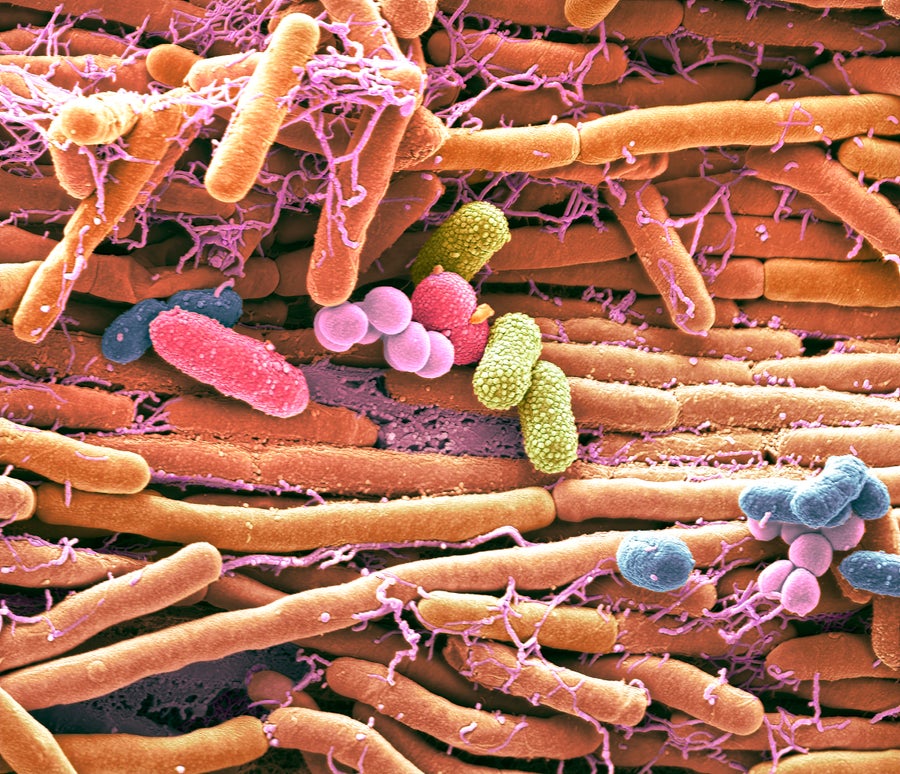
Colored scanning electron micrograph (SEM) of bacteria cultured from a mobile phone. Tests have revealed the average handset carries 18 times more potentially harmful germs than a flush handle in a men’s toilet. With frequent use phones remain warm, creating the ideal breeding ground for bacteria. With touch-screen phones, the same part of the phone touched with fingertips is pressed up against the face and mouth, increasing chances of infection. In tests, E. coli, Haemophilus influenza, and MRSA were amongst infectious bacteria found on handsets. Common harmless bacteria include Staphylococcus epidermidis, Micrococcus, Streptococcus viridans, Moraxella, and bacillus species. Steve Gschmeissner/ Science Source
.
.
Click the link below for the article:
.
__________________________________________
 James' World 2
Leave a comment