
Click the link below the picture
.
Quincy Jones, one of the most powerful forces in American popular music for more than half a century, died on Sunday in California. He was 91.
His death was confirmed in a statement by his publicist, Arnold Robinson, that did not mention a cause. The statement said that he had died peacefully at his home in Bel Air.
Mr. Jones began his career as a jazz trumpeter and was later in great demand as an arranger, writing for the big bands of Count Basie and others; as a composer of film music; and as a record producer. But he may have made his most lasting mark by doing what some believe to be equally important in the ground-level history of an art form: the work of connecting.
Beyond his hands-on work with score paper, he organized, charmed, persuaded, hired, and validated. Starting in the late 1950s, he took social and professional mobility to a new level in Black popular art, eventually creating the conditions for a great deal of music to flow between styles, outlets and markets. And all of that could be said of him even if he had not produced Michael Jackson’s “Thriller,” the best-selling album of all time.
Mr. Jones’s music has been sampled and reused hundreds of times, through all stages of hip-hop and for the theme to the “Austin Powers” films (his “Soul Bossa Nova,” from 1962). He has the third-highest total of Grammy Awards won by a single person — he was nominated 80 times and won 28. (Beyoncé’s 32 wins is the highest total; Georg Solti is second with 31.) He was given honorary degrees by Harvard, Princeton, Juilliard, the New England Conservatory, the Berklee School of Music, and many other institutions, as well as a National Medal of Arts and a National Endowment for the Arts Jazz Master fellowship.
His success — as his colleague in arranging, Benny Carter, is said to have remarked — may have overshadowed his talent.
In the late 1950s and early ’60s, Mr. Jones led his own bands and was the arranger of plush, confident recordings like Dinah Washington’s “The Swingin’ Miss ‘D’” (1957), Betty Carter’s “Meet Betty Carter and Ray Bryant” (1955) and Ray Charles’s “Genius + Soul = Jazz” (1961). He arranged and conducted several collaborations between Frank Sinatra and Count Basie, including what is widely regarded as one of Sinatra’s greatest records, “Sinatra at the Sands” (1966).
He composed the soundtracks to “The Pawnbroker” (1964), “In Cold Blood” (1967), and “The Color Purple” (1985), among many other movies; his film and television work expertly mixed 20th-century classical, jazz, funk, and Afro-Cuban, street, studio and conservatory. And the three albums he produced for Michael Jackson between 1979 and 1987 — “Off the Wall,” “Thriller” and “Bad” — arguably remade the pop business with their success, by appealing profoundly to both Black and white audiences at a time when mainstream radio playlists were becoming increasingly segregated.
Quincy Delight Jones Jr. was born on the South Side of Chicago on March 14, 1933, to Quincy Sr. — a carpenter who worked for local gangsters — and Sarah (Wells) Jones, a musically talented Boston University graduate. At one point in the late 1930s, Quincy and his brother, Lloyd, were separated from their mother, who had developed a schizophrenic disorder, and taken by their father to Louisville, Ky., where they were put in the care of their maternal grandmother, a former enslaved worker.
By 1943, Quincy Sr. had moved with his sons to Bremerton, Wash., where he found work in the Puget Sound Naval Shipyard. They were eventually joined by his second wife, Elvera, and her three children, and four years later the family moved to Seattle. Once there, Quincy Sr. and Elvera had three more children; of the eight, Quincy Jr. and Lloyd perceived themselves to be the least favored by their stepmother, and were often left to fend for themselves.
.
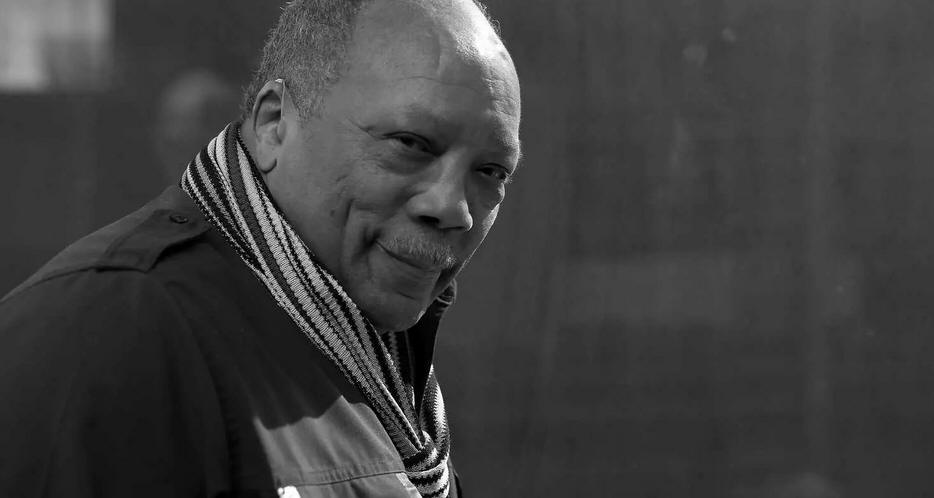
Quincy Jones, Giant of American Music, Dies at 91
.
.
Click the link below for the article:
.
__________________________________________
 James' World 2
Leave a comment