
Click the link below the picture
.
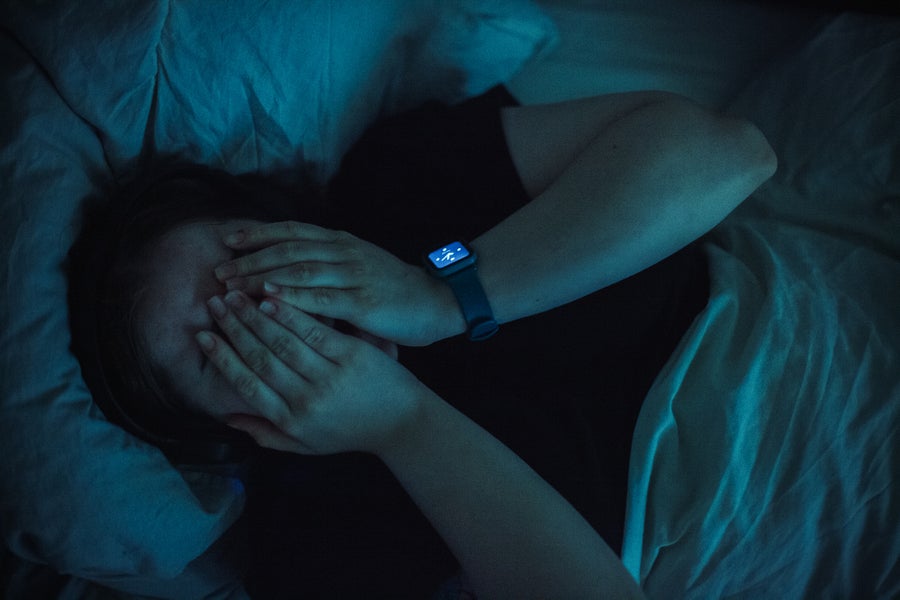
If the nerve-racking buildup to the U.S. presidential election has stolen your sleep, you’re not alone. An American Psychological Association survey released last week found that more than 82 percent of adults have felt that this election cycle “has been an emotional rollercoaster” and that 25 percent say they have lost sleep over it. But experts in the field have some good news: a few actionable, science-based steps can help.
Since the moment the first campaign signs went up, sleep physician Sally Ibrahim says, she has been providing advice for what she calls “electsomnia.”
“You can have acute insomnia or very short-term issues around sleep, like if you’re about to get married, for example. But election season drags on so much [that] people can develop these sort of chronic issues with their sleep loss,” says Ibrahim, a pediatric and adult sleep specialist at the University Hospitals health system in northeastern Ohio and an associate professor at the Case Western Reserve University School of Medicine. “What studies have found is our thoughts around our situation can be much more impactful than the situation itself.”
Anxiety about anything can disrupt sleep, but research suggests that unpredictable, high-stakes, world-scale events—such as the coming U.S. election—can have a particularly intense effect, says clinical psychologist Tony Cunningham, director of the Center for Sleep and Cognition at Beth Israel Deaconess Medical Center and Harvard Medical School. Cunningham ran a study that tracked people’s moods, mental health, alcohol consumption, and sleep in 2020, right around that year’s presidential election and the COVID pandemic. He found that those who experienced more stress and depression on election day were more likely to have worse sleep that night.
“Sleep was uniquely terrible, [as well as] almost every metric we collected,” Cunningham says. “Stress and negative mood were probably the most dramatically affected. There were several days of significant increase leading up to the election, and then it was kind of a slow-burn couple of days until it got back down to normal.” People reported napping more the day after the election, he adds.
“Take stock of how you are doing in the moment, especially day-to-day, leading up to and following the election.”
—Tony Cunningham, clinical psychologist
The four-day delay in the 2020 voting results also likely worsened things, Cunningham says. He was surprised that even many non-U.S. study participants reported similar stress and shifts in sleep that rose and fell with the election cycle. “This is a major sociopolitical event that is driving an acute stress response in a large proportion of the population,” he says.
Cunningham, who is collecting data again for the 2024 election, warns that people in the U.S. may experience a “double whammy” when the clocks switch from daylight saving time to standard time during the weekend before election day. This could be “particularly damaging” to sleep, he says. Luckily, there are ways to cope. “The first thing is just to try to acknowledge your feelings and recognize your limits,” Cunningham says. “Take stock of how you are doing in the moment, especially day-to-day, leading up to and following the election.”
Cunningham also notes that research links overconsumption of news during stressful events to psychological distress. “There’s a level between being informed and then doomscrolling at four in the morning,” he says, adding that the latter “is not going to be helpful to you.”
“Performance anxiety” about sleep can also beget less sleep. “We actually tell people with insomnia, ‘Don’t worry about not sleeping,’” Ibrahim says.
.
 Dmytro Betsenko/Getty Images
.
.
Click the link below for the article:
.
__________________________________________
 James' World 2
Leave a comment