
Click the link below the picture
.
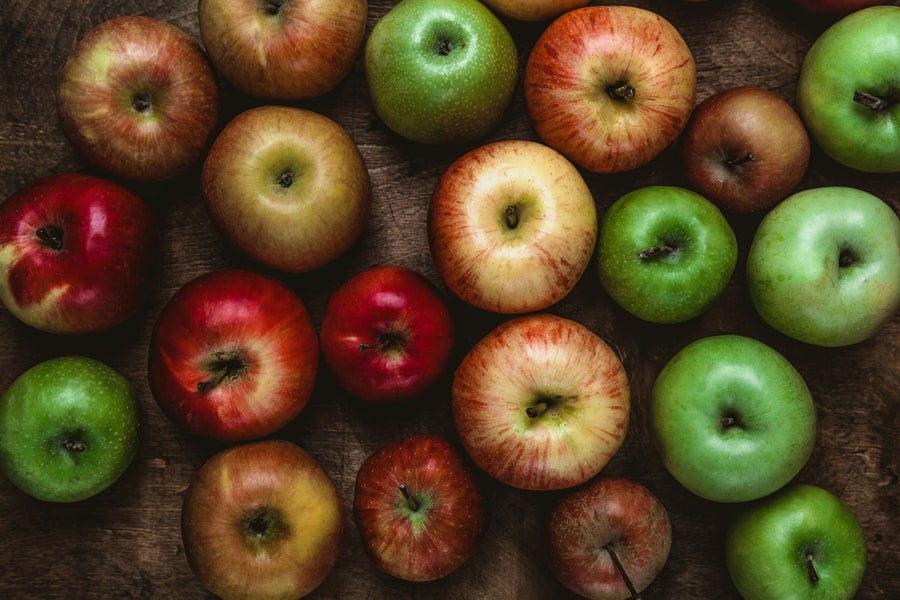
We are living in a golden age of apples, a time of delicious, diverse, mouth-watering abundance that we could barely have imagined at the turn of the millennium. How did we get to a time when most of us, most of the year, can eat our choice of fragrant, juicy, sweet, crisp (oh so crisp) apples?
We can thank a mix of science, innovations, investment in long-term research, the multi-multi-multi-generational transmission of knowledge, communal action, and people who joyfully dedicate their lives to a cause.
What’s your favorite apple? I asked this question on the social media platform Bluesky, and this is a sample of people’s answers: Macoun, Winesap, Gravenstein, Winter Banana, CrimsonCrisp, SnapDragon, SweeTango, Jazz, Cosmic Crisp, Jonathan, Empire, Envy, RubyFrost, Hidden Rose, Sonata, Pink Lady, Regent, Honeycrisp, Honeycrisp, Honeycrisp. (My favorite? Evercrisp.)
Many of us remember that the U.S. apple market was dominated for decades by one variety: Red Delicious, which is a bold name for a bland apple. It is certainly red, with a lovely rich jewel color and a handsome shape. But delicious? The main alternative was Golden Delicious, a perfectly fine but similarly uninspiring yellow variety. Tart, green Granny Smiths, which were propagated in Australia in 1868 by an orchardist named Maria Ann Sherwood Smith, started taking a decent share of the market in the U.S. in the 1980s. And that’s where we were stuck.
David Bedford, an apple researcher at the University of Minnesota who helps develop new varieties (his favorite apples: Honeycrisp, SweeTango and Rave) says, “I still remember some big marketers telling me: we have a red apple, a yellow apple, and a green apple. Do we really need any more?”
Apple History
Today’s cultivated apples are produced by the tree Malus domestica. Its ancestor is Malus sieversii, which still grows wild in what is now Kazakhstan and bears small and variable fruit. Farmers began domesticating apples sometime between 10,000 and 4,000 years ago in the Tian Shan Mountains of Central Asia, according to genetic analyses. These cultivated varieties then quickly spread along the Silk Road trade route, where breeders crossed them with another wild species, Malus sylvestris. The ancient Romans developed techniques for apple grafting (more on that in a sec) and propagated the trees across their empire.
It’s a little challenging to track the cultural history of apples because in many languages, the word that came to mean “apple” could refer to any type of fruit. There weren’t apples in Mesopotamia, for instance, so the tempting fruit in the Garden of Eden story was more likely a fig. When the Greek goddess of discord inscribed a fruit with “For the most beautiful” and started the Trojan War, that fruit may have been a quince. And William Tell probably didn’t shoot an arrow through an apple on top of his son’s head. Isaac Newton wasn’t hit on the head, but he did say that observing an apple falling from a tree helped inspire his theory of gravity.
.
 LightFieldStudios/Getty Images
.
.
Click the link below for the article:
.
__________________________________________
 James' World 2
Leave a comment