
Click the link below the picture
.
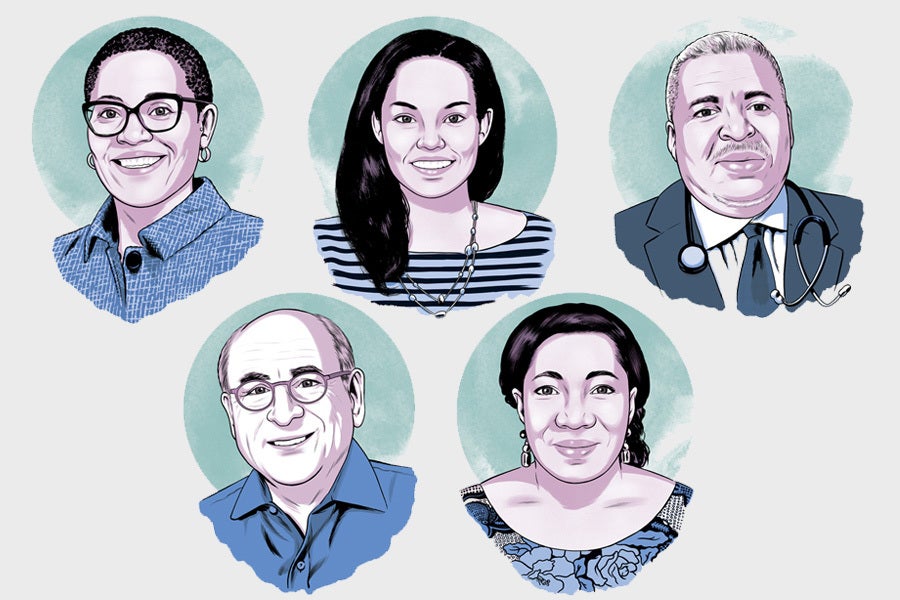
After attending the first annual Global Sickle Cell Disease Congress in Accra, Ghana, in 2010, Obiageli Nnodu returned home to Nigeria with a deep resolve to combat the disease in her own country. Nigeria is estimated to have the world’s largest population of people with sickle cell disease, and Nnodu, a clinical hematologist and sickle cell researcher at the University of Abuja, has been treating adults with the illness since 1985. She knew she would have had far more impact if she could have intervened when they were young. Most people who die from sickle cell disease in Africa are children who have never been diagnosed, so instituting widespread newborn screening would be the most effective way to help them survive.
At the time, the efforts to screen newborns in Nigeria were small and isolated, with little communication or collaboration among groups. Nnodu co-founded the Sickle Cell Support Society of Nigeria (SCSSN), a nongovernmental organization that brings together other NGOs, doctors, researchers, parents, and patients. Her first goal: collect as much data as possible about the disease in her country.
Nnodu quickly learned that diagnostic tests in Nigeria required tedious sample collection, transportation to one of only six sickle cell centers across the nation, reliable power for the diagnostic machines at those centers, and highly trained personnel to collect and process the samples. In a country like Nigeria, with a largely rural population, scaling up this process was simply not feasible.
By 2017 more practical tests had been developed—ones with a low learning curve that didn’t require electricity and could be conducted at the patient’s location. Between September and December of that year, Nnodu’s team used those simple devices to test more than 1,000 newborns across Nigeria and proved they could reliably and accurately diagnose day-old babies. Shortly thereafter, a study of infants at immunization clinics in the capital city of Abuja showed their approach could be integrated into a public health system.Based on Nnodu’s foundational studies, a health-care network, the Consortium on Newborn Screening in Africa, was created; by 2021 it included seven countries. It works to establish and expand newborn screening and early-intervention programs at medical centers and hospitals. Nnodu is also the principal Nigerian investigator for another multicountry collaboration, the Sickle Pan African Research Consortium, which is working to develop infrastructure for sickle cell disease research, care, education, and training in sub-Saharan Africa.
In just 15 years, “she has taught those working with her the power of networking, collaboration, and attention to detail,” says Adekunle Adekile, the previous chair of the SCSSN and a sickle cell researcher and professor of pediatric hematology at Kuwait University.
Nnodu acknowledges that it’s unusual for a hematologist who works with adults to focus on newborn screening. She hopes that by identifying sickle cell disease early, she can get these tiny patients to pediatricians who will look after them so they can grow up, be educated, take on grown-up responsibilities “and come to me.”
.
 Joel Kimmel
.
.
Click the link below for the article:
.
__________________________________________
 James' World 2
Leave a comment