
Click the link below the picture
.
As Hurricane Rita bore down on the bayous of southeastern Texas in 2005, Caitlin Eaves’s family made the wrenching decision to evacuate and leave their longtime home to an uncertain fate. After they returned, they spent several months sleeping on what was left of their floor and repairing the extensively flood-damaged house bit by bit, hampered in part by the long delay in restoring power. The storm also destroyed the local high school, leaving then-16-year-old Eaves and her peers in their 200-person rice-farming community without any formal schooling for weeks.
When Hurricane Harvey barreled toward the same area in 2017, Eaves’s parents and her then 91-year-old grandmother opted to stay put based on the forecasts. But the storm stalled over the region, inundating some areas with more than 60 inches of rain. The resulting floods trapped her family in their home. Eaves, by then grown and living elsewhere, frantically called local high school friends. Within minutes they rushed to successfully rescue the family by airboat.
The experiences exacted a mental toll on the family. “These kinds of things keep happening over and over, and I think my parents are finally getting worn down with everything they have to do,” Eaves says. But people such as her parents can’t just sell a house in small-town Texas for enough to buy a home farther inland, away from the danger of future storms. Their story is one of thousands of similar accounts among hurricane survivors. Almost 300 hurricane-related disasters have struck the U.S. since 2001, and such events are predicted to become increasingly frequent and ferocious. Two massive storms—Fiona and Ian—recently wrought their damage within days of each other, stressing already stricken places such as Puerto Rico to the breaking point.
Just one major destructive event such as this has immediate and sometimes long-term mental health effects, which can worsen when the disaster and its aftermath are severe and lingering. And research shows that people who are subjected to a conveyor belt of catastrophes are at even greater risk for mental health struggles related to anxiety, post-traumatic stress disorder (PTSD), and mood disorders. The level of support and resources available in an affected location can determine how resilient residents are to these difficulties—and a key strategy may rely on developing what are called “concentric circles of community.” With the individual at the center, family and friends form the closest such circle, followed by neighborhood acquaintances and then the support structures around these communities, from government policies to literal structures that can protect them. “Local government and local organizations need to be active, along with targeted states and national government,” says Sarah Lowe, a social and behavioral scientist at the Yale School of Public Health.
Immediate Aftermath
Many people suffer acute stress in the immediate aftermath of a massive disaster, Lowe says. They might have nightmares or want to avoid reality completely, and they can experience a heightened sense of watchfulness that leaves them jumpy and struggling to fall asleep. As a teen, Eaves stopped buying things that wouldn’t fit into her emergency “go bag.” “You catch yourself doing weird things like that,” she says, “and being used to the ongoing inconvenience of it, never feeling stable.”
.
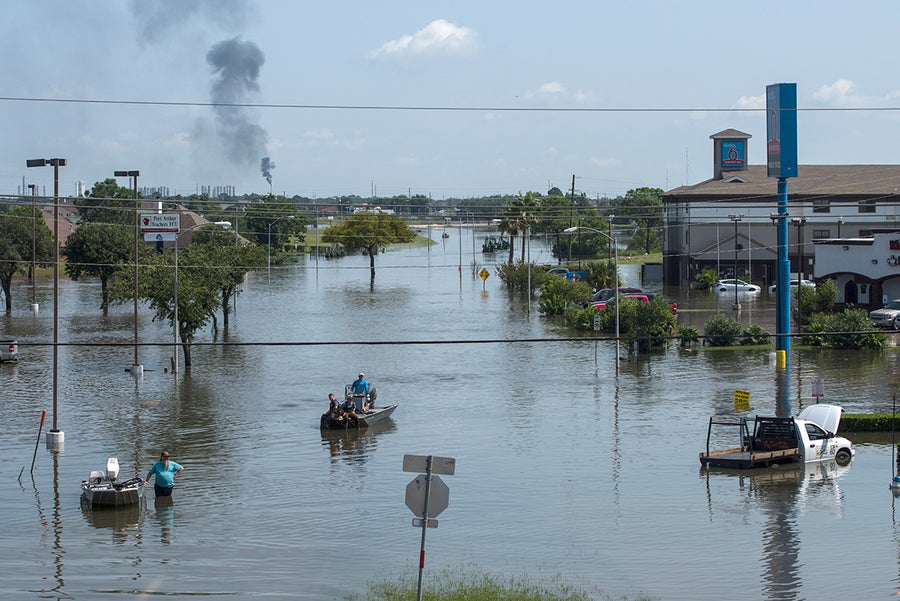
Residents return to their homes in Port Arthur, Texas to survey the damage wrought by Hurricane Harvey in September 2017. Michael Robinson Chavez/The Washington Post via Getty Images
.
.
Click the link below for the article:
.
__________________________________________
 James' World 2
Leave a comment