
Click the link below the picture
.
On behalf of the 55 million people worldwide who live with Alzheimer’s disease, the millions more who shoulder the burden of care and loss, and the younger generations whose futures are clouded by the threat of this disease, we issue a call to action.
The time is ripe. For the first time, we have an opportunity to defeat this disease, which robs so many otherwise healthy people of their memories and their identities and causes so much suffering and loss to them, their loved ones, and society at large.
In recent years, scientists have made startling advances in their ability to detect Alzheimer’s disease in the early stages, when treatments are most effective. Drugs are now available that can slow the progress of the disease, having gone from the lab to pharmacy shelves, and more are in the pipeline.
The arrival of these twin advances in testing and treatments has galvanized medical researchers, entrepreneurs and healthcare professionals. Several big pharmaceutical firms that had backed away from the disease, because it was so complex that it defied quick solutions, are once again making big investments. Biotech firms are working to commercialize new technologies, such as blood biomarker tests and cognitive tests that can help in diagnostics and screening. What’s more, regulators have shown a new willingness to move drugs quickly through the approval process, which is spurring innovation.
This good news brings a new challenge: getting these tests and treatments to the millions of people in all corners of the world who need them. We formed the Davos Alzheimer’s Collaborative (DAC) in part to address this challenge.
Part of this task involves bolstering our ability to detect Alzheimer’s early in the disease. Several blood tests that are currently on the market can measure telltale proteins, and more are due in the coming months. We need to make these tests cost-effective and plentiful.
Even though much of the technology needed for early detection is already in place, policymakers are underestimating the resources and assistance that clinics, doctors’ offices and public-health officials will require to adopt and implement early detection.
Putting tools in the hands of consumers is another effective strategy that could be helpful in early detection. Digital assessment tools are now available that allow you to test yourself for cognitive impairment—whether it’s memory, judgment or orientation. Such tests can help manage the screening workload in clinics.
We also need to raise public awareness about the new outlook for Alzheimer’s, so that people know there’s something they can do about the disease other than fear it. People should be asking their doctors, “How is my brain health? Is there a blood test I can take?” Doctors will need to figure out how to build Alzheimer’s testing into their routine clinical practice. DAC is helping them do exactly that.
Rectifying inequities is critical. So far, researchers developing treatments and tests have focused on people of northern European descent, neglecting the rest of the world, where the vast majority of Alzheimer’s patients are to be found. This is unfair, and it is also bad science, because it leaves out information contained in the full panoply of human genetic diversity. Research organizations are making efforts to rectify this gap, but much remains to be done.
Healthcare systems around the world, already strained by the growing prevalence of Alzheimer’s and other diseases, will need help in handling the new protocols for screening and treatment.
To seize this global moment, we must work together. At present, the field of Alzheimer’s is fragmented. Academics work with their cohorts, businesses have their product strategies, governments focus on their own citizens. This compartmentalization is a wasted opportunity to pool our knowledge and scale our resources.
Governments around the world need to step up their game. The U.S. National Institutes of Health spent about $400 million a year on Alzheimer’s disease in 2010; it now spends $3.7 billion. No other government or region comes close. Europe, China, India and other nations need to join the U.S., U.K. and others in the fight against this disease.
The World Economic Forum and the Global CEO Initiative on Alzheimer’s Disease came together to form DAC, because we need an international organization that can coordinate an approach to Alzheimer’s disease that resembles the global effort to fight infectious disease. DAC was modeled on organizations such as Gavi, the Vaccine Alliance; The Coalition for Epidemic Preparedness Innovations and The Global Fund, which were formed as mechanisms for battling malaria, polio, influenza and other infectious diseases around the world.
Defeating Alzheimer’s will require a massive cooperative effort. DAC is already working to speed innovation and prepare healthcare systems to implement new technologies and strategies. We are enlisting corporate executives, government leaders and nongovernmental organizations in an effort to ease the burden of this disease and end the suffering it causes.
In the following pages you will read about our efforts thus far to make health systems better able to detect the disease early, reach underserved populations and to find new, innovative ways of bringing more providers to the frontlines.
Leveraging what we are learning from around the world, we are calling on governments to increase their investments in research, healthcare and treatments. Working together, we can beat this disease rapidly and comprehensively.
Alzheimer’s disease, the millions more who shoulder the burden of care and loss, and the younger generations whose futures are clouded by the threat of this disease, we issue a call to action.
The time is ripe. For the first time, we have an opportunity to defeat this disease, which robs so many otherwise healthy people of their memories and their identities and causes so much suffering and loss to them, their loved ones and society at large.
In recent years, scientists have made startling advances in their ability to detect Alzheimer’s disease in the early stages, when treatments are most effective. Drugs are now available that can slow the progress of the disease, having gone from the lab to pharmacy shelves, and more are in the pipeline.
The arrival of these twin advances in testing and treatments has galvanized medical researchers, entrepreneurs and healthcare professionals. Several big pharmaceutical firms that had backed away from the disease, because it was so complex that it defied quick solutions, are once again making big investments. Biotech firms are working to commercialize new technologies, such as blood biomarker tests and cognitive tests that can help in diagnostics and screening. What’s more, regulators have shown a new willingness to move drugs quickly through the approval process, which is spurring innovation.
This good news brings a new challenge: getting these tests and treatments to the millions of people in all corners of the world who need them. We formed the Davos Alzheimer’s Collaborative (DAC) in part to address this challenge.
Part of this task involves bolstering our ability to detect Alzheimer’s early in the disease. Several blood tests that are currently on the market can measure telltale proteins, and more are due in the coming months. We need to make these tests cost-effective and plentiful.
Even though much of the technology needed for early detection is already in place, policymakers are underestimating the resources and assistance that clinics, doctors’ offices and public-health officials will require to adopt and implement early detection.
Putting tools in the hands of consumers is another effective strategy that could be helpful in early detection. Digital assessment tools are now available that allow you to test yourself for cognitive impairment—whether it’s memory, judgment or orientation. Such tests can help manage the screening workload in clinics.
We also need to raise public awareness about the new outlook for Alzheimer’s, so that people know there’s something they can do about the disease other than fear it. People should be asking their doctors, “How is my brain health? Is there a blood test I can take?” Doctors will need to figure out how to build Alzheimer’s testing into their routine clinical practice. DAC is helping them do exactly that.
Rectifying inequities is critical. So far, researchers developing treatments and tests have focused on people of northern European descent, neglecting the rest of the world, where the vast majority of Alzheimer’s patients are to be found. This is unfair, and it is also bad science, because it leaves out information contained in the full panoply of human genetic diversity. Research organizations are making efforts to rectify this gap, but much remains to be done.
Healthcare systems around the world, already strained by the growing prevalence of Alzheimer’s and other diseases, will need help in handling the new protocols for screening and treatment.
To seize this global moment, we must work together. At present, the field of Alzheimer’s is fragmented. Academics work with their cohorts, businesses have their product strategies, governments focus on their own citizens. This compartmentalization is a wasted opportunity to pool our knowledge and scale our resources.
Governments around the world need to step up their game. The U.S. National Institutes of Health spent about $400 million a year on Alzheimer’s disease in 2010; it now spends $3.7 billion. No other government or region comes close. Europe, China, India and other nations need to join the U.S., U.K. and others in the fight against this disease.
The World Economic Forum and the Global CEO Initiative on Alzheimer’s Disease came together to form DAC, because we need an international organization that can coordinate an approach to Alzheimer’s disease that resembles the global effort to fight infectious disease. DAC was modeled on organizations such as Gavi, the Vaccine Alliance; The Coalition for Epidemic Preparedness Innovations and The Global Fund, which were formed as mechanisms for battling malaria, polio, influenza and other infectious diseases around the world.
Defeating Alzheimer’s will require a massive cooperative effort. DAC is already working to speed innovation and prepare healthcare systems to implement new technologies and strategies. We are enlisting corporate executives, government leaders and nongovernmental organizations in an effort to ease the burden of this disease and end the suffering it causes.
In the following pages you will read about our efforts thus far to make health systems better able to detect the disease early, reach underserved populations and to find new, innovative ways of bringing more providers to the frontlines.
Leveraging what we are learning from around the world, we are calling on governments to increase their investments in research, healthcare and treatments. Working together, we can beat this disease rapidly and comprehensively.
.
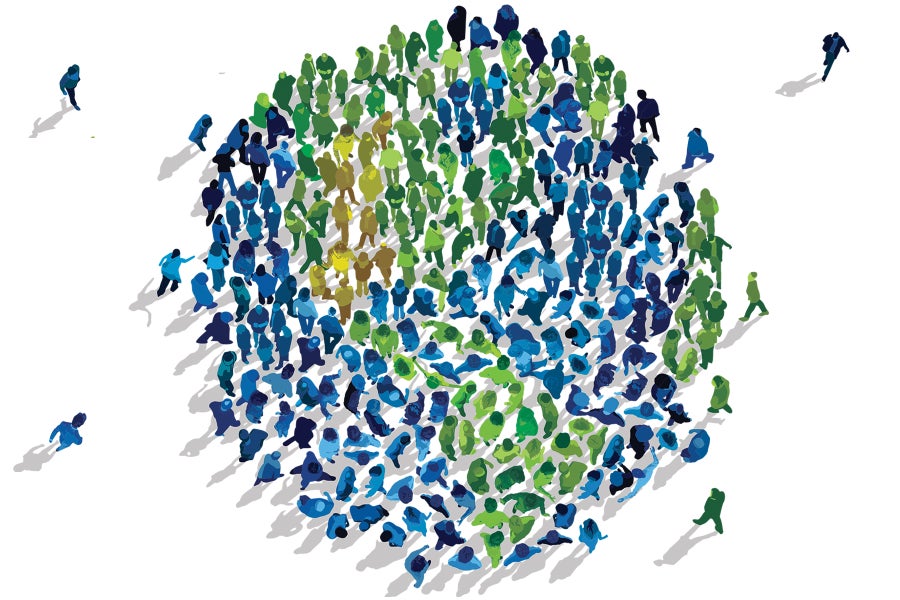
Rectifying inequities will be needed to reduce the numbers of people with dementia worldwide. Daniel Hertzberg/Theispot
.
.
Click the link below for the article:
.
__________________________________________
 James' World 2
Leave a comment