
Click the link below the picture
.
Thanks to the development of modern agriculture, the germ theory of disease and pasteurization, as well as the advent of freezers, electric ovens, and fridges, millions of people can now access safe, disease-free food in many parts of the world. But despite these advances, foodborne illnesses endure. The Centers for Disease Control and Prevention estimates that around 48 million Americans—one in seven—get sick from food each year.
Harmful, illness-causing pathogens lurk and fester in many different foods, from salad greens, fruit, and vegetables to meat, eggs, rice, and seafood. Improper food preparation and storage, lack of hand hygiene, general unsanitary conditions, and insufficient cooking or reheating can all lead to food contamination. A lot of foodborne illnesses are caused by such improper handling. “The vast majority will be sporadic cases,” says Martin Wiedmann, a food scientist at the Cornell University College of Agriculture and Life Sciences. “One person gets sick because one thing went wrong.”
It is possible for contamination to occur during growth of crops, animal agriculture, and production procedures, however. Strict food hygiene laws and monitoring agencies (including the CDC, the Food and Drug Administration, and the U.S. Department of Agriculture’s Food Safety and Inspection Service) ensure that the U.S. has one of the best food safety records in the world. But unexpected events or mistakes on farms or in factories can still lead to foodborne pathogen contamination. When outbreaks of foodborne illnesses do happen, experts can use DNA fingerprinting of bacteria to quickly identify the origin and recall any food that might be contaminated, helping to contain the spread.
Common symptoms of foodborne illness include upset stomach, nausea, vomiting, diarrhea, fatigue, and fever. In severe cases, people can be hospitalized and die. Pregnant women, elderly adults, immunocompromised individuals, and young children are more susceptible to foodborne illnesses. Around 30 percent of all foodborne illness deaths worldwide occur in children under five years old.
The CDC recognizes 31 pathogens as common sources of foodborne illness. Bacteria, viruses, chemicals and even parasites (such as tapeworms) can all be culprits. These are some of the major microbes you should especially watch out for.
E. coli
Escherichia coli bacteria normally live peacefully inside your intestines without harming you. If ingested, however, these bacteria can infect other areas of the body, causing diarrhea, vomiting, and stomach pain. Some severe strains (such as those that produce so-called Shiga toxin) can lead to life-threatening dehydration and serious kidney damage.
E. coli can be expelled from the intestines in feces, meaning that unsanitary bathroom conditions and poor hygiene habits can all cause contamination of food. If a person gets such bacteria on their hands from direct or indirect contact with fecal matter, and then they go to prepare food or handle kitchen utensils with unwashed hands, for example, the E.coli can easily spread and become foodborne. Unclean water and unpasteurized beverages (such as raw milk) can also spread E. coli. Farmed produce also carries an E. coli risk – particularly if wildlife or livestock feces come into contact with the bacterium.
“E. coli is often associated with cattle and other ruminants,” says Martin Bucknavage, food safety and quality specialist at the Pennsylvania State University’s Penn Extension, which focuses on agriculture. “It could be cows, sheep, even white-tailed deer—it’s in their intestinal tract.” Contamination can occur if an infected animal’s feces get into water supplies and crops. This route is thought to have caused a number of E. coli outbreaks in produce, such as one in spinach in 2006. But this type of pathogen exposure has decreased in recent years, partly because farmers have been better at controlling livestock waste, Bucknavage says. “The meat industry has done a lot of work to try to minimize it.”
.
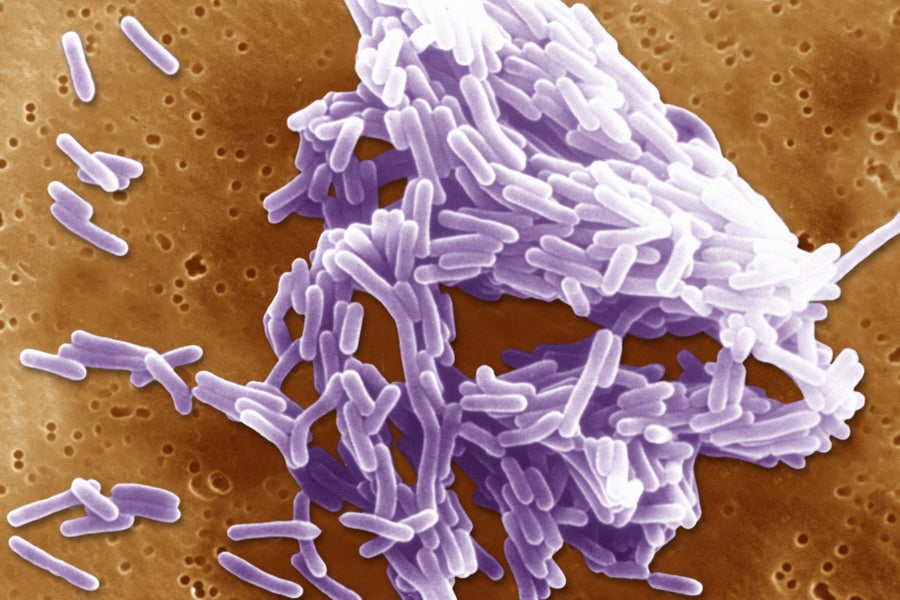
Scanning electron micrograph of Listeria monocytogenes. BSIP/Getty Images
.
.
Click the link below for the article:
.
__________________________________________
 James' World 2
Leave a comment