
Click the link below the picture
.
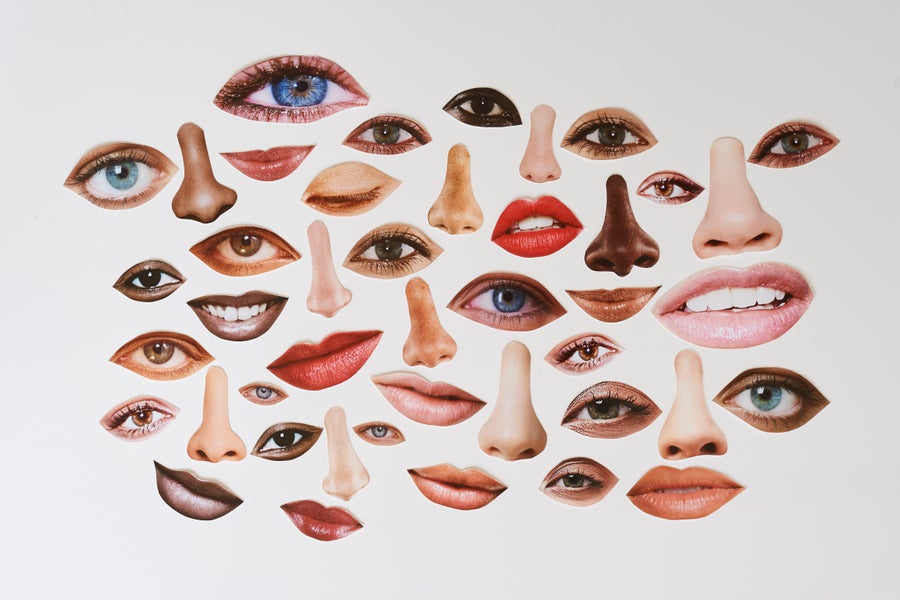
Doris Tsao is the 2024 recipient of The Kavli Prize in Neuroscience for her research on facial recognition. Her work has provided insights into the complex workings of the brain and has the potential to advance our understanding of perception and cognition.
Megan Hall: When we see a friend’s face, how do we instantly know who they are? Doris Tsao looks closely at the brain patterns of monkeys to help unravel this mystery. This year, she received The Kavli Prize in Neuroscience with Nancy Kanwisher and Winrich Freiwald, for identifying a specialized region of the brain where facial recognition happens.
Scientific American Custom Media, in partnership with The Kavli Prize, spoke with Doris to learn more about her discoveries and how she’s using them to unlock a bigger question – how do our brains represent the world?
As a kid, Doris Tsao was surrounded by science. Her mother was a computer programmer and her father is a mathematician.
Doris Tsao: I always had grew up with the sense that being a scientist was the most noble life calling. That really came from my parents talking to them. It was part of our family.
Megan Hall: But Doris didn’t think she’d be a scientist.
Doris Tsao: I didn’t think of myself as particularly interested in science. I like math. My parents gave me geometry problems, and I loved that. I certainly didn’t think about the brain when I was a kid. I liked to play. I played with Barbie dolls. I loved to read biographies.
Megan Hall: That all changed when she was in sixth grade.
Doris Tsao: I remember just waking up one morning and, suddenly, for no real reason, wondering if space is infinite or not. Because it seemed like if space is infinite, that seems incredible. I’d never thought about infinity before. And if it wasn’t, how could that be? Right? So, I just kept going in these loops, and I remember obsessing about this for days.
Megan Hall: She revisited this question in high school as she started reading about artificial intelligence and neuroscience. Books by philosophers like Immanuel Kant made her think about how our minds perceive space. Why do you think that question gripped you so much?
Doris Tsao: It’s kind of funny, I always thought I was special, but my kids, they’re like six years old and they ask me that nowadays. So, I think it’s such a natural question. Maybe every kid wonders about this at some point.
Megan Hall: But Doris kept wondering about it. Still, she couldn’t pinpoint exactly what she was looking for. She says she went to the California Institute of Technology for college because she liked the idea of being a scientist.
Doris Tsao: And I had read all these books about the brain, and so on. So, I had romantic notions about that, but it was like sort of a fantasy about what my life could be like rather than motivated in a question about the world.
Megan Hall: Then something pretty common happened. She was on a camping trip with her dad and he asked her to proofread one of his academic papers. His first language is Chinese, so…
Doris Tsao: He would give me his papers to correct English mistakes. And I did this starting in middle school, high school, and I had no idea what his papers were – they were like gobbledygook – but I could figure out that the verb was not agreeing with the subject.
Megan Hall: But this time was different. With her training from Caltech, Doris actually understood what he was writing about.
Doris Tsao: It was kind of astonishing to me, like, the idea.
.
 Getty Images
.
.
Click the link below for the article:
.
__________________________________________
 James' World 2
Leave a comment