
Click the link below the picture
.
John McFall, a Paralympic sprinter who later became an orthopedic and trauma surgeon, has had an esteemed career fueled by his intense drive and curiosity. Now he’s adding yet another acclaimed career to the mix: astronaut.
Following a serious motorcycle accident when he was 19, doctors amputated McFall’s right leg above the knee. With the use of a prosthetic leg, which he has worn ever since, he won a bronze medal in the 100-meter sprint event at the 2008 Paralympic Games, where he represented the U.K. In 2022, after a competitive selection process, the European Space Agency (ESA) inducted McFall into its astronaut corps, making him its first physically disabled member, or parastronaut. McFall was specifically chosen to participate in ESA’s groundbreaking “Fly!” feasibility study, which aims to systematically assess the barriers that exist in spaceflight for individuals with physical disabilities. The Fly! study is set to conclude this autumn. McFall has yet to fly in space, let alone to be assigned a slot on any upcoming mission, but that could soon change.
He now awaits his chance to launch and continues his training. Scientific American spoke with McFall about the process of becoming an astronaut and the unique physiological challenges uncovered in the latest feasibility study.
Why did you apply to participate in this study? What aspects of your background made you feel particularly suited for this project?
What was interesting about the application for this study was that there was never any guarantee of a flight to space. The notice was just for a candidate with a physical disability to participate in a feasibility study, with ESA’s goal being to hopefully create an opportunity to fly someone with such a disability to space. For me, it was like, “What have I got to lose?” I didn’t have going to space on my radar at all, but a friend of mine sent me a message suggesting that I look into it. I saw it as a bold and innovative opportunity, and it’s commendable that ESA is the first space agency to take on such a brave initiative. In the back of my mind, I thought that if I could get selected, this would tick all the boxes for things I love doing in my life: being curious while challenging myself academically, physically, and emotionally.
In terms of my background: As an amputee and surgeon, I know a lot about medicine and my disability specifically—especially what is and isn’t feasible with my condition. As an athlete, I know that I’m fit and physically capable—probably an ideal person to demonstrate how capable people with physical disabilities can be. I thought I might be an ideal candidate to help answer this question.
It’s somewhat surprising that we haven’t had someone with a physical disability in space yet. Before doing this study, why do you think other groups hadn’t tried to do this?
I don’t think there is a definitive answer. If you look at the history of human spaceflight, especially in the last 20 years, the space station has been inhabited with a constant human presence since the year 2000. In the first decade [after 2000], essentially until the end of the shuttle era, the space station was still being built. We were also learning a lot about long-term human habitation in orbit. Around 2014 or 2015 we started gathering good long-term data on the effects of living in low-Earth orbit with microgravity on astronauts. Since then, the idea of whether this would be possible for someone with a physical disability has been floating around. Dave Parker, then director of human and robotic space exploration for ESA, went to all the ESA member states to get approval for selecting someone with a physical disability in 2021. It takes time, but I think the idea has been there for a while. Now that we’ve learned more about human spaceflight and how the body responds to prolonged microgravity, we’re ready to move to the next step.
.
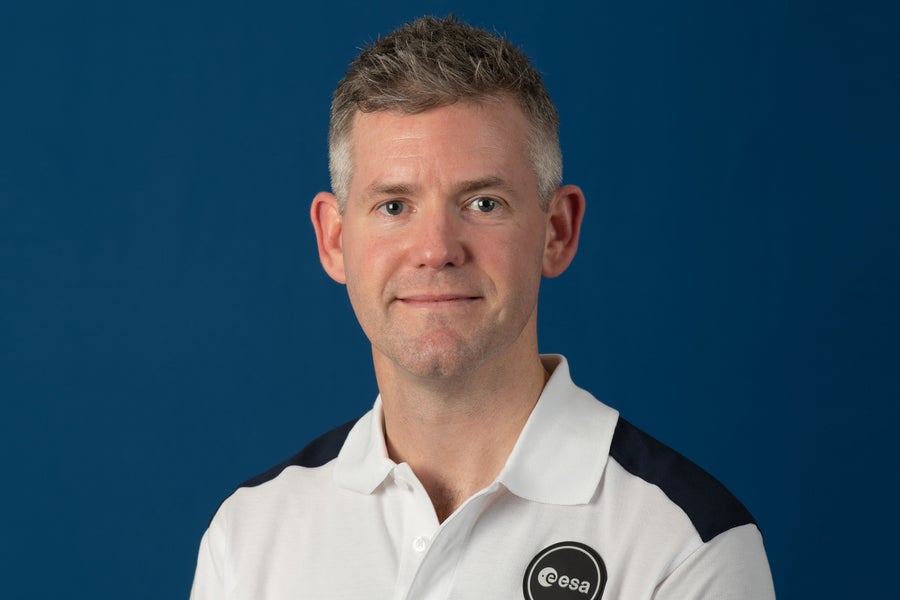
John McFall, member of the European Space Agency’s astronaut class of 2022. ESA – P. Sebirot
.
.
Click the link below for the article:
.
__________________________________________
 James' World 2
Leave a comment