
Click the link below the picture
.
When it came time for Itzy Morales Pantoja to start her Ph.D. in cellular and molecular medicine, she chose a laboratory that used stem cells—not only animals—for its research. Morales Pantoja had just spent two years studying multiple sclerosis in mouse models. As an undergraduate, she’d been responsible for giving the animals painful injections to induce the disease and then observing as they lost their ability to move. She did her best to treat the mice gently, but she knew they were suffering. “As soon as I got close to them, they’d start peeing—a sign of stress,” she says. “They knew what was coming.”
Even though the mouse work was emotionally “very, very difficult,” Morales Pantoja remained committed to her research out of a desire to help her sister, who has multiple sclerosis. Three years after the project wrapped up, however, Morales Pantoja was crushed to find that none of her results would be of any direct help to people like her sister. An antioxidant she’d tested seemed promising in mice, but in human samples it was ineffective.
This was a disappointment but not a surprise. Around 90 percent of novel drugs that work in animal models fail in human clinical trials—an attrition rate that contributes to a $2.3-billion average price tag for every new drug that comes to market.
Today Morales Pantoja is a postdoctoral fellow at the Johns Hopkins Center for Alternatives to Animal Testing, where she is helping to develop lab-grown models of the human brain. The goal is to advance scientific understanding of neurodegeneration while moving the field beyond what some researchers see as an antiquated reliance on animal models.
Millions of rodents, dogs, monkeys, rabbits, birds, cats, fish, and other animals are used every year for research purposes worldwide. Exact numbers are hard to come by, but advocacy group Cruelty Free International estimated that 192 million animals were used in 2015. Most of this work occurs in four broad domains: cosmetics and personal products, chemical toxicity testing, drug development, and drug-discovery research.
Animal-based studies have contributed to important findings and lifesaving medical advancements. The COVID vaccines, for instance, were developed in animals, including mice and nonhuman primates. Animal models have also been critical in advancing AIDS drugs and in developing treatments for leukemia and other cancers, among many other uses.
But animal studies often fall short of producing useful results. They may weed out possibly effective drugs or miss toxicity in humans. They have failed to deliver breakthroughs in certain fields of medicine, including neurological conditions. A 2014 study estimated that candidate therapies for Alzheimer’s disease developed in animal models have failed in clinical trials about 99.6 percent of the time. “As questions about human biology and variability get more complex, we are bumping up against the limits of animal models,” says Paul Locke, an environmental health scientist and attorney at the Johns Hopkins Bloomberg School of Public Health. “The thing you run into with animals—and there’s no way to get around this—is that animal biology is just too different from human biology.” Other species are no longer providing the insights about human biology—including at the cellular and subcellular levels—that scientists today need to achieve innovation.
A growing, multidisciplinary community of researchers around the world is investigating alternatives to animal models. Some are motivated by concerns about animal welfare, but for many, sparing the lives of millions of creatures is just an added bonus. They are driven primarily to create technologies and methods that will approximate human biology and variability better than animals do.
.
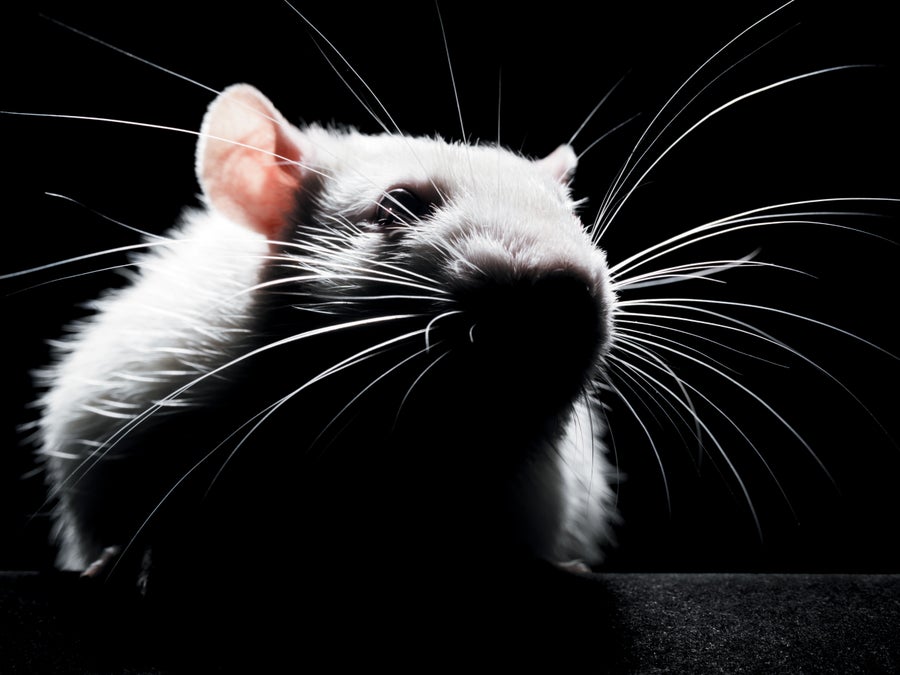
Millions of animals are used for research purposes every year, but their efficacy is increasingly limited. Henrik Sorensen/Getty Images
.
.
Click the link below for the article:
.
__________________________________________
 James' World 2
Leave a comment