
Click the link below the picture
.
As I watched my parents’ generation reach their 80s, I was struck by the dramatic differences among them. A handful suffered from dementia, but many others remained cognitively sharp—even if their knees and hips didn’t quite keep up with the speed of their thoughts.
That observation runs counter to prejudices about aging, which were highlighted early in the 2024 presidential race between elderly candidates, but these biases permeate society in general. “The belief about old people is that they’re all kind of the same, they’re doddering, and that aging is this steady downward slope,” says psychologist Laura Carstensen, founding director of the Stanford Center on Longevity. That view, she says, is a great misunderstanding.
Instead, research highlights the very differences I noticed. In our 40s, most people are cognitively similar. Divergences in cognition appear around age 60. By 80 “it’s quite dramatically splayed out,” says physician John Rowe, a professor of health policy and aging at Columbia University’s Mailman School of Public Health. Yes, there will be a group diminished by dementia and cognitive decline, but in general the 80-somethings “include the wisest people on the planet,” Carstensen says.
Focusing on only those with poor brain health misses more than half the population. Rowe led research showing that in the six years after turning 75, about half of people showed little to no change in their physical, biological, hormonal and cognitive functioning, whereas the other half changed quite a lot. A longer-term study followed more than 2,000 individuals with an average age of 77 for up to 16 years. It showed that the three quarters who did not develop dementia showed little to no cognitive decline.
Some of this is related to genetics. Studies of successful aging have shown that genes account for 30 to 50 percent of physical and cognitive changes. But factors like a healthy way of life and good self-esteem are also consequential. So to an extent, Rowe says, “this is really good news because it means that you are, in fact, in control of your old age.”
Research has also busted the myth that there is no upside to aging past 70 or so. “We have found very clearly that there are things that improve with age,” Rowe says. The ability to resolve conflicts strengthens, for instance. Aging is also associated with more positive overall emotional well-being, which means older adults are more emotionally stable than younger adults, as well as better at regulating desires.
The normal aging process does bring changes to the brain, says Denise Park, a neuroscientist at the University of Texas at Dallas. There is some shrinkage in the frontal lobes and some damage to neurons and their connections. Cognitive processing slows down. Yet that slowdown is usually on the order of milliseconds and doesn’t always make a meaningful difference in daily life. And to compensate, older people activate more of the brain for tasks such as reading. “Older adults will often forge additional pathways” for particular activities, Park says. “Those pathways may not be as efficient as the pathways that younger adults use, but they nonetheless work.”
.
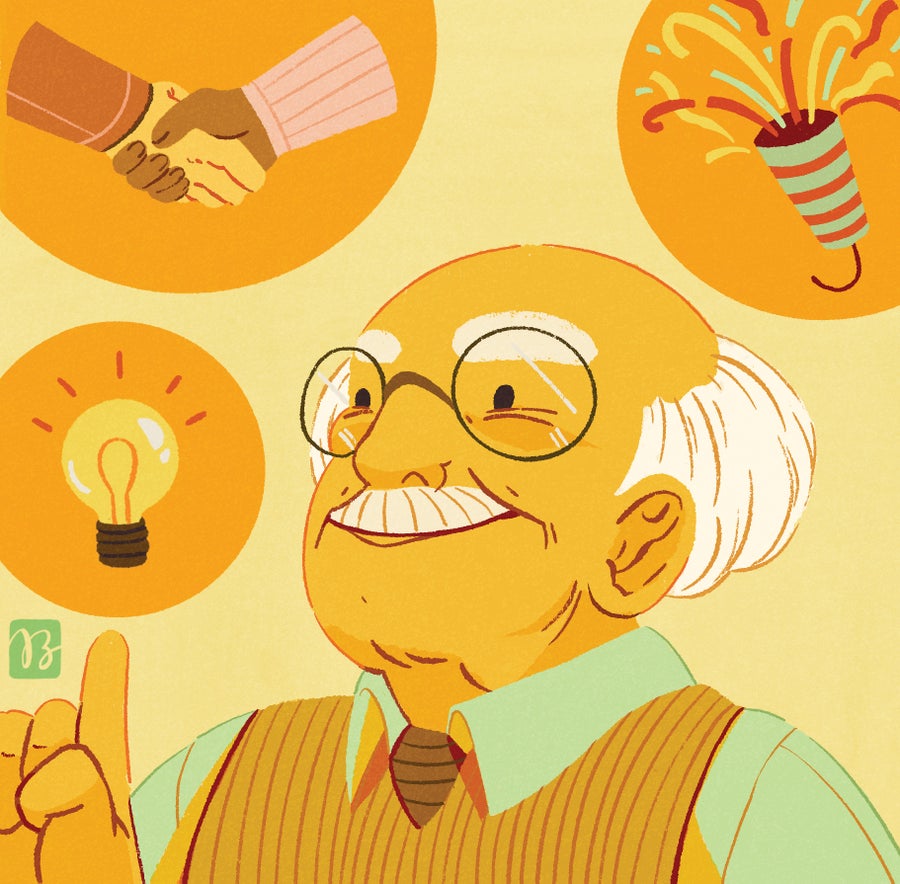 Jay Bendt
.
.
Click the link below for the article:
.
__________________________________________
 James' World 2
Leave a comment