
Click the link below the picture
.
August’s full moon is known as the Sturgeon Moon, but this year, it also will be a supermoon and a rare blue moon. Here’s how to see it on Monday night. Stargazers will be treated to a rare celestial event on Monday night as a blue moon rises, although it won’t be a typical blue moon. It will also be the first of four consecutive supermoons.
2 types of blue moons
The blue moon that most people have heard about occurs when there are two full moons in a calendar month, a phenomenon that happens once every two or three years. When this happens, the second one of the month is considered a blue moon.
Monday night’s event falls into a different category, known as a seasonal blue moon.
Each season usually has three full moons, but every few years, a season will have four, with the third of the series being dubbed a blue moon. This summer is one of those rare occasions, and it won’t happen again until May 20, 2027.
After Monday, the fourth and final full moon of the season will rise on Sept. 17, just five nights before the end of astronomical summer.
Does a blue moon actually look blue?
Despite what the nickname suggests, Monday’s blue moon will not take on any strange color and will look like many other full moons throughout the year.
The moon will rise in the east shortly after sunset and will slowly slide across the southern sky throughout the night before setting in the west right around daybreak.
August’s full moon will have many other nicknames, including the Sturgeon Moon, the Black Cherries Moon, the Corn Moon, and the Mountain Shadows Moon.
.
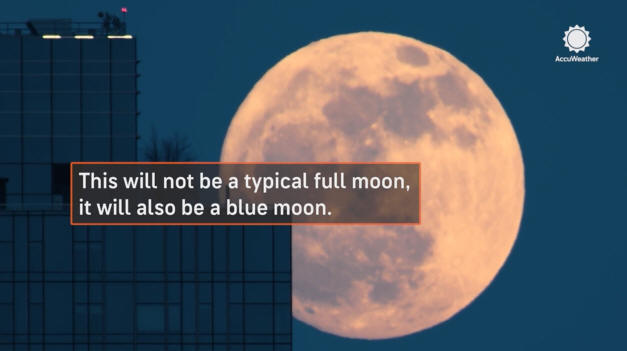 August’s full moon will not only be known as the Sturgeon Moon, but it will also rise as a rare seasonal blue moon. Catch the rise of the Blue Sturgeon Moon on Aug. 19.
.
.
Click the link below for the article:
.
__________________________________________
 James' World 2
Leave a comment